Across Anatolia, the earliest Christian communities did not build outward. They built inward and upward. Monasteries rose not in city centers but along cliffs, valleys, and volcanic ridges, places where isolation offered safety, devotion, and time. These were not destinations. They were refuges.
Each monastery below was founded for a reason. Some to escape persecution. Some to control trade routes quietly. Some because a monk believed a vision demanded a specific place. And all of them still feel suspended between the physical world and something more contemplative.
Suspended Between Forest and Sky: Sumela Monastery
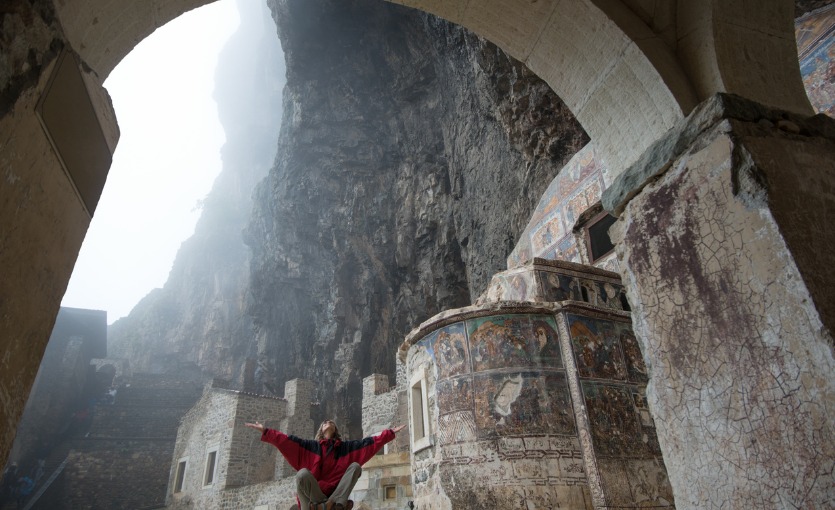
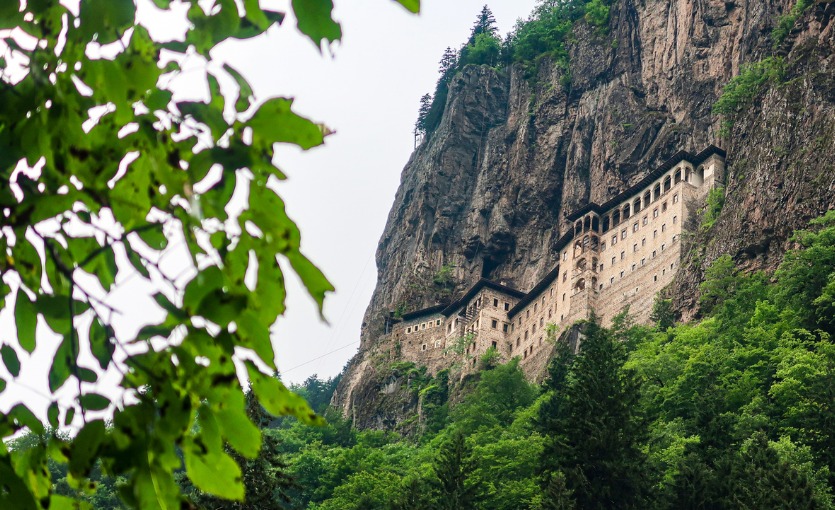
Sumela was founded in the 4th century by two Athenian monks, Barnabas and Sophronius, who believed the Virgin Mary had appeared to them in a dream and instructed them to build a monastery at this exact cliff face. The location was not symbolic. It was practical. The near-vertical rock wall offered natural protection from raids and made the monastery almost impossible to access without permission.
Over centuries, Byzantine emperors expanded Sumela into a full monastic city with chapels, kitchens, libraries, and rainwater cisterns. During Ottoman rule, the monastery was protected rather than destroyed, granted special privileges that allowed Christian worship to continue uninterrupted.
You arrive today after a forest ascent that mirrors the original monks’ isolation. Access via a cheap flight to Trabzon followed by a mountain drive feels like the modern echo of a pilgrimage rather than tourism.
A favorite local anecdote claims that monks once lowered baskets on ropes to receive supplies, refusing entry to anyone who did not belong. The cliff still feels capable of enforcing that rule.
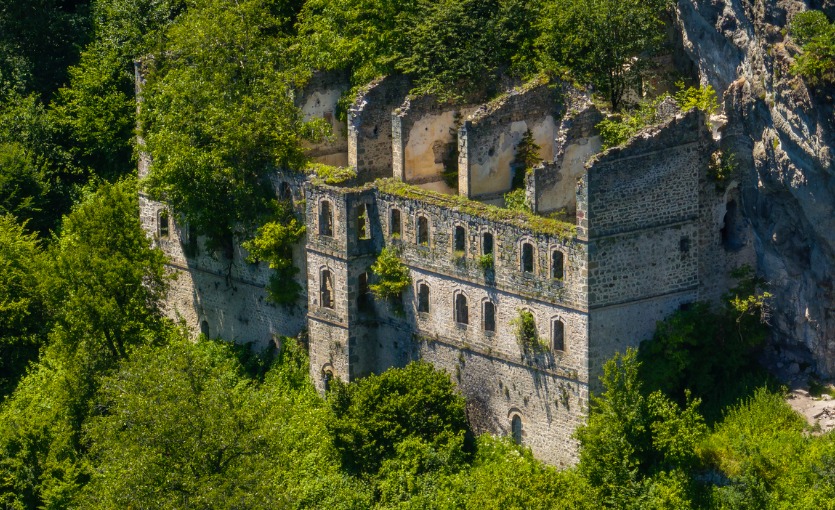
A Forgotten Valley of Stone and Silence: Vazelon Monastery
Vazelon predates Sumela and was founded around 270 AD, making it one of the oldest monastic sites in the region. It was established during a period when Christianity was still illegal in the Roman Empire, which explains its hidden placement deep within forested valleys near Çaykara.
Unlike Sumela, Vazelon functioned as a land-owning monastery. It managed agriculture, education, and regional records. Historians have found tax documents and legal records here, revealing that monks were not only spiritual figures but administrators of daily life.
Walking through its remains, you sense this practicality. There is less grandeur, more structure. The stone feels lived-in rather than ceremonial.
You reach it via a cheap flight to Trabzon, then inland roads that feel intentionally indirect, just as they were meant to be.
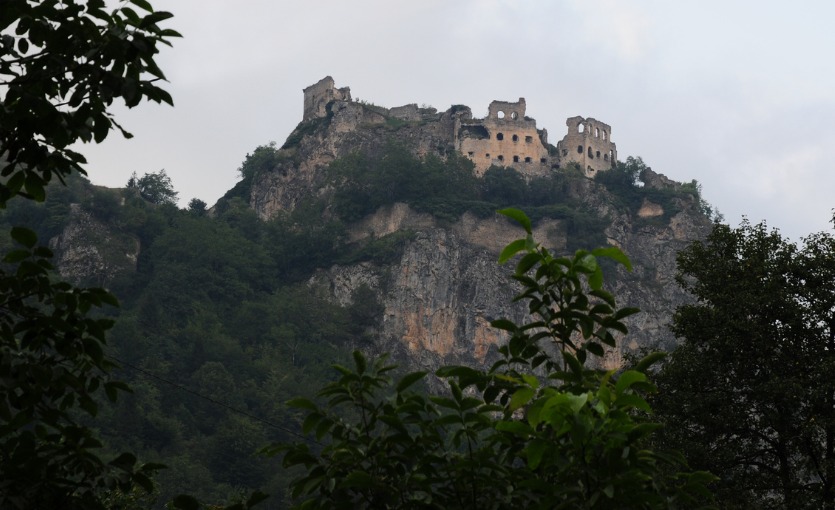
The Retreat That Refused the World Kustul Monastery
Kuştul Monastery was founded in the 8th century during periods of iconoclasm, when religious imagery was being destroyed across the Byzantine world. Many monks fled to remote areas to continue their practices quietly, and Kuştul’s location reflects that urgency.
Built high above surrounding valleys, it was never intended to grow large. Its purpose was withdrawal. The monks here practiced extreme isolation, limiting contact even with nearby communities.
One surviving record describes Kuştul as “a place where speech fades.” Standing there now, surrounded by forest and elevation, the description still feels accurate.
A cheap flight to Trabzon followed by steep, narrowing roads delivers you to a place that still resists modern intrusion.
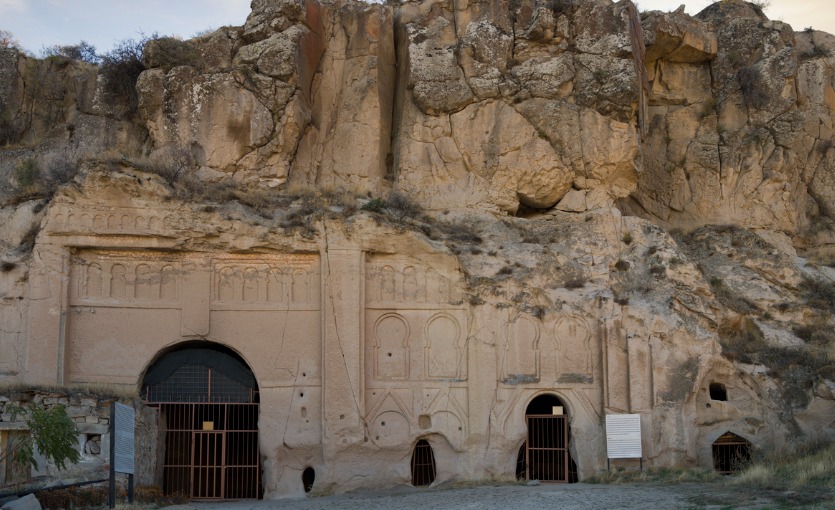
A Canyon Where Worship Was Carved: Ihlara Valley Churches
The churches of Ihlara Valley were carved between the 4th and 13th centuries by early Christians fleeing Roman persecution and later by monastic communities seeking solitude. The canyon’s depth provided both concealment and water access, making long-term settlement possible.
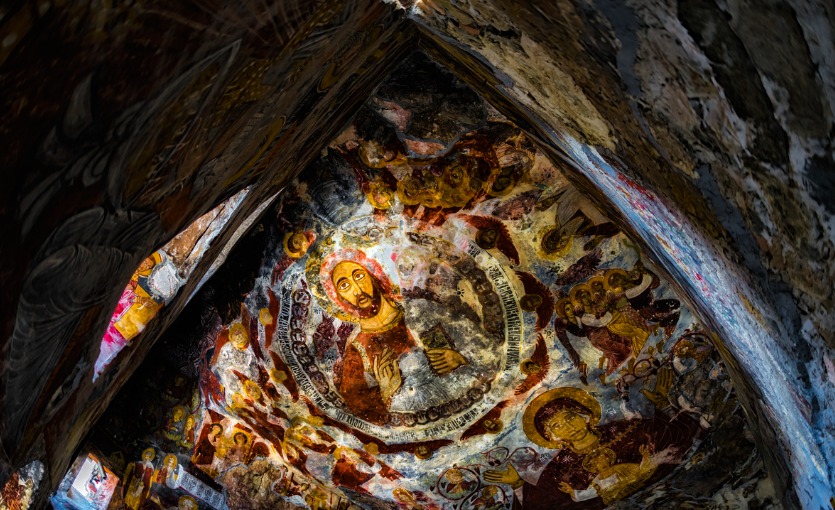
Unlike freestanding monasteries, these churches were hidden entirely within rock walls. Some frescoes include surprisingly emotional scenes, faces painted with sorrow or tenderness rather than strict iconography.
You move through a landscape where worship was literally embedded into geology. Access is easiest via a cheap flight to Kayseri, then ground travel into the valley.
Local legend claims that entire congregations once disappeared into the canyon during invasions, leaving no trace until danger passed.
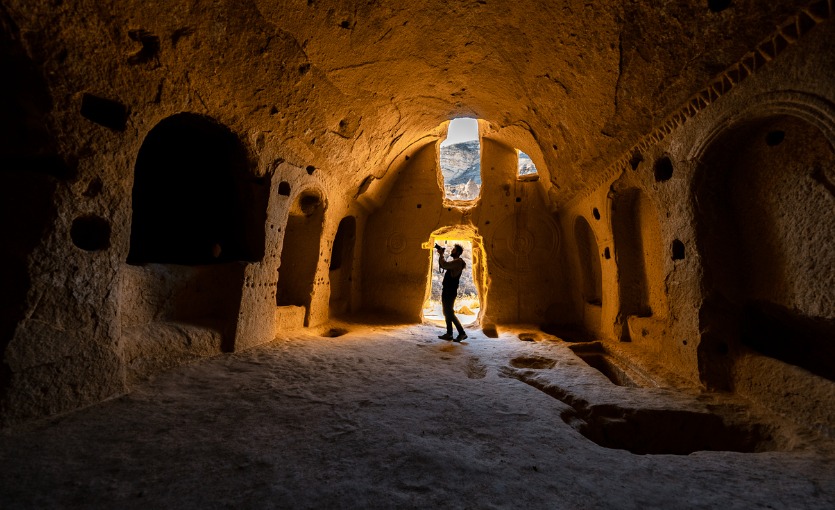
Where Entire Communities Lived in Stone: Goreme and Cappadocia
Göreme’s monastic life peaked between the 10th and 12th centuries when Cappadocia became a major Christian refuge. Soft volcanic rock allowed entire monasteries, churches, and homes to be carved underground and into fairy chimneys.
These were not temporary shelters. Families lived here for generations. Frescoes inside churches were meant to educate illiterate worshippers, often illustrating biblical stories in vivid narrative form.
The region was also designed defensively. Underground tunnels allowed residents to vanish when danger approached.
Arrival via a cheap flight to Kayseri places you within a landscape shaped as much by belief as by erosion.
Monumental Faith Above the Göksu Valley: Alahan Monastery
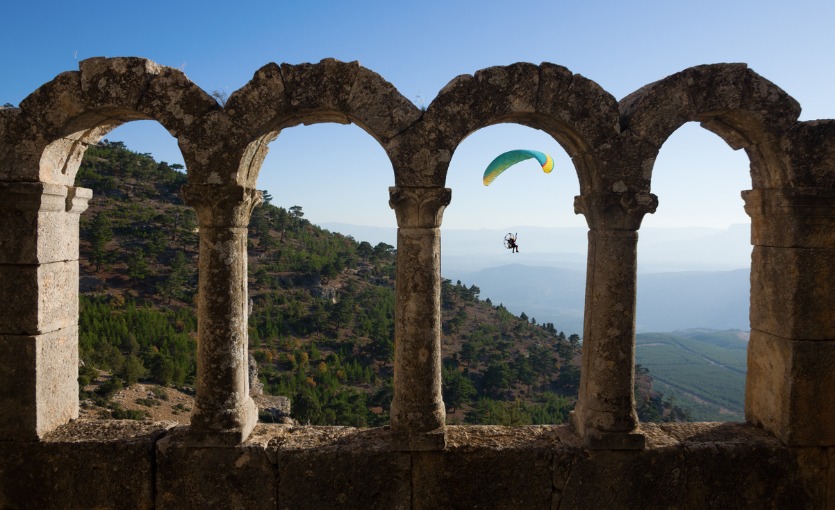
Alahan Monastery dates to the 5th century and represents Christianity’s shift from secrecy to state religion. Built during the reign of Emperor Zeno, it was meant to demonstrate permanence and authority rather than concealment.
Unlike cliff monasteries, Alahan stands openly, with basilicas and columns that suggest ambition. Its location overlooking the Göksu Valley was strategic, visible to travelers and traders below.
You reach it via a cheap flight to Cukurova International Airport, then inland travel through terrain that highlights the monastery’s commanding placement.
Scholars believe Alahan was intended as a pilgrimage site but never fully completed, possibly due to shifting trade routes or political instability.
Fragmented Sanctuaries of the East: Harput and Diyarbakir Region
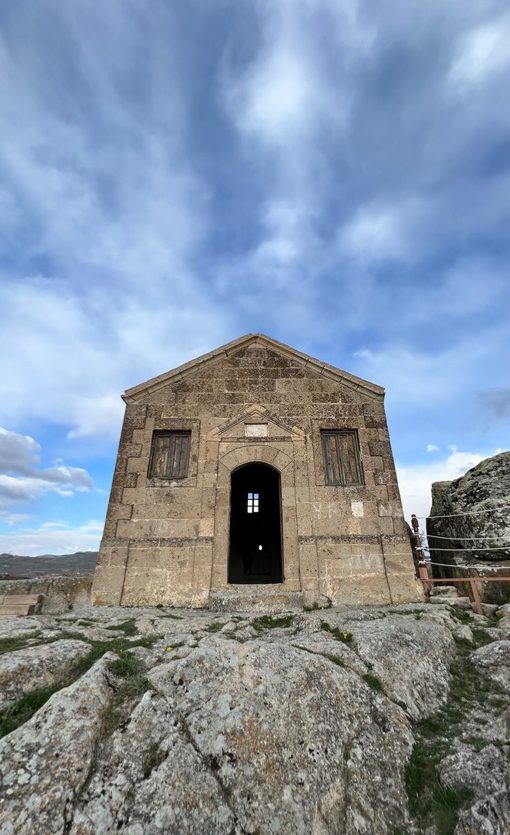
Around Harput and Diyarbakır, early Christian communities carved small cave churches between the 5th and 10th centuries. These were modest, functional spaces rather than monumental structures.
Many were abandoned gradually as populations shifted and Islam became dominant in the region. What remains today are fragments that feel personal, chapels scaled for handfuls of worshippers rather than crowds.
Access via a cheap flight to Elazig or a cheap flight to Diyarbakir brings you close to landscapes where religious layers overlap rather than replace one another.
Local stories suggest that some cave churches were reused quietly for centuries, shared respectfully by different faith communities.
Why These Monasteries Still Matter
These monasteries were not built to last forever. They were built to serve moments of need, belief, and withdrawal. That they remain at all feels almost accidental.
What connects them is not architecture alone, but intention. Each site reflects a decision to step away from the world without abandoning it completely.
You do not visit these places casually. You arrive slower than expected. You leave quieter than planned.
And somewhere between cliff paths and carved stone, you understand why the mountains were chosen in the first place.