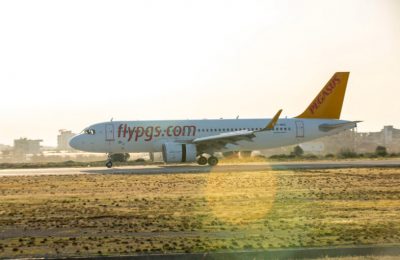
Spring in southern Spain feels like the world has exhaled. The heat has not yet hardened into summer intensity, orange trees perfume entire plazas, and long lunches spill into golden evenings without urgency. This is the season to move slowly. You begin by opening the app, check out the Pegasus route map, compare airline flights tickets, and apply what you learned in Flight Hacks: How to Plan a Multi-Stop Trip with Pegasus to build a seamless circuit. Whether you depart on a cheap flight to Istanbul first and connect onward or plan your return leg as a flight to Türkiye , spring becomes the perfect bridge between Andalusia and Anatolia.
You pack light after reviewing the baggage allowance page, consider an upgrade package for extra comfort, and remember that Pegasus Café’s Pre-order menu allows you to secure your meal before departure. Don’t forget you can order your meal up to 24 hours before the flight.
Then you land in Andalusia and begin.
Málaga: Sea-Salt Mornings, Moorish Walls, and Long Lunches
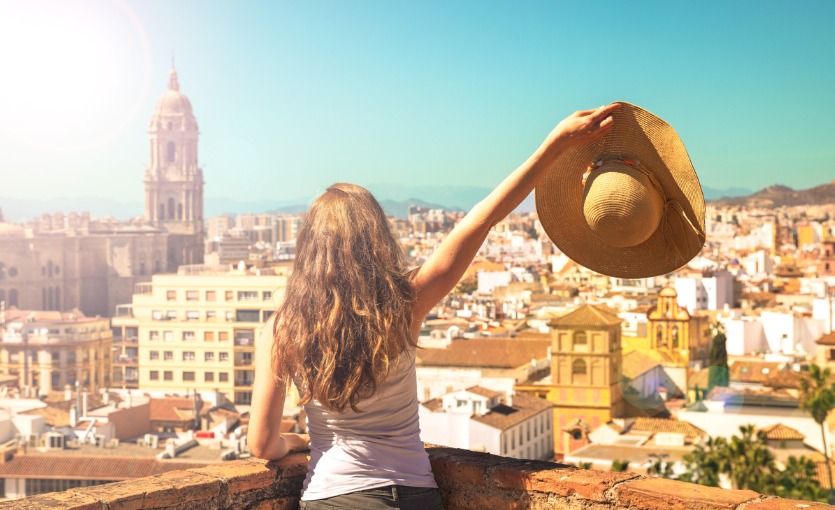
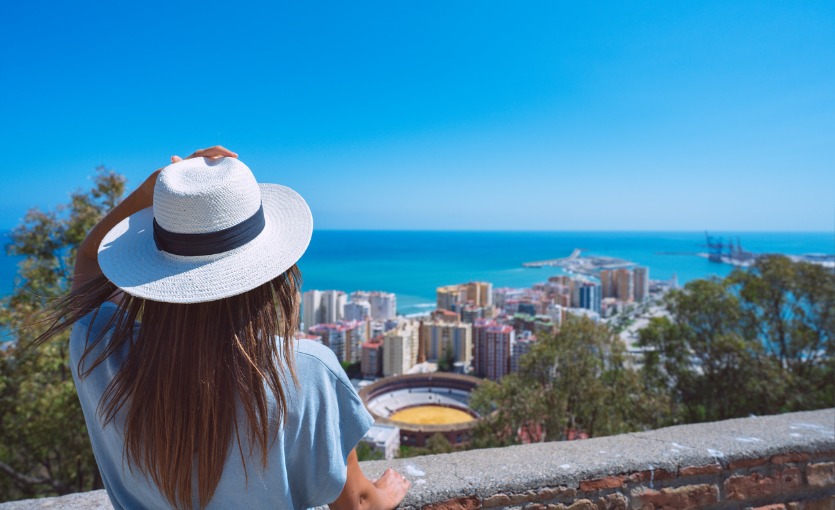
Málaga greets you with light. Not dramatic light. Not theatrical light. Just a soft Mediterranean shimmer bouncing off tiled façades and fishing boats rocking gently in the port. You begin at the Alcazaba, the 11th-century Moorish fortress that climbs above the city in terraced courtyards and horseshoe arches. Built by the Hammudid dynasty, it once guarded the coastline from invasion. Today, it guards your first panoramic view of Málaga’s cathedral dome and glittering sea.
Walk downhill into the historic center where Picasso was born. His childhood home is now a museum, but the real art is outside: musicians on Calle Larios, grandparents sharing coffee at Plaza de la Constitución, children chasing pigeons across sunlit stones.
Lunch belongs to the sea. At El Tintero or along the Pedregalejo promenade, you eat espetos de sardinas grilled over open coals, salted by the breeze itself. Pair it with chilled gazpacho or ajoblanco almond soup, a dish that whispers of Andalusia’s Moorish past. Families love Málaga because everything feels easy. The beaches are wide and gentle, the port area Muelle Uno offers playgrounds and ice cream, and the city’s compact size means no one gets tired too quickly.
If you crave movement, Málaga opens the door to extreme sports in the surrounding region. The Caminito del Rey cliffside walkway offers heart-racing views suspended over deep gorges, while paragliding in the nearby hills gives you a literal bird’s-eye view of the Costa del Sol.
Just outside the city, rent a car and drive to Ronda, perched dramatically above a canyon split by a 18th-century stone bridge. The route feels cinematic, the villages whitewashed and quiet, the olive groves endless.
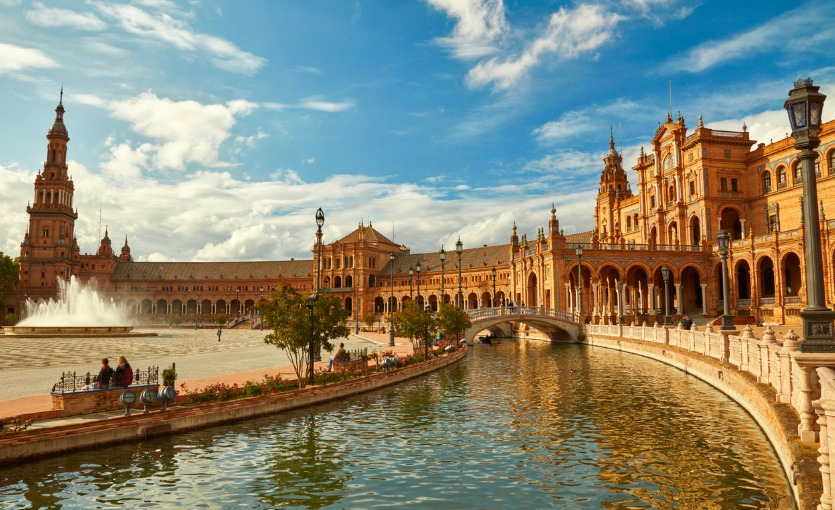
Seville: Orange Blossom Streets, Flamenco Nights, and Palace Light
Seville does not whisper. It hums. The scent of azahar, orange blossom, lingers in the air as you approach the Real Alcázar, a royal palace still used by Spain’s monarchy. Its intricate tilework and carved wooden ceilings tell a story of Islamic artistry and Christian monarchy layered together. Built in the 14th century atop earlier Moorish foundations, it feels both sacred and cinematic.
Across the square rises the Seville Cathedral, one of the largest Gothic cathedrals in the world. Climb La Giralda tower, originally a minaret, for sweeping views of tiled rooftops and church spires. History here is not static. It breathes.
Lunch in Seville is tapas theater. Jamón ibérico sliced paper thin. Salmorejo thicker and richer than gazpacho. Spinach with chickpeas, a dish that dates back to Moorish kitchens. Families linger in shaded plazas while children play between fountain splashes. The city moves at conversation pace.
In the afternoon, you walk through the Barrio de Santa Cruz, once the Jewish quarter. Narrow lanes twist unexpectedly, balconies drip with flowers, and quiet courtyards offer secret refuge from the sun.
Evening transforms Seville. Flamenco erupts in intimate tablaos where heels strike wood and guitars cry out with emotional precision. Romance here is not subtle. It is full-bodied and unapologetic.
For those seeking motion, the Sierra Norte offers hiking and even rock climbing options. Or drive to the Atlantic coast near Cádiz for windsurfing and raw ocean energy.
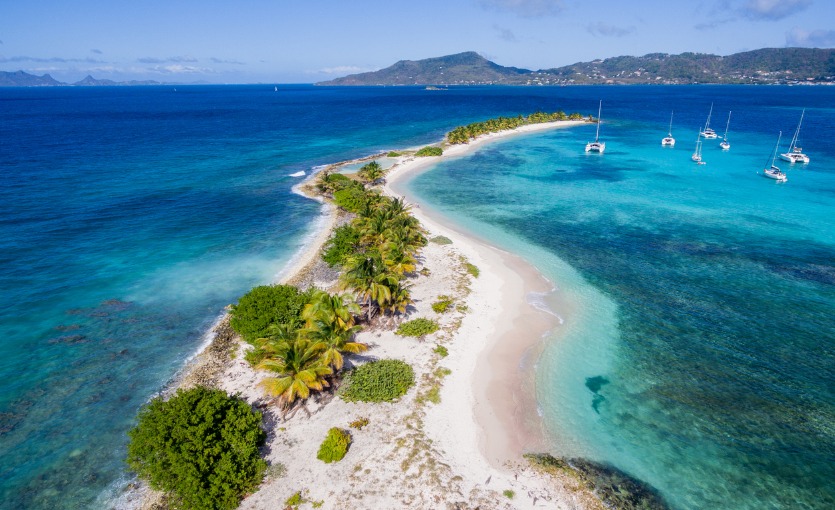
Granada: The Alhambra Glow, Mountain Air, and Tapas After Dark
Granada rises toward the Sierra Nevada mountains, where snow sometimes lingers even in spring. Your morning belongs to the Alhambra. Built in the 13th and 14th centuries by the Nasrid dynasty, this palace complex is not just architecture. It is geometry and poetry carved into stucco walls. Water channels run quietly through courtyards like living calligraphy.
Arrive early. Gates open at 8:30 am and lines grow quickly. Pre-book tickets online weeks in advance. Inside, time dissolves. You step through the Court of the Lions, sunlight filtering across marble columns, and feel centuries compress into a single breath.
Granada’s culture balances mountain and city. In the Albaicín quarter, white houses cascade down cobbled slopes while street musicians fill Mirador de San Nicolás with song at sunset. Families wander safely, stopping for churros dipped in thick chocolate.
Granada is also one of Europe’s last strongholds of free tapas culture. Order a drink and a plate appears: tortilla española, grilled chorizo, fried eggplant drizzled with honey. For dessert, piononos from nearby Santa Fe offer syrupy sweetness wrapped in delicate sponge.
Nature lovers drive into the Sierra Nevada National Park. Hiking trails vary from gentle alpine walks to more demanding ascents. In winter, skiing dominates, but spring still invites cycling, trail running, and mountain adventures.
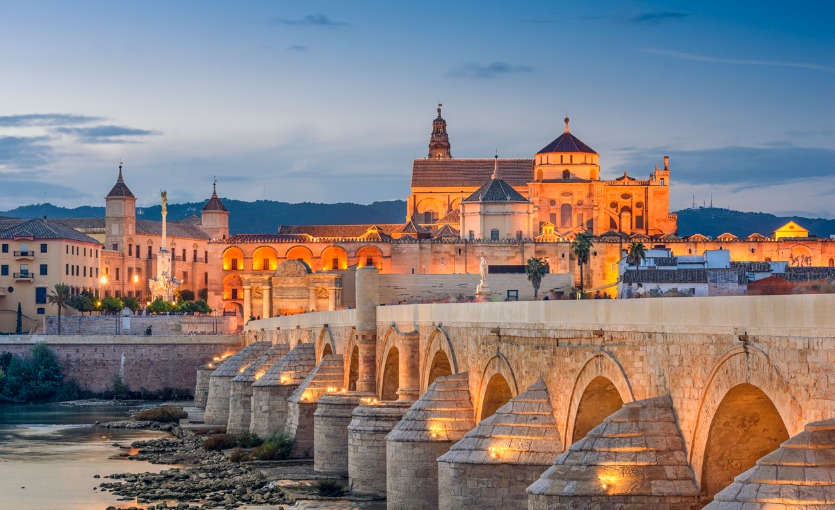
Córdoba: Arches of History, Flowered Patios, and Quiet Golden Hours
Córdoba feels contemplative. The Mezquita, originally built as a mosque in 784 under the Umayyad dynasty, remains one of the most extraordinary buildings in Europe. Inside, red-and-white striped arches extend in hypnotic repetition. At its heart stands a Renaissance cathedral inserted centuries later. Two religions. One space. Perfect tension.
Spring is patio season. Córdoba’s courtyards bloom with geraniums and jasmine, open to visitors during the famous Patios Festival. Families wander between homes, peeking into tiled sanctuaries filled with fountains and flowering pots.
Lunch leans rustic. Flamenquín, crispy pork rolled around ham. Salmorejo again, thicker and creamier here. Rabo de toro, slow-cooked oxtail rich with spice. Each dish reflects Córdoba’s agricultural surroundings and Moorish spice routes.
Walk across the Roman Bridge at sunset. The Guadalquivir River glows gold beneath ancient stone. Romance here feels gentle rather than theatrical.
Just outside the city, explore Medina Azahara, the 10th-century palace city built by Abd al-Rahman III. Once a symbol of power, now ruins that stretch into open countryside, it offers a profound reminder of Andalusia’s layered story.
The Slow Route That Stays With You
Southern Spain in spring is not about ticking boxes. It is about pacing yourself between fortress walls and beach chairs, between cathedral bells and guitar strings, between mountain air and olive oil dinners that stretch past midnight.
You move from Málaga’s sea breeze to Seville’s palace gardens, from Granada’s geometric poetry to Córdoba’s arch-filled silence. You hike, you swim, you eat, you pause. You find moments of adrenaline in cliff walks and alpine trails, and moments of stillness in courtyard shade.
When you eventually book your return flight to Türkiye , perhaps using insights from Pegasus Airlines and the Art of Traveling Türkiye on the Cheap, you carry Andalusia’s warmth with you. And maybe you begin planning the next loop. Mediterranean to Mediterranean. Coast to coast. Culture to culture.
Because the slow route is not just about where you go. It is about how deeply you allow yourself to feel it.