İçindekiler
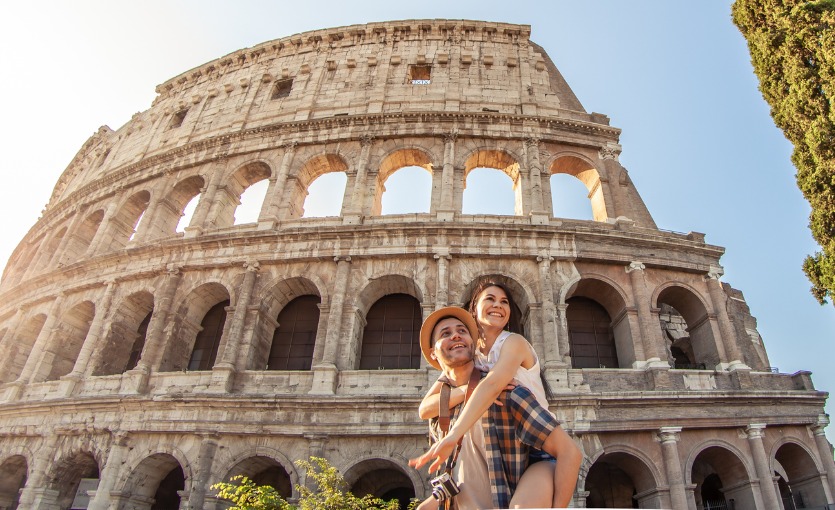
Rome hits you the moment you step outside. Warm stone, espresso in the air, scooters threading past ruins like it is the most normal thing in the world. This is a city that rewards a plan, but only the kind that leaves room for detours: a church door you push open on a whim, a bakery window that pulls you in, a sunset that keeps you on the bridge longer than you meant to stay.
Before you map out your days, check out the Pegasus route map and build your timing like a pro. If you are combining routes across Europe, take a cue from The Smart Traveler’s Toolkit: Booking, Baggage & Beyond. You can compare airline flights tickets, watch fares the way you would watch weather, and use how to find cheap flights as your mental checklist. Rome also pairs beautifully with an Istanbul connection, so if you are already holding a cheap flight to Istanbul, you can turn a flight to Türkiye into a two-part story.
One more thing to get right: onboard food. Use Pegasus Cafe’s pre-order menu and remember this: Don’t forget you can order your meal up to 24 hours before the flight! It is the kind of small move that keeps Day 1 from starting hungry.
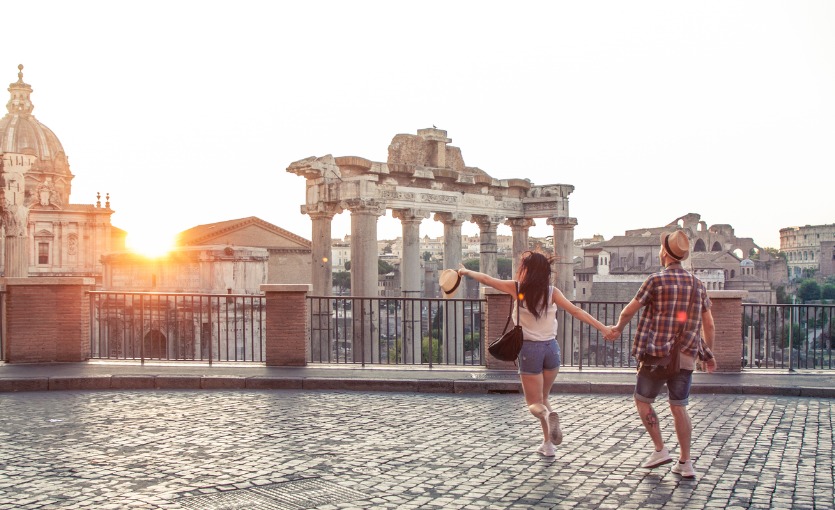
Day 1: Gladiators at Sunrise, Spritz at Golden Hour
8:00 AM: Breakfast near the action, not inside the crush
Start near Monti, where Rome wakes up gently. You want something quick but real: a cappuccino and a warm maritozzo, or a cornetto with jam. Eat standing at the bar like locals do, then walk toward the Colosseum while the city still feels soft.
8:30 AM: Enter the Colosseum before the lines peak
In March, the Colosseum opens at 8:30 AM, and arriving right at opening is the single best line-skipper. By late morning, the area thickens with tour groups and the security lines start to stretch. For March schedules, the Colosseum stays open until 7:15 PM, with last entry at 6:15 PM.
Tickets and timing that actually matter:
- A standard “24h Colosseum, Roman Forum, Palatine” ticket is listed at €18.
- Your Colosseum time slot typically locks you into a 75-minute visit window.
- If you pick special add-ons, note that some experiences specify 75–90 minutes and do not allow changing the time after purchase.
Once you are inside, do not rush the first few minutes. Stand in the arena bowl and look at how the seating tiers stack. This was not just a building. It was a machine for spectacle, designed so tens of thousands could pour in, react together, and pour back out into the city.
10:15 AM: Roman Forum and Palatine Hill, where the city began
Walk directly to the Roman Forum while your legs still have that fresh-morning energy. In March, the Forum and Palatine open at 9:00 AM and follow the same closing rhythm as the Colosseum, last entry 6:15 PM.
This is where Rome stops being “ancient” in the abstract. You are walking the spaces where law, gossip, power, commerce, and ritual collided daily. Climb up toward Palatine Hill and you feel the logic immediately: the best views, the best breeze, the status of height.

1:00 PM: Lunch like a Roman
Now you earn something hearty. Head toward Testaccio for classic Roman comfort: carbonara, cacio e pepe, or amatriciana. If you have been living in Türkiye long enough to love big, generous tables, Rome will feel familiar here. The pacing is slower, the plates are straightforward, and the satisfaction lands hard.
If you want a tiny comparative moment for your readers, this is where you can nod to Turkish cuisine without forcing it: Rome also has its “simple ingredients, perfect technique” philosophy, the way a great menemen does not need a hundred tricks to be memorable.
4:30 PM: Monti wander and a church-door detour
Monti is made for late afternoon. You browse small shops, duck into a quiet basilica, and let the city cool down around you. Rome is a museum that does not charge you to walk.
8:00 PM: Dinner in Trastevere, then the real Rome comes out
Cross the river into Trastevere at night and the energy changes. Pick a trattoria where you can hear plates and laughter, order artichokes if they are in season, then go for a second course that feels unapologetically Roman. Finish with gelato on a slow walk back toward the river.
Day 1 planning notes
- Wear comfortable walking shoes. You are doing uneven stone all day.
- Check baggage allowance page before you pack, especially if you are trying to keep it carry-on simple.
- If you want extra comfort on the flight, an upgrade package can make landing feel less like a recovery mission and more like a clean start.
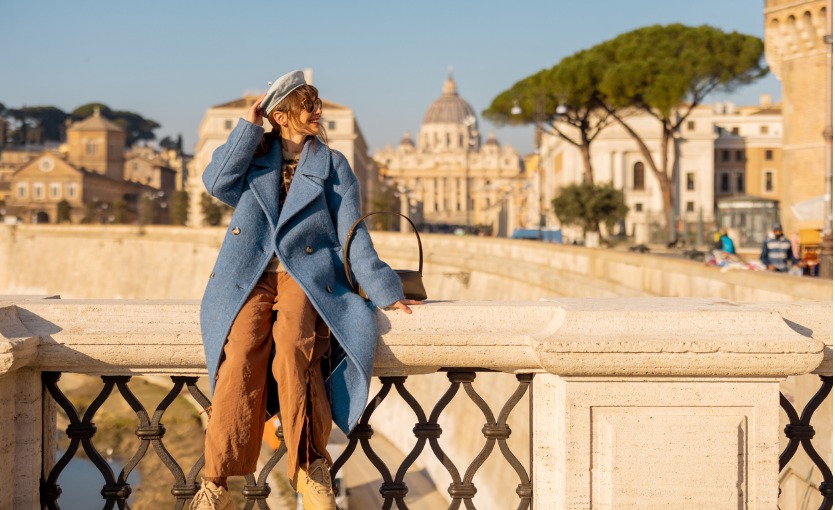
Day 2: Vatican Grandeur, Tiber River Calm, and a Perfect Night Walk
7:30 AM: Coffee first, then the Vatican before it gets loud
Get a fast espresso and go early. The Vatican Museums are famous for two things: staggering art, and the way crowds can turn the experience into a slow shuffle if you arrive at peak hours.
For 2026, the Vatican Museums list standard opening Monday to Saturday, 8:00 AM to 8:00 PM, with last entry 6:00 PM.
An adult ticket is listed at €20, and online tickets include an additional fee (shown as €5 on the official page).
Practical reality: book ahead. Then treat the Museums like a route, not a freestyle wander. You want to reach the Sistine Chapel before the crowd density peaks, so earlier entry pays off emotionally.
11:30 AM: St. Peter’s Basilica and the feeling of scale
Step into St. Peter’s and let the silence hit you. It is not quiet because it is empty. It is quiet because the space is so dominant it makes people lower their voices.
If you go up to the dome, you earn one of the best views in Europe. The city spreads out like pale stone and warm geometry, and the river curls through it like a ribbon.
1:30 PM: Lunch near Prati, clean and simple
Prati is great for a calmer lunch. Think crisp salads, light pasta, or a sandwich that actually tastes like good ingredients. This is also your “reset” moment before afternoon walking.
3:30 PM: Castel Sant’Angelo and a slow river walk
Castel Sant’Angelo gives you history that feels almost cinematic: fortress, refuge, and viewpoint in one. Afterward, walk the Tiber slowly. This is Rome’s antidote to Rome. The city quiets down when you stay near the water.
8:30 PM: Dinner with a view, then a classic night route
Tonight is for atmosphere. Book somewhere that lets you linger, then take the kind of walk Rome was built for: Piazza Navona, the Pantheon area, Trevi Fountain late when it is calmer. You will see couples, students, older Romans out for a stroll. It feels lived-in, not staged.
Day 2 planning notes
- Vatican days reward an earlier start more than almost anything else in Rome.
- If you are connecting through Istanbul at any point, Tips for a Smooth Transit Through Istanbul’s Sabiha Gökçen Airport is a natural companion read, especially for tight connections.
Day 3: Markets, Masterpieces, and One Last Late Dinner
8:30 AM: Market morning, Rome in daily mode
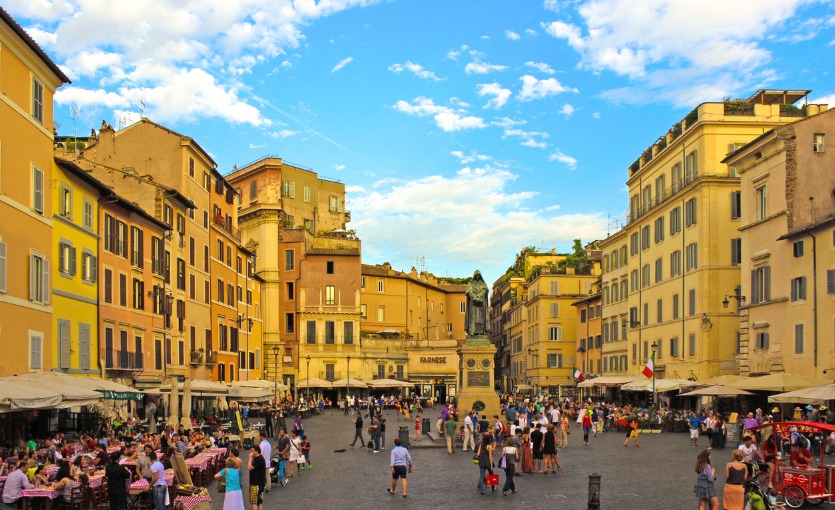
Start at Campo de’ Fiori or a neighborhood market where you can snack as you browse. Market logic is universal: seasonal produce, fast conversation, and food that makes you hungry even if you swore you were not.
Grab something small for breakfast, then keep moving.
10:00 AM: Borghese Gallery, the “book it or forget it” museum
If you can secure timed entry, the Borghese Gallery is one of Rome’s most concentrated hits of beauty. Bernini’s sculptures are the kind that make you stand still longer than you expect. This is not “see it and go.” This is “how did a human hand do that.”
1:00 PM: Lunch in a neighborhood that feels local
Go where the mood is relaxed: parts of Flaminio, parts of Trionfale, or back to wherever felt good earlier. Order something you have not tried yet, even if it is simple. Rome is a city where simple can still feel like a revelation.
4:00 PM: The “choose your finale” hour
Pick the ending that matches your personality:
- If you want drama, climb a viewpoint and watch the light change.
- If you want texture, wander smaller streets and let Rome surprise you.
- If you want a last cultural hit, choose one more museum, but keep it short and intentional.
8:30 PM: Final dinner, no rushing, no compromise
Your last dinner should be the one you remember on the flight home. Go classic and Roman. Order the dish you loved most again, plus one you did not get around to. Let dessert happen. Let the table linger.
Day 3 planning notes
- Rome is best when you leave some “blank space” in your day. That is where the city becomes yours.
- If Rome is part of a bigger loop that continues to Türkiye, it pairs beautifully with Istanbul, Izmir, Ankara, or Antalya later. Keep your next trip ideas parked in your Türkiye travel guide for when you land.
A Rome Ending That Feels Like a Secret You Earned
By the end of three days, Rome stops being a checklist. It becomes a rhythm you can feel in your body: early mornings when the stones look freshly washed, mid-day crowds you learn to dodge like a local, and late nights when trattorias glow and the city finally exhales.
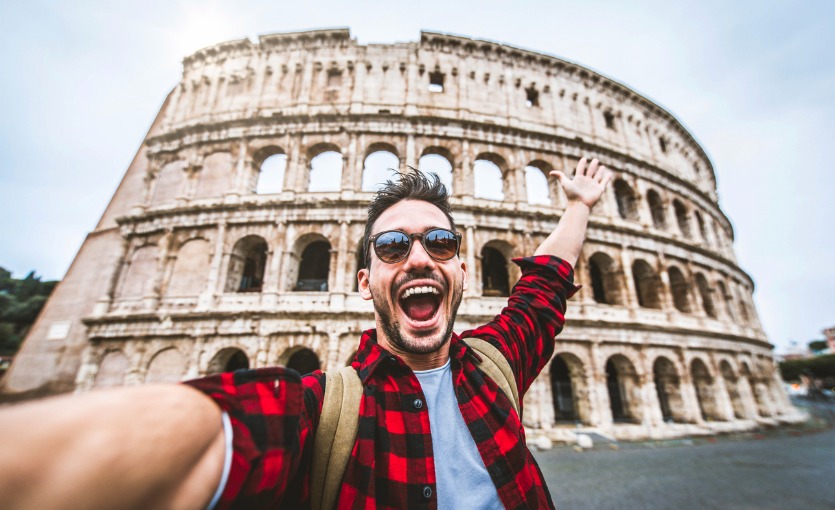
You came for ancient monuments, but what you take home is something more personal. The exact corner where you found the best espresso. The moment you stepped into the Colosseum and realized how small one person is inside a story that big. The way a simple plate of pasta can taste like a city’s entire identity.