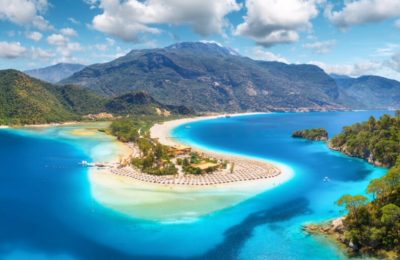
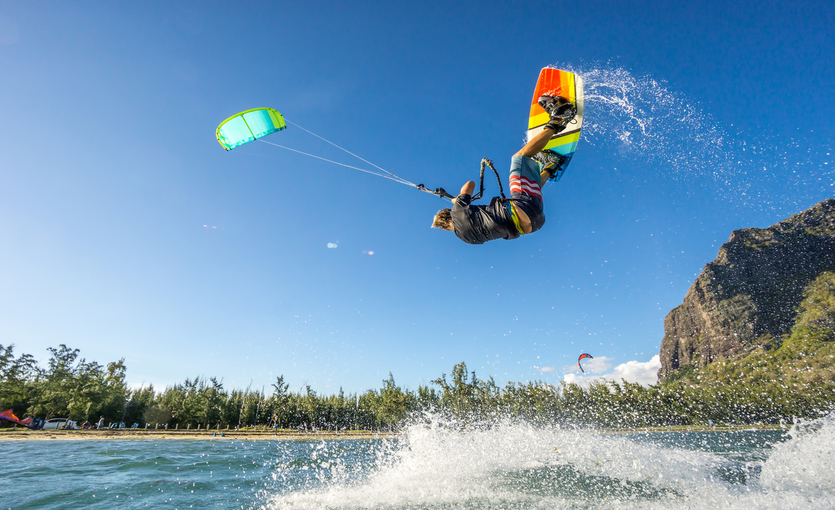
There is a particular kind of travel that is wind-dependent. You plan around forecasts rather than calendars, you spend more time studying isobar charts than hotel reviews, and the best days of your trip are determined entirely by what the atmosphere decides to do. Kitesurfing is that kind of travel, and once it gets under your skin, ordinary beach holidays start to feel like something is missing. The good news is that Europe and Türkiye contain some of the finest kitesurfing destinations in the world and Pegasus connects you to several of them directly. Whether you’re booking a cheap flight to İzmir for Alaçatı’s famous Meltem winds, a cheap flight to Istanbul as your jumping-off point for the wild Aegean swell around Bozcaada, or connecting onward to reach Tarifa’s legendary Atlantic gusts, the Pegasus route map will show you how close the wind actually is. For Thrill Seekers Only covers the full range of Türkiye’s adrenaline scene beyond the coast, and Why Türkiye’s Coastline Rivals (and Beats) Greece makes the case with some force if you’re comparing options on the Aegean. Here is the wind guide: six destinations, one obsession.
Alaçatı, Türkiye: The One That Converts Non-Believers
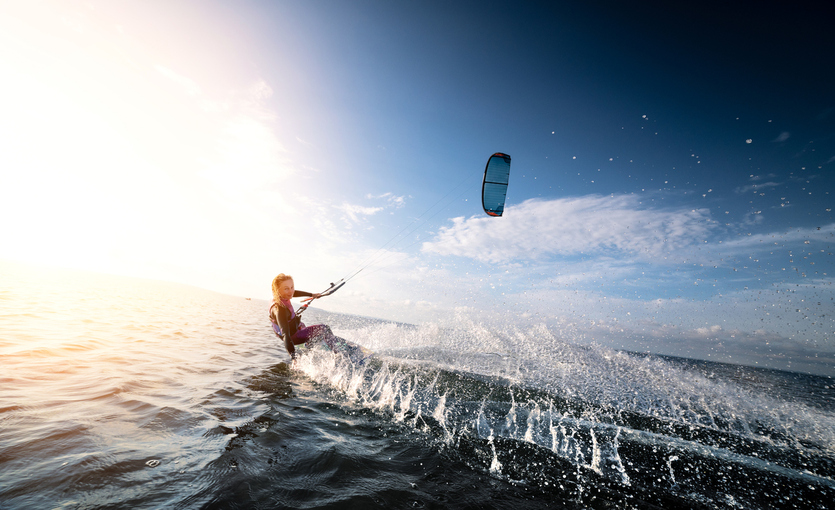
Ask any kitesurfer who has been to Alaçatı and they will tell you the same thing: they expected to like it and ended up loving it in a way they didn’t see coming. The town itself is partly responsible: a beautifully preserved stone village on the western tip of the Çeşme Peninsula with boutique hotels, excellent restaurants, and a cosmopolitan energy that makes the evenings as good as the days on the water. But the kitesurfing is what makes people rebook before they’ve even left.
The secret is the Meltem. This is the prevailing north-westerly wind that dominates the Aegean from late spring through to early autumn, and in Alaçatı it funnels through the peninsula’s geography into something remarkably consistent: side-onshore, strong enough to be genuinely exciting, and blowing across a shallow flat-water lagoon that is as close to ideal kitesurfing conditions as you are likely to find anywhere in Europe. The bay is large enough that it doesn’t feel crowded even during the peak season, when it hosts rounds of the GKA Kite World Cup and the world’s best riders share the water with people on their third ever lesson. That coexistence is a feature, not a bug. Watching professional freestyle riders throw tricks fifty meters away from where you’re learning to waterstart is a genuinely motivating experience. 3 Days in İzmir covers the broader region, and Sun, Sea and Simit: Türkiye’s Aegean Turquoise Riviera gives you the full coastal context for what Alaçatı sits within.
Tarifa, Spain: Europe’s Wind Capital, for Good Reason
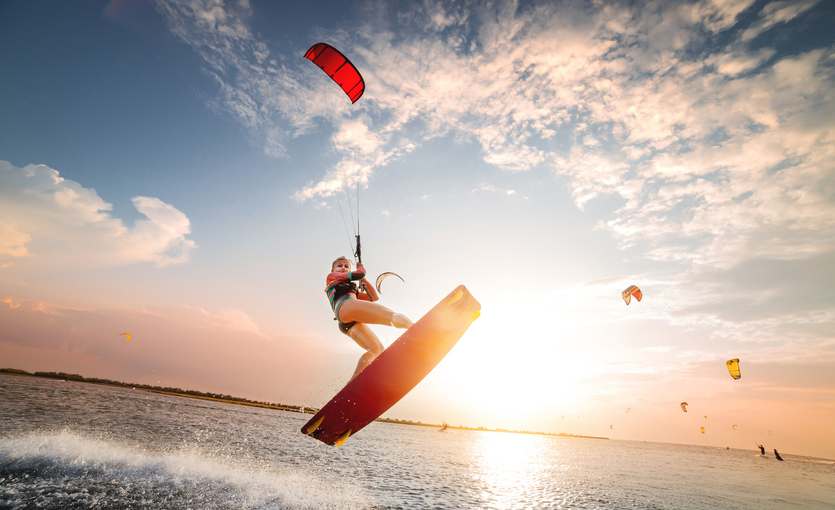
Tarifa sits at the southernmost tip of continental Europe, where the Atlantic and the Mediterranean collide and Africa is close enough that you can see it on a clear day across the Strait of Gibraltar. The town has been shaped so thoroughly by wind that it’s visible in the architecture: heavy doors, sheltered courtyards, whitewashed walls angled away from the prevailing gusts. On the worst days, the wind will blow the coffee out of your cup. On the best days, it will set up conditions that make you feel like you’re riding at the absolute edge of what a kite and a board can do.
There are two main winds here and they produce very different kitesurfing. The Levante comes from the east, blowing from the Mediterranean side, warm and often strong, producing the choppy fast conditions that experienced riders love. The Poniente blows from the west off the Atlantic, gentler and more consistent, creating the flatter water that suits progressional riding and learning. The combination means Tarifa has a longer reliable season than almost anywhere else on this list, running from April through October with good wind days spread throughout. The town itself has been a kitesurfing destination long enough that the infrastructure is excellent: a high concentration of schools and rental shops, a beach culture that fully embraces the sport, and enough bars and restaurants in the old town that the evenings take care of themselves. Fly into Málaga on a cheap flight to Málaga and it’s a straightforward 90-minute drive down to Tarifa along the coast.
Bozcaada, Türkiye: The Aegean’s Best-Kept Secret
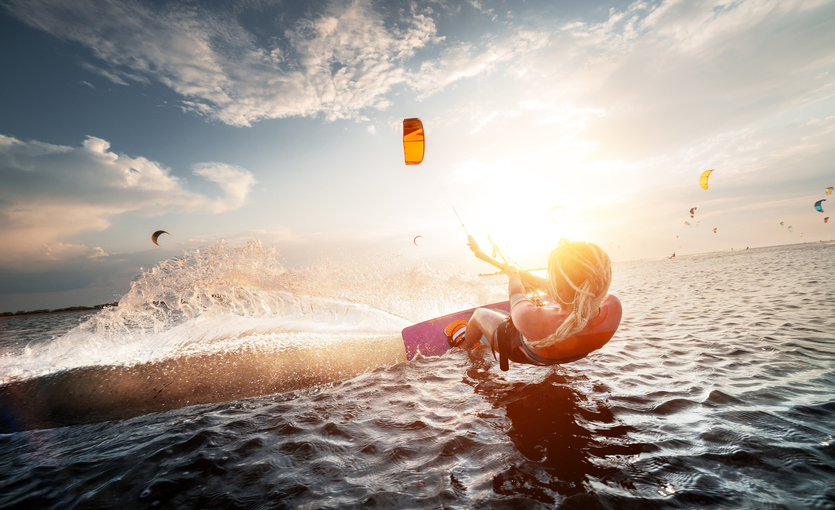
Bozcaada is a small island in the northern Aegean that most people associate with wine — its vineyards produce some of the best bottles in Türkiye — and fewer people associate with kitesurfing. That gap in perception is one of the main reasons to go. The Meltem wind hits Bozcaada with real force in July and August, the open Aegean swell produces conditions that are considerably more challenging than Alaçatı’s lagoon, and the island’s small population and deliberately low-key tourism infrastructure mean you are unlikely to share the water with many other people. For riders who have outgrown the crowded beginner spots and want to test themselves against something more unpredictable, Bozcaada is the answer.
The island itself is worth traveling to even on a windless day which, in fairness, is not something you’ll say about many kitesurfing destinations. A Genoese castle, lanes of whitewashed houses with blue wooden shutters, tavernas serving fresh catch and the local wine: Bozcaada has the unhurried quality of an island that has decided not to try too hard. The kitesurfing spots are on the exposed south and east-facing beaches, and the lack of infrastructure means you need to come self-sufficient in terms of equipment. But that’s exactly the kind of rider Bozcaada suits. Fly into Istanbul and make your way west. Türkiye’s Best Wine Villages You Haven’t Visited Yet covers Bozcaada’s other great obsession.
Rhodes, Greece: Ancient Island, Modern Wind
Rhodes is one of those places that manages to be simultaneously one of the most visited islands in the Mediterranean and one of the best kitesurfing destinations in Europe — a combination that shouldn’t really work but does. A cheap flight to Dalaman followed by a short ferry ride across from either Fethiye or Marmaris gets you there. The medieval walled city at its northern tip is a UNESCO World Heritage Site of genuine stature, with Ottoman mosques, Byzantine churches, and Crusader fortifications compressed into a space you can walk in an hour. The kitesurfing happens at the opposite end of the island, at Prasonisi, where a narrow sandbar connects Rhodes to a small islet and creates two entirely different water conditions on either side.
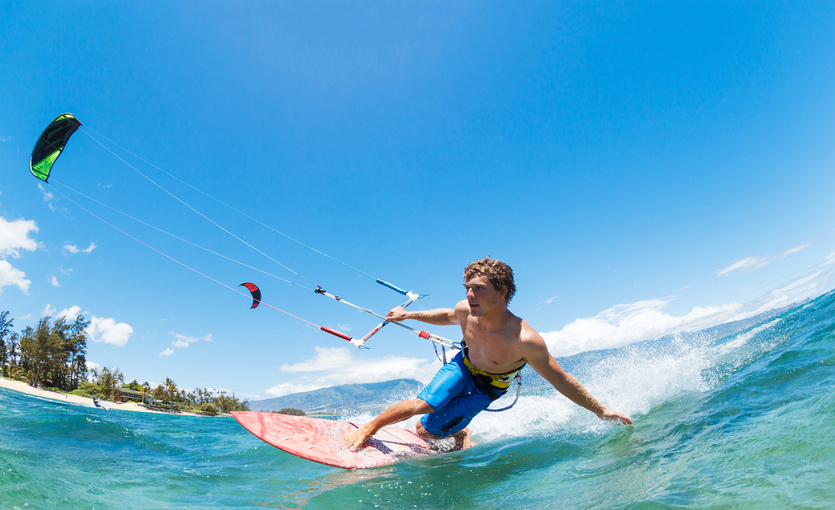
On the western side of the sandbar, the water is rough and choppy, driven by the northerly Meltemi: ideal for wave riding and for riders who want the feeling of genuinely open water. On the eastern side, the same wind produces a large flat-water lagoon that is protected enough to be suitable for intermediate riders working on their technique. Being able to walk between two completely different kitesurfing environments in the space of five minutes is a rare and useful thing, and it’s the reason Prasonisi has built such a strong reputation among European riders looking for variety. The Meltemi blows reliably from June through August, and the island’s extensive tourism infrastructure means that everything outside the kitesurfing is handled, including accommodation, food, history is handled.
Leucate, France: The Long Season on the Lagoon
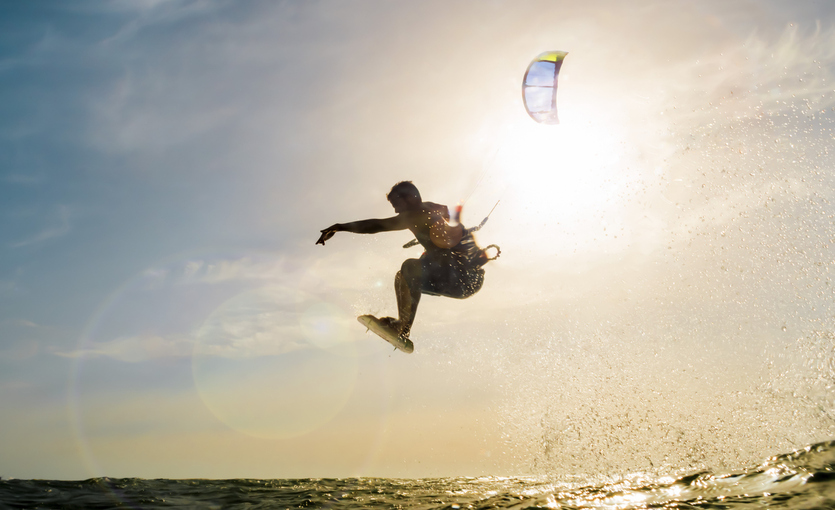
Leucate sits on a narrow strip of land between a large saltwater lagoon and the Mediterranean, in the Occitanie region of southern France, and it holds a distinction that matters a great deal to people who plan trips around wind: it has the longest reliable kitesurfing season in mainland Europe. The Tramontane, a powerful north-westerly wind that channels through the gap between the Pyrenees and the Massif Central, blows with real consistency from March through November: a window that covers shoulder seasons when everywhere else in the Mediterranean is either too cold or too calm.
The lagoon itself is large, flat, and warm, making Leucate a natural choice for riders learning or progressing. The absence of ocean swell means the water is predictable enough to concentrate on technique without managing conditions at the same time, and the consistent Tramontane winds mean you can plan a trip with a reasonable expectation that the wind will actually show up. The area around Leucate is also wine country — Fitou and Corbières are produced in the vineyards immediately behind the coast — and the combination of excellent kitesurfing and excellent eating at the end of each session makes the off-water hours considerably easier to spend than at some of the more single-minded surf destinations. Marseille is the closest major airport: a cheap flight to Marseille puts you on the lagoon within an hour or two.
Gökova Bay, Türkiye: Where You Actually Learn to Fly
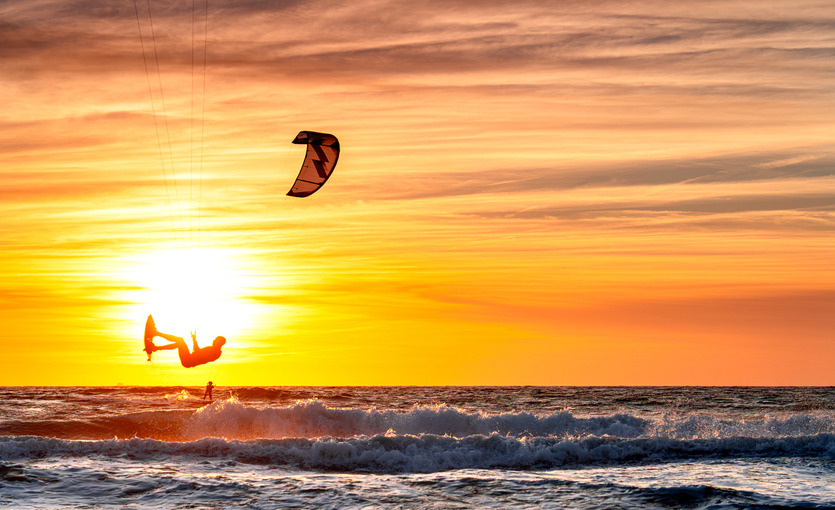
Gökova Bay occupies a long inlet of the Aegean south of the Bodrum Peninsula, surrounded by pine-forested mountains on three sides and open to the prevailing Meltem on the fourth. The combination produces wind conditions that are remarkably steady, which is the kind of consistency that makes kitesurfing schools choose their locations very carefully, and that makes nervous beginners feel considerably less nervous once they’re out on the water. The bay is wide and deep enough that the wind has room to establish itself before it reaches the shoreline, and the flat-water conditions mean that the learning curve is as gentle as this sport’s learning curve ever gets.
What makes Gökova particularly interesting is that the surrounding area is genuinely beautiful in its own right. The bay sits within a protected national park, the mountains are forested and largely undeveloped, and the boat trips out to the islands and hidden coves that punctuate the coastline are among the best in Türkiye. Accommodation ranges from simple guesthouses to boutique coastal hotels, and the evenings along the bay have a relaxed quality that makes the whole experience feel more like a holiday and less like a training camp. You can fly into either Dalaman or into Bodrum on a cheap flight to Bodrum, with Gökova Bay sitting roughly halfway between the two airports. Beautiful Coastal Towns in Türkiye to Visit covers the full picture of the Muğla coastline that Gökova sits within.