It is 1am. You are standing on a black sand beach on the south coast of Iceland and the sky is the color of a bruised peach. The sun has not set. It will not set. It dipped toward the horizon around midnight, turned the sky a sequence of pinks and golds and deep purples, and then changed its mind and started rising again. You are not tired, even though you should be, because the light will not let you be tired. This is the midnight sun, and no photograph or description prepares you for what it does to a person: the way it removes the structure of the day, the way it makes time feel provisional, the way you find yourself still outside at 3am thinking you have plenty of time because, technically, you do.
Iceland in June and July is not just Iceland with better weather. It is a different country from the one that exists in winter. The waterfalls are at full force from the snowmelt. The lupine fields are in purple bloom across the lava fields. The puffins have come back to the sea cliffs. The roads that were impassable in February are open to the highlands. And the light — that extraordinary, continuous, peach-gold light — makes the whole landscape look like something that has been specifically lit for your arrival. Book a cheap flight to Reykjavik with Pegasus, check the Pegasus route map for connections, and plan to stay longer than you think you need to. The light has a way of making that decision for you.
Diamond Beach and the Black Sand Coast
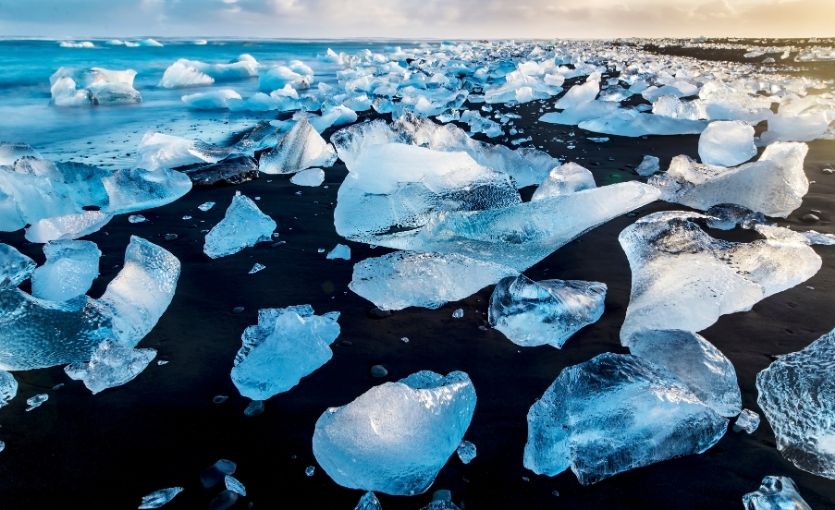
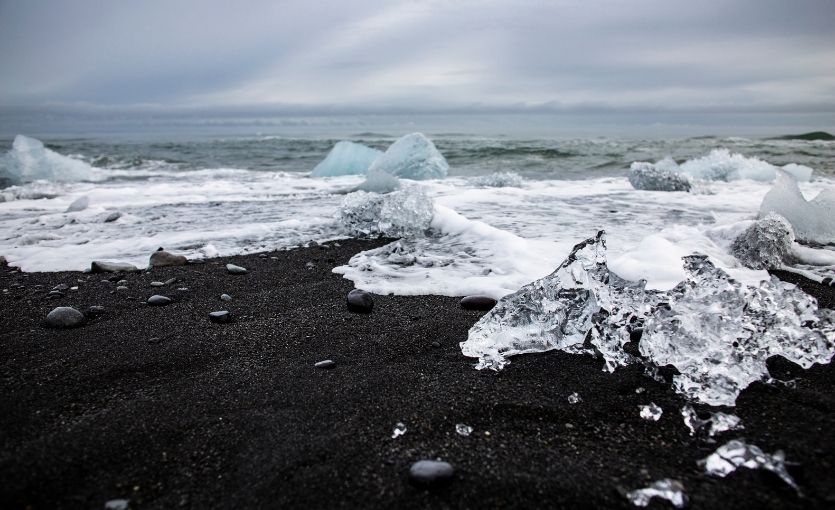
You see the photographs of Diamond Beach before you go and you assume, reasonably, that they have been enhanced. The black sand is too black, the ice too perfectly translucent, the contrast too cinematically exact. Then you stand on the beach at Jökulsárlón and watch a block of glacier ice the size of a small car roll slowly in the shallow surf, its interior glowing blue-white in the midnight sun, and you understand that the photographs were actually underselling it.
Diamond Beach sits at the mouth of the Jökulsárlón glacier lagoon on Iceland’s south coast, where icebergs calved from the Breiðamerkurjökull glacier float slowly through the lagoon, eventually reaching the sea and washing up on the black volcanic sand. The ice has been compressed for centuries, sometimes millennia, inside the glacier — the blue color comes from that compression, which forces out the air bubbles that make ordinary ice look white. In the midnight sun of June and July, these blocks of ancient ice catch the golden light and refract it in ways that make the whole beach feel like a set from a film about the end of the world. It is one of the most genuinely extraordinary things to see in Europe, and June and July are the right months because the long light means you can be there at any hour and the ice will be doing something different every time.
The beach is on Route 1, Iceland’s ring road, and accessible without a guide. Come at midnight if you can. The tourists who arrived on the afternoon tour buses have gone, the light is at its most horizontal and golden, and the beach is as close to empty as Diamond Beach ever gets in summer.
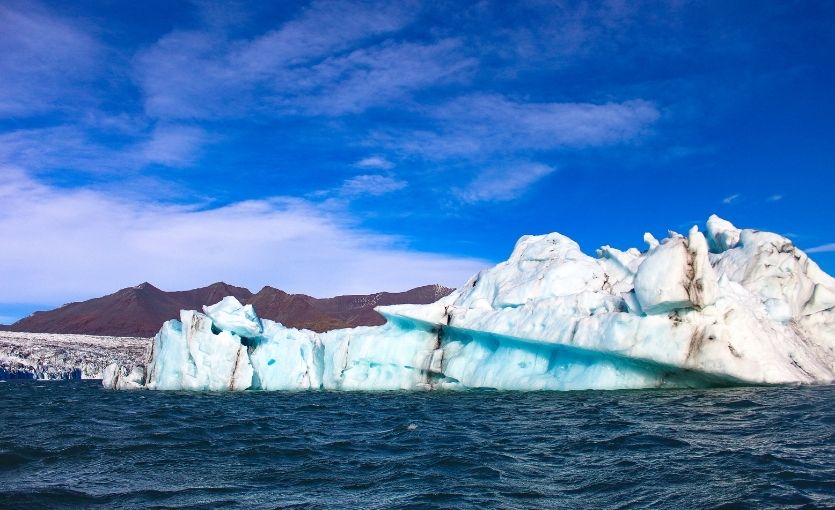
Jökulsárlón Glacier Lagoon: Inside the Ice
Behind Diamond Beach, separated from the sea by a short channel, the Jökulsárlón lagoon is where the icebergs begin their journey. The lagoon was not here a hundred years ago — it formed as the Breiðamerkurjökull glacier retreated through the 20th century and is now one of the deepest lakes in Iceland. The icebergs that float across it are blue and white and occasionally black from volcanic ash trapped inside the ice, and they move in the slow, purposeful way of things that have no particular hurry because they have been moving for longer than you can easily imagine.
Boat tours run across the lagoon throughout the summer and are worth taking: from the water, surrounded by icebergs that rise several meters above the surface and extend further below, the scale of the glacier behind becomes comprehensible in a way that standing on the shore doesn’t quite achieve. The amphibious boat tours that go directly onto the glacier ice are particularly memorable. In June and July, tours run late into the evening — the midnight sun makes 10pm trips possible and, in terms of light quality, often preferable to the middle of the day. The vatnajökull glacier, of which Breiðamerkurjökull is an outlet, is the largest glacier in Europe. The lagoon at its foot is the most accessible and most spectacular way to understand what that actually means.
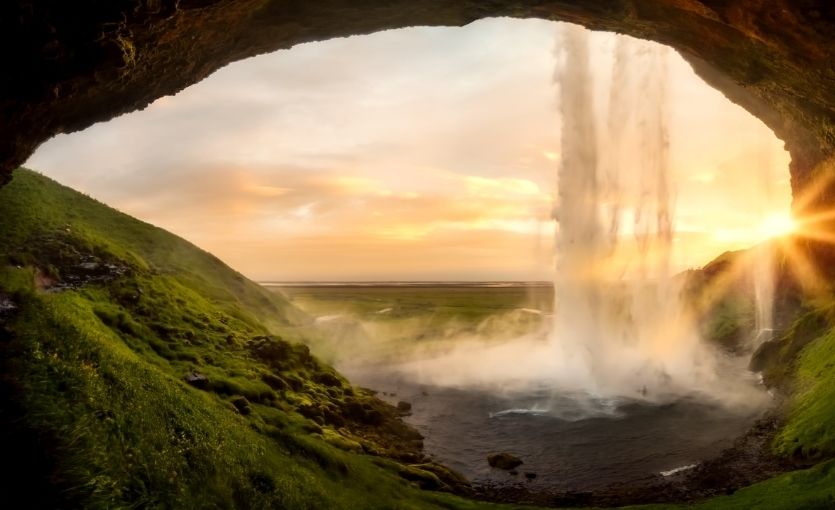
The Snæfellsnes Peninsula: Jules Verne’s Gateway to the Earth
Jules Verne set the entrance to the center of the Earth at Snæfellsjökull, the glacier-capped volcano at the tip of the Snæfellsnes Peninsula, and while the specific geology involved is fictional, the choice of location feels entirely correct. The Snæfellsnes Peninsula extends west from Reykjavik into the Atlantic like a finger pointing toward North America, and the landscape along it is one of the most dramatically varied in Iceland: lava fields, sea cliffs, fishing villages, black sand beaches, and at the end of it all the glacier itself, sitting above the peninsula in the slow, patient way of things that have been there since the last ice age and intend to remain.
The town of Stykkishólmur, about halfway along the peninsula’s north coast, is a working fishing community with a harbor full of boats and an old wooden church on the hill that is one of the most photographed buildings in Iceland. The Búðir black church, on the south coast, sits alone in a lava field above a black sand beach and is a genuinely strange and beautiful thing: a small, perfectly black building against a sky that in June and July is never fully dark. The Snæfellsjökull glacier itself is accessible by guided snowmobile or hiking tour in summer, and the view from the summit across the Atlantic on a clear June evening — which, in Iceland in June, can happen at 11pm — is the kind that stays with you.
The peninsula is two to three hours from Reykjavik by road and works well as a two-night base. In June and July the Snæfellsnes road, Route 54, is fully open and the highland tracks around the glacier are accessible. Top Coastal Escapes in Europe with Pegasus Airlines covers the broader context of Iceland among Europe’s great coastal destinations.
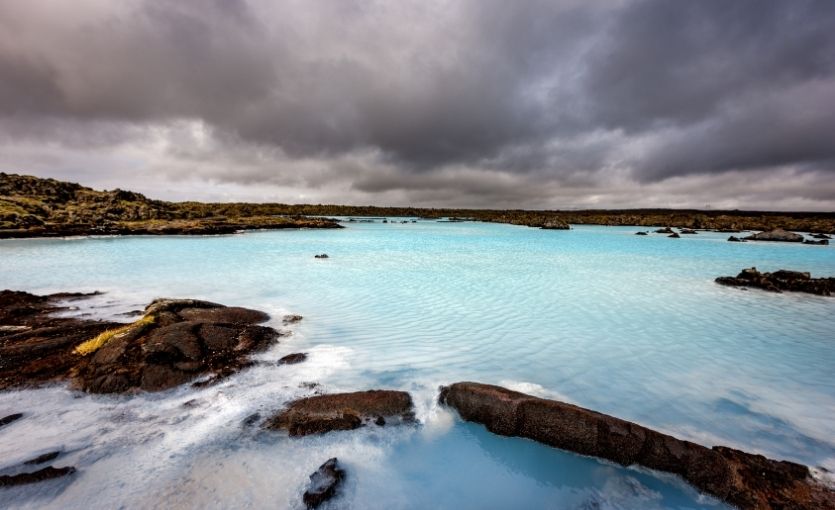
The Blue Lagoon: Why It Lives Up to Every Photograph
The Blue Lagoon is perhaps the most photographed place in Iceland and one of the most photographed places in Europe, and it has developed, partly as a result of that fame, a reputation for being overhyped. This reputation is wrong. The Blue Lagoon is genuinely extraordinary, and the reason it photographs so well is that it actually looks like that: the water is that shade of opaque, milky turquoise, the steam rises from the surface in exactly that way, and the surrounding lava field gives the whole thing a starkness that makes the warm water feel like something conjured by contradiction.
The lagoon is geothermal — heated by Iceland’s volcanic activity to a consistent 37 to 40 degrees Celsius regardless of the air temperature outside — and the water is rich in silica, algae, and minerals that give it both its color and its skin-softening properties. In June and July, the combination of warm water and midnight sun produces a specific and unrepeatable experience: you are lying in a 38-degree outdoor pool at midnight, the sun is still above the horizon casting long shadows across the lava field, and the steam rising around you catches the golden light in a way that makes the whole thing feel slightly impossible. Book well in advance — the Blue Lagoon requires reservations and the summer slots fill months ahead.
The lagoon is 20 minutes from Keflavik International Airport on the Reykjanes Peninsula, which makes it a logical first or last stop on an Iceland trip rather than a detour. The Retreat at Blue Lagoon, the hotel built directly into the lava field around the lagoon, is among the most atmospherically remarkable places to stay in Europe if the budget allows.
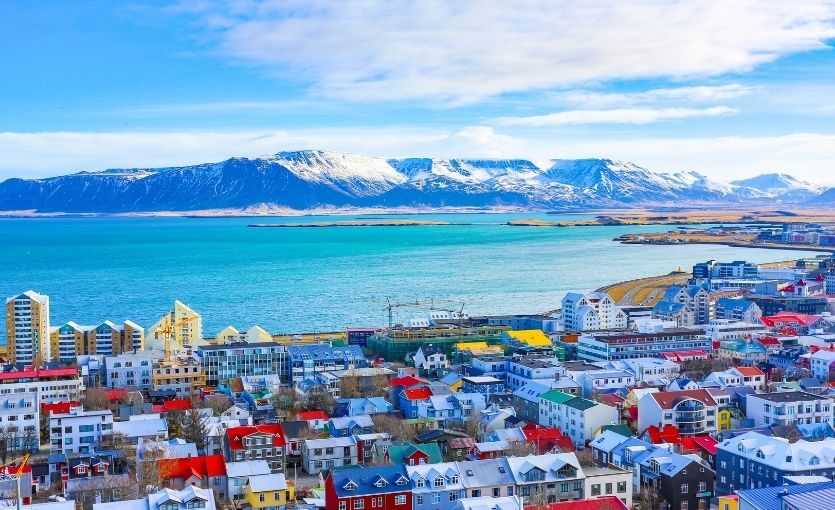
Reykjavik: The World’s Most Northerly Capital at Its Most Alive
Reykjavik has a population of around 130,000 people, which makes it one of the smallest capital cities in the world and one of the most concentrated. Everything is walkable, the food scene has developed over the past decade into something genuinely serious, and the nightlife operates on a schedule that the midnight sun has made entirely its own: the bars and restaurants on Laugavegur, the main street, are full until 4am in June because no one can tell that it’s 4am from looking outside. The city has an energy in summer that is specific to the season — a slightly manic, time-has-dissolved quality that the locals ride with the confidence of people who have been doing this every June for their entire lives.
The Hallgrímskirkja church, with its concrete basalt-column facade rising above the city center, is the obvious landmark — take the elevator to the top for the best view of the city and the surrounding landscape. The Harpa concert hall on the harbor, designed by Henning Larsen and Olafur Eliasson, is worth seeing from the inside: the geometric glass facade plays differently at every hour of the day, and in the midnight sun it does things with light that the architects can only have designed after spending a great deal of time outside at midnight in Iceland. The National Museum of Iceland covers 11 centuries of settlement with enough depth to justify half a day.
The Ring Road in June and July: Driving Iceland Around the Clock
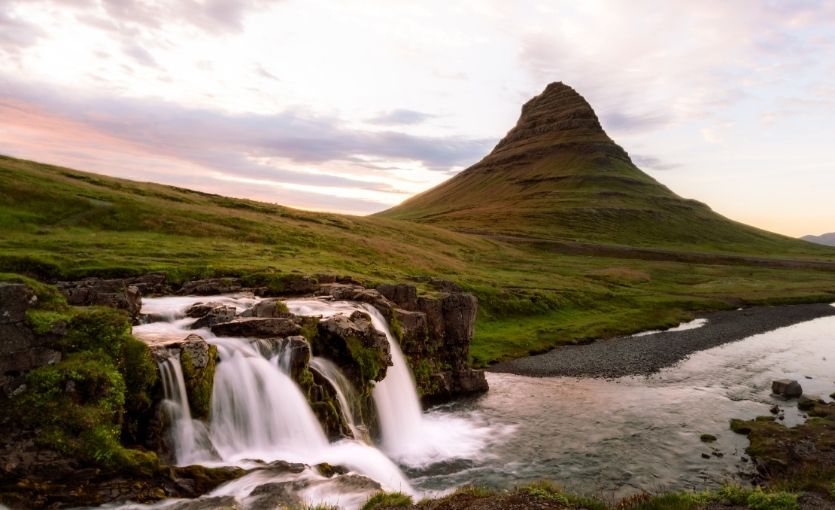
Iceland’s Route 1, the ring road, circles the entire country in 1,332 kilometers and is the organizing principle of most Iceland road trips. In June and July it has a particular quality: you can drive it at any hour, because the light is always sufficient, and the decision of when to stop is not forced by darkness but by the more interesting question of what you want to see next. The standard ring road takes seven to ten days to complete properly, stopping at the major sites and taking at least some of the highland detours that are only possible in summer.
The south coast — the stretch from Reykjavik past Seljalandsfoss and Skógafoss waterfalls, along the black sand beaches of Vík, to the glacier lagoon — is the most densely spectacular and the most visited. The east fjords are the quietest and the most rewarding for those who want the Iceland that hasn’t been photographed as much: deep fjords, small fishing villages, and roads that descend to sea level and climb again in a continuous series of revelations. The north, centered on Akureyri, has the Mývatn lake system — one of the most geologically active landscapes on earth, with mud pots, lava formations, and geothermal swimming areas that you share with local farmers rather than tour groups. The Summer Solstice Circuit covers Iceland as part of the broader European midsummer story.