August in Türkiye is hot, vivid, and very full in the places that everyone already knows about. But step sideways from the obvious choices and the country opens up: a river village where the water runs cold even in the height of summer, a Black Sea town where the hillsides are an impossible shade of green, a peninsula at the edge of the Aegean where you can swim in a cove and be the only person in it. The destinations in this guide are built for August precisely because they offer something the famous resorts can’t: relief, space, and the particular pleasure of being somewhere that rewards the extra effort of getting there. Some have direct Pegasus flights; where they don’t, the nearest airport and onward connection is noted. Book your cheap flights to Türkiye early — August fills fast. Check the Pegasus route map for the connection that works best from your starting point.
Akyaka
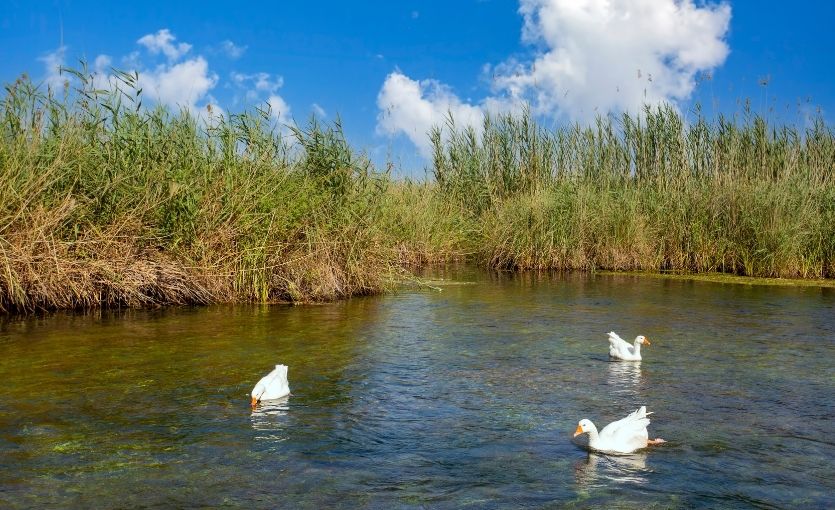
You will know Akyaka is different the moment you step into the Azmak River. It is the middle of August, the air temperature is pushing 35 degrees, and the water is 17 degrees Celsius — fed by underground springs, indifferent to the season, cold enough to make you gasp and immediately want to go back in. The river runs from those springs through a reed-lined channel to the Gulf of Gökova, and the village of Akyaka has built its life along its banks: wooden Ottoman-style houses, cafes with their tables set over the water, restaurants where the menus change based on what the morning brought in. The whole place is a Cittaslow town — an international designation for communities committed to a slower pace of life — and that commitment is visible in the architecture, the absence of neon, and the speed at which an afternoon can disappear.
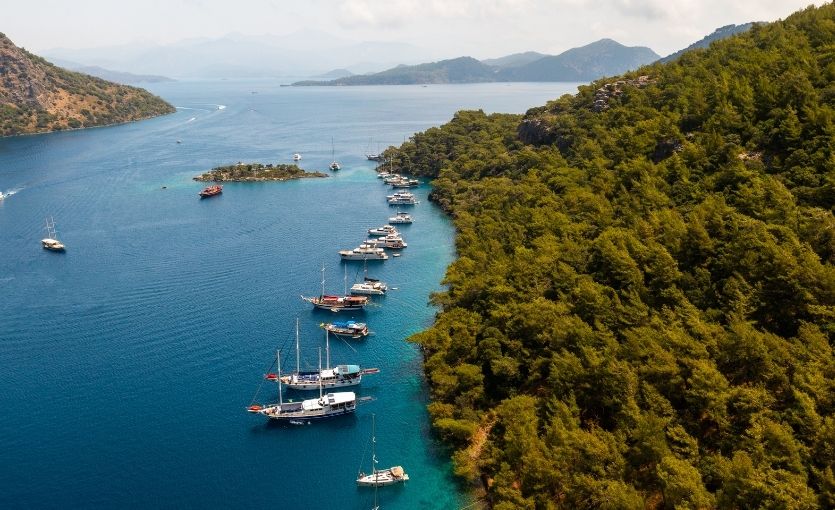
The bay beyond the river mouth faces the Gulf of Gökova, and the Meltem wind that funnels through the gulf in summer makes Akyaka one of the better windsurfing and kitesurfing spots on the Turkish coast. The pine hills behind the village have walking trails that give you shade when you need it and views over the gulf when you want them. In the evenings the riverside tables fill up, the light goes golden on the water, and the idea of leaving acquires a kind of theoretical quality. For more on the Muğla coastline surrounding Akyaka, covers the full picture.
Getting there: Fly into cheap flights to Dalaman — about 65 kilometers from Akyaka, roughly an hour by car or shuttle.
Urla
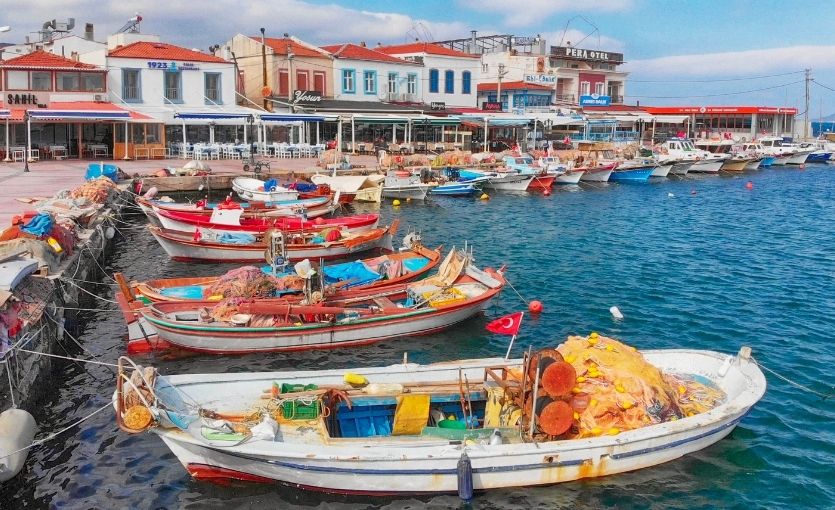
Urla is the kind of place that makes you reconsider what a town is supposed to do with itself. The old market street is lined with ceramics studios, small galleries, and wine bars in restored stone buildings, and on a Saturday morning the weekly producer market fills it with the particular energy of people who have made things they’re proud of and want you to try them. The artichoke season has finished by August but the grape harvest is close enough that the vineyards around the town are heavy and green, and the local wine producers — Urla has its own appellation and some genuinely serious small cellars — are pouring through the summer. You taste a glass of local white on a shaded terrace and understand immediately why people talk about this peninsula the way they do.
The bays on the western edge of the Çeşme Peninsula are warm and clear in August, and the ruins of Klazomenai — one of the twelve cities of the Ionian League, now partly underwater in the shallow bay north of town — reward a morning’s careful exploration. The fish restaurants along the waterfront do the thing that the best Turkish seafood restaurants always do: the menu is whatever came in, and it arrives with bread and olive oil and the suggestion that you’re in no particular hurry. 3 Days in İzmir covers how to combine Urla with a broader İzmir itinerary, and Türkiye’s Best Wine Villages You Haven’t Visited Yet covers the peninsula’s wine culture in depth.
Getting there: Fly into cheap flights to İzmir — Urla is about 45 kilometers west of the city, a straightforward drive or local bus connection.
İzmir Karaburun
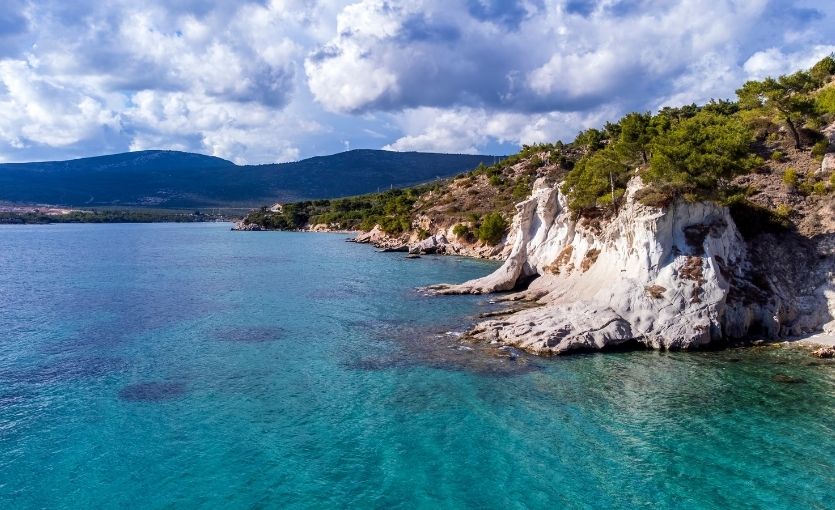
There is a stretch of Aegean coastline northwest of İzmir that almost nobody goes to, and it looks the way the Turkish coast looked before tourism arrived. Karaburun is a peninsula of small fishing villages, rocky coves, and water that runs deep and clear without a sun lounger in sight. You drive out from the city through olive groves and scrubland, the road narrowing as the peninsula does, and by the time you reach the main village you have the mild, pleasant sensation of having gone somewhere most people don’t bother to find. The harbor has fishing boats in it. The Thursday market serves the local community rather than tourists. The restaurants serve the catch.
The monk seals that occasionally surface in the waters around the peninsula are the most reliable indicator of how little pressure this coastline has been under. In August, when everywhere else on the Aegean is at maximum capacity, Karaburun is the version of the coast that feels like it has been kept in reserve. A hire car is essential — the best coves require your own transport and a willingness to follow tracks that aren’t fully marked on maps. Silent Travel: 8 Quiet Turkish Destinations covers Karaburun alongside similar discoveries across the country.
Getting there: Fly into İzmir (see above). The peninsula is about 80 kilometers northwest of the city — a hire car is strongly recommended, as public transport is limited and the best coves require your own wheels.
Kuşadası and Şirince
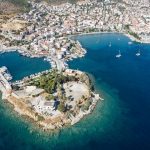
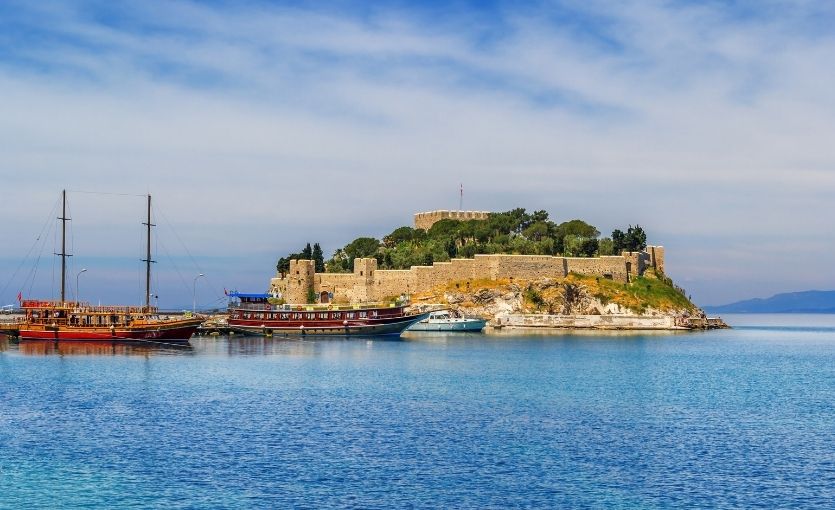
Kuşadası and Şirince are close enough to visit together and different enough to make doing so genuinely worthwhile. Kuşadası is a working resort town on the Aegean coast of Aydın province — good beaches, a fortified island in the harbor that you can walk across to, and immediate access to Ephesus, one of the great Roman cities of antiquity. The trick with Ephesus in August is timing: arrive at 8am, before the heat builds and before the day-trip crowds arrive from the cruise ships in the harbor, and the marble colonnades and the Library of Celsus and the Great Theater are extraordinary. Wait until noon and you are sharing them with thousands of other people in full sun.
Şirince is a different kind of relief entirely. Eight kilometers inland from Selçuk, at an altitude that takes the edge off the August heat, the village sits among olive and fruit orchards on a hillside of whitewashed stone houses. The fruit wines for which it is famous — cherry, peach, pomegranate — are sold at stalls throughout the village, and the views from the upper terraces over the orchard-covered valley below are the kind that make you stay longer than planned. In the late afternoon when the day-trippers have gone back down to the coast, the village settles into a quiet that feels entirely disproportionate to how close it is to everywhere else. Türkiye’s Best Wine Villages You Haven’t Visited Yet covers Şirince in context.
Getting there: Fly into İzmir (see above). Kuşadası is about 90 kilometers south; Şirince is reachable from Selçuk, well-connected by bus from both İzmir and Kuşadası. A hire car gives the most flexibility across both.
Rize
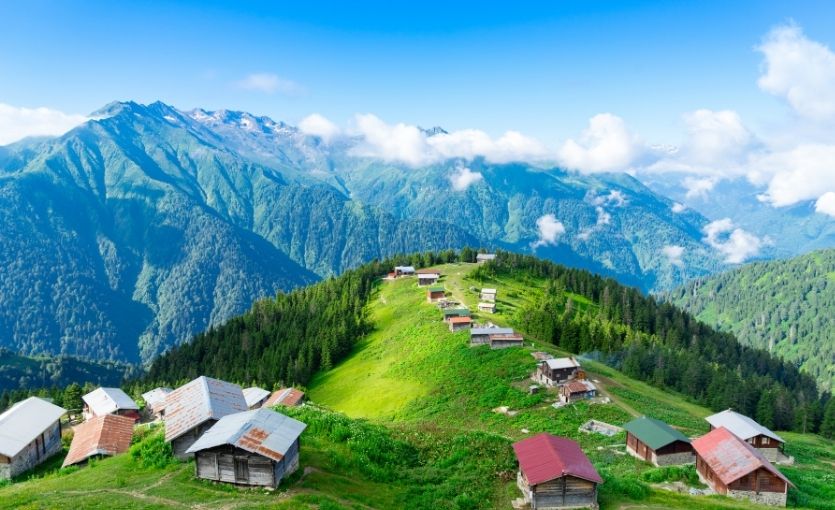
Step off the plane at Rize-Artvin Airport and the first thing you notice is that the air is different. It’s cooler, heavier, and it carries something green in it — the particular smell of a landscape that receives more rain than almost anywhere else in Türkiye, where the hillsides above the city are terraced with tea gardens from the shoreline to the cloud line. After a week on the Aegean coast, the lushness of Rize is almost disorienting: the mountains are dark with forest, the streams run fast and cold, and the sky, when it isn’t blue, is the productive grey of somewhere that has understood for centuries that rain is not the enemy.
The tea culture is not a performance here but a daily fact: çay is grown and processed and consumed with the confidence of a tradition that doesn’t need to explain itself to you. The Fırtına Valley, running inland past medieval stone arch bridges toward the Ayder plateau at 1,350 meters, is one of the great short drives in Türkiye: the gorge walls close in, the river runs green below the road, and the plateau at the top opens onto hot springs and mountain views and a version of highland village life that the lower valleys have largely lost. The Most Popular Traditional Foods of the Black Sea Region covers what to eat here, and Wellness Weekends: Thermal Springs and Tranquil Villages in Türkiye covers Ayder in detail.
Getting there: Pegasus flies directly into cheap flights to Rize-Artvin — one of the most scenic approaches in Türkiye, built on a platform over the Black Sea. Alternatively fly into cheap flights to Trabzon, about 75 kilometers west, well-connected by road.
Sinop
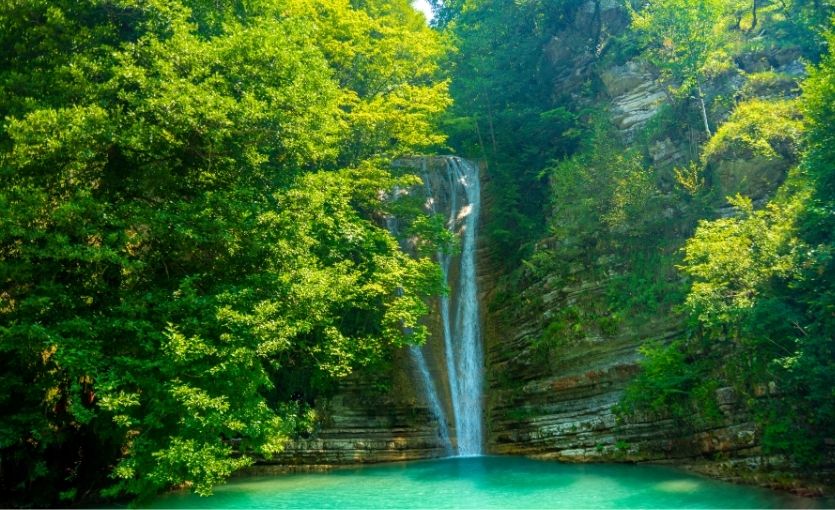
Sinop is the northernmost point of the Turkish mainland, and it feels like it. The town occupies a narrow peninsula on the Black Sea and has a stillness about it that the more southerly resorts don’t manage: the harbor faces both east and west, the old city walls built by the Pontic kings still stand around much of the peninsula, and the fish restaurants inside them serve their catch without any particular interest in impressing you. On a calm August morning the Black Sea is flat and the boats’ reflections are perfect in the water, and the town’s classical heritage — Sinope was the birthplace of Diogenes, who told Alexander the Great to stop blocking his sunlight — sits in the background with appropriate nonchalance.
The beaches east of town, particularly Kumsal Beach and the coves around Hamsilos Bay, offer Black Sea swimming that is cooler than the Mediterranean and Aegean — a genuine and welcome advantage in the peak of summer. You swim, you eat fish, you walk the walls, and the day takes care of itself. Türkiye’s Hidden Highlands: Cool Escapes for Summer covers the broader Black Sea region that Sinop sits within.
Getting there: Pegasus flies directly into cheap flights to Sinop — check availability early as the route is seasonal. Alternatively fly into cheap flights to Samsun, about 170 kilometers west, and take the coastal road east — worth doing for the scenery.
Kaz Dağları
You drive up from the coast and the temperature drops a degree for every hundred meters of altitude, and by the time you reach the black pine forest the air is genuinely cold and the idea that you were sweating on a beach an hour ago seems slightly implausible. Kaz Dağları — known in antiquity as Mount Ida, where Homer’s gods watched the Trojan War unfold on the plain below — rises above the northwestern Aegean coast with a seriousness that the coastal landscape below doesn’t hint at. The pines are old and tall, the springs that run through the valleys are cold and clear, and the trails cross meadows at altitude where the wildflowers are still holding on in early August and the only sounds are wind and running water.
The mountain villages — Adatepe and Yeşilyurt are the most welcoming — have guesthouses and home-cooked meals built around what the mountain produces: wild mushrooms, highland honey, yogurt from the village dairies. At 10 to 12 degrees cooler than the coast, hiking here in August is not just possible but actively pleasurable, which is a sentence you cannot write about most of Türkiye in this month. Kaz Mountains (Mount Ida): Places to Visit covers the trails in detail, and Türkiye’s Top Treks places Kaz Dağları in the context of the country’s best walking terrain.
Getting there: The nearest Pegasus airport is cheap flights to Balıkesir-Edremit, around 30 to 40 kilometers from the western villages. Alternatively fly into İzmir (see above) or Çanakkale and drive — both routes take around two hours through Aegean landscapes worth the journey.
Weather in Türkiye in August
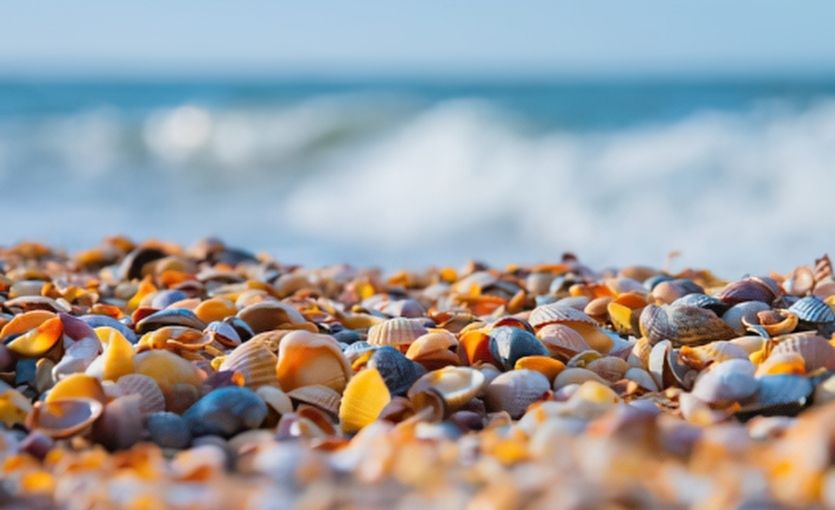
August is Türkiye’s hottest month. Coastal temperatures on the Aegean and Mediterranean regularly reach the mid-30s Celsius (mid-90s Fahrenheit). The Black Sea coast is significantly cooler at 22 to 26 degrees Celsius (72 to 79 degrees Fahrenheit), and the mountain destinations in this guide — Kaz Dağları especially — sit 10 to 12 degrees below the coast at altitude. August is also the driest month across the Aegean and Mediterranean regions: almost no rain, very long days of sunshine, and sea temperatures peaking at around 26 to 28 degrees Celsius (79 to 82 degrees Fahrenheit).
Carry water whenever you’re outdoors, apply sunscreen generously, and plan any serious walking for early morning or late afternoon. Book accommodation well in advance — August is peak season across all of these destinations. Use how to find cheap flights to secure the best fares early, check the baggage allowance page before you pack, consider the upgrade package if your plans might shift, and pre-order your in-flight meal up to 24 hours before departure via the Pegasus Café pre-order menu so you’re ready to go from the moment you board.