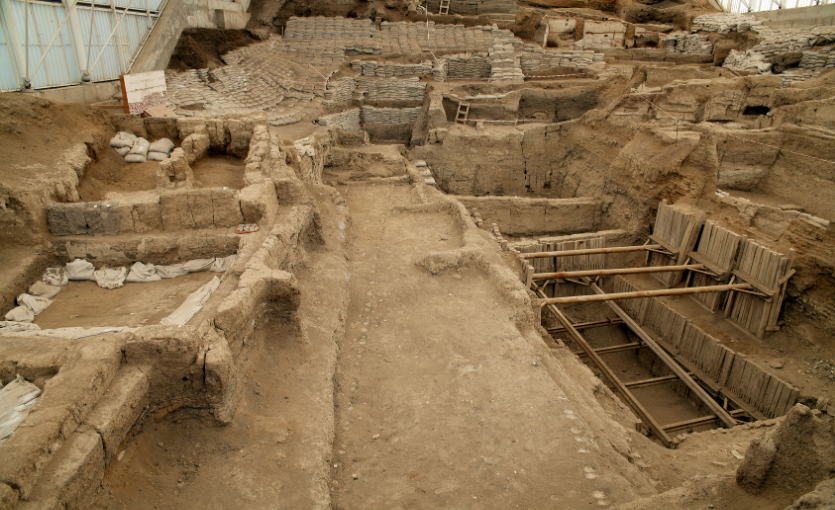
Close your eyes and imagine there are no streets beneath your feet, no doors ahead of you, only a rooftop, a ladder, and a hole cut into mud plaster leading down into the dark. You climb down into a single room lit by a hearth, its walls smoothed white by hands that repainted them again and again for generations, and somewhere beneath the floor you are standing on, a family member lies buried, curled into the fetal position, close enough that the living and the dead have shared the same roof for nine thousand years. This is not a myth or a reconstruction in a museum diorama. This is Çatalhöyük, and if you book cheap flights to Konya, you can stand on the same earth where humanity first tried out something entirely new: living, permanently, shoulder to shoulder with thousands of strangers.
A flight to Türkiye for most people means Istanbul’s skyline or Cappadocia’s balloons. Çatalhöyük sits quietly on the Konya Plain in Central Anatolia, two low mounds of earth that look, at first glance, like nothing at all. But beneath that unremarkable soil is one of the most debated, most rewritten, and most human sites on the planet, a place where archaeologists are still arguing about what we got wrong the first time. A visit here is not a walk past velvet ropes and gift shop replicas. It is a walk into the very moment our species decided to stay put, and the ground has not finished telling us why.
Where Is Çatalhöyük, and Why Does It Matter So Much?
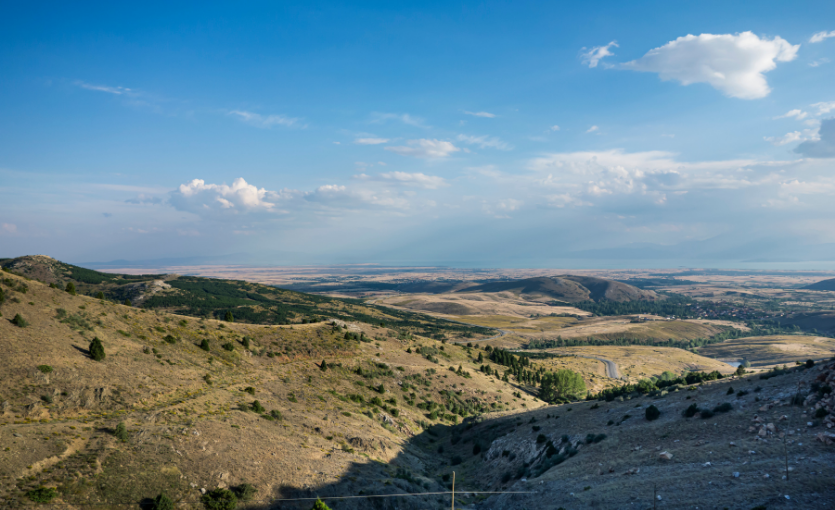
Çatalhöyük lies about 50 kilometers southeast of Konya’s city center, within the Küçükköy neighborhood of the Çumra district, just 10 kilometers from Çumra itself. The name means forked mound, a nod to the two low hills that make up the site, separated by the dry bed of an old branch of the Çarşamba River.
- The East Mound is the larger, older, and taller of the two, holding nearly every layer of the Neolithic settlement stacked one atop the next
- The West Mound is lower and younger, dated to the Early Chalcolithic, and marks a genuine shift in architecture, pottery, and daily life rather than a simple continuation
- UNESCO added Çatalhöyük to the World Heritage List in 2012, one of dozens of Turkish sites to earn that status; see our UNESCO Uncovered: Traveling Through Time in Türkiye for the full list
- Unlike a classical ancient city, there are no colonnaded streets, no temples, no palace. Life here was organized at the scale of the household, which is precisely what makes it so radical
A City Without Streets
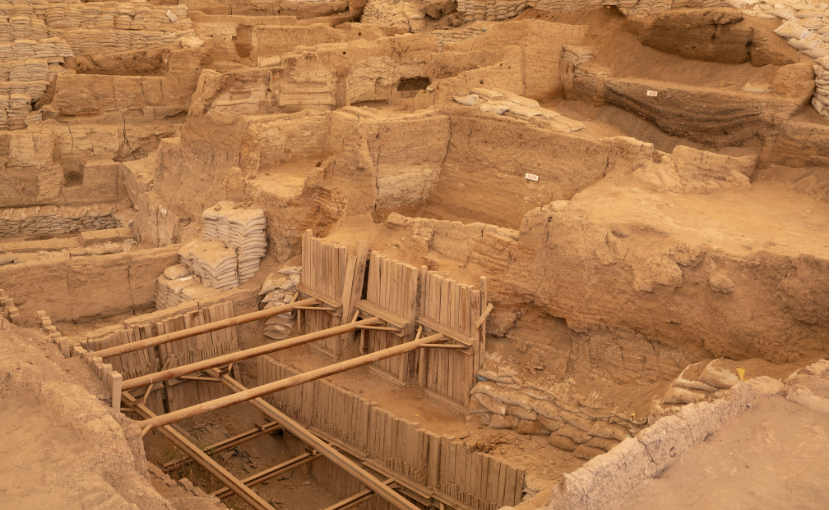
Walk the excavation area under its protective shelters and the strangeness of the place sinks in fast. Houses sit directly against one another, wall to wall, with no streets or alleys separating them at all. To get anywhere, people once crossed the rooftops, dropping down into their own home, or a neighbor’s, through a hole in the ceiling reached by a wooden ladder.
- Homes were entered exclusively from above, through a roof opening, since there were no ground-level doors
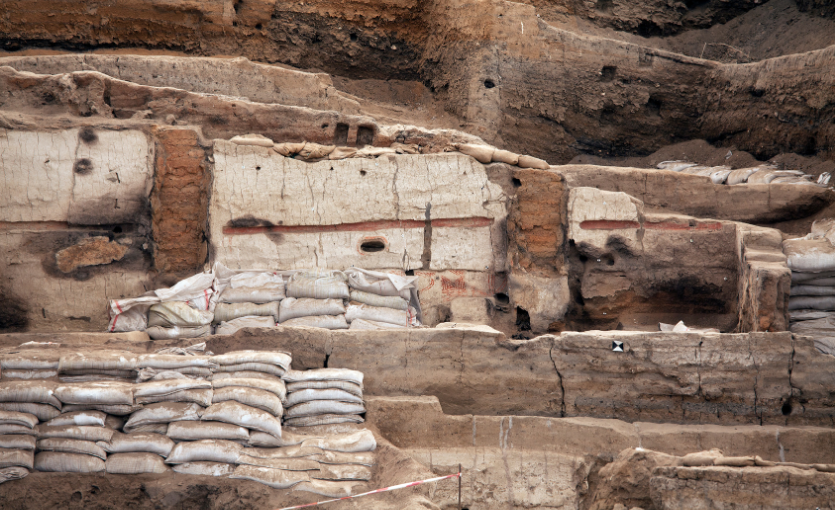
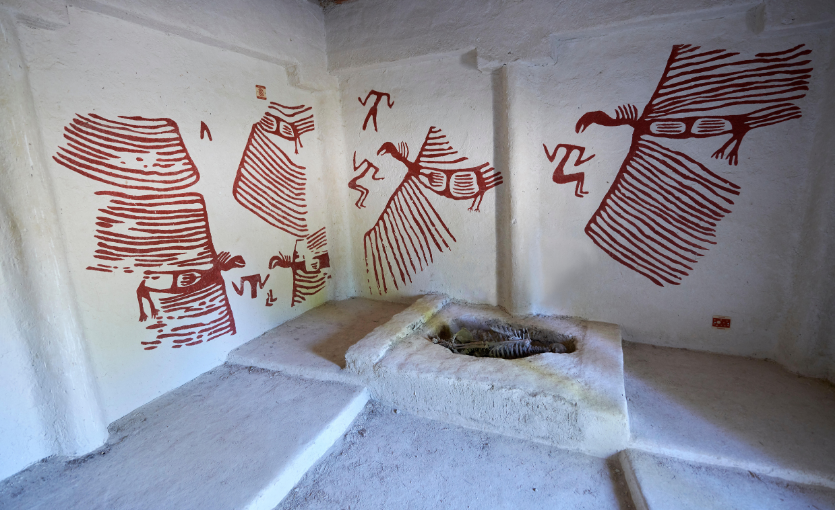
- Interior walls were replastered and whitewashed so often that some structures show hundreds of layers of plaster, a maintenance ritual that doubled as an act of memory
- The dead were buried beneath the platforms where the living slept and ate, so a household’s history was literally layered under its own floor
- A recent excavation season uncovered the earliest known remains of a Neolithic wooden ladder, the very object that once carried residents down from their rooftops
The Myths Science Is Still Rewriting
For decades, Çatalhöyük was taught as the world’s first city and the seat of a mother goddess cult, two ideas so vivid they hardened into fact long before the evidence was fully in. Today, researchers are far more careful with both claims, and the site itself is why. There are no monumental temples here, no palace, no dedicated cemetery separate from the houses. Everything, ritual and daily life alike, seems to have happened at the same household scale, which does not fit neatly into either legend.
- The famous seated female figurines are real and genuinely striking, but they sit alongside just as many animal and abstract forms, which weakens the idea of a single, centralized goddess cult
- A landmark 2025 study in the journal Science analyzed ancient DNA from more than 130 individuals buried across dozens of houses on the East Mound
- Early in the settlement’s history, people buried under the same house were close blood relatives. Centuries later, they often were not, and where a genetic thread survived, it ran through the maternal line for roughly a thousand years
- Grave goods were more often left with girls than boys, a detail that does not prove Çatalhöyük was ruled by women, but does suggest female lineage held the community together in ways archaeologists are only now able to measure
Recent seasons have added smaller, stranger clues to that picture too, including a marble figurine unlike any classical example found before, and a fragment of bread believed to have been baked from fermented barley, quietly rewriting what we thought we knew about Neolithic kitchens as much as Neolithic belief.
What to See at Çatalhöyük
This is not a ruin you glance at from a viewing platform. Set aside two to three unhurried hours to take in all four parts of the site properly.
- East Mound: the main excavation, where sheltered cross sections reveal plastered walls, hearths, storage spaces, and burials beneath the floor, exactly as they were found
- West Mound: quieter and less visited, where new architecture and pottery mark the community’s move west after the East Mound was abandoned
- The Reconstructed House: a full scale, walk-in replica complete with hearth, sleeping platforms, wall decoration, and the roof entry hole, the closest thing to actually living in a Çatalhöyük home
- The Visitor and Reception Center: opened in 2023 and built almost entirely from wood, its exhibits are worth seeing before you walk out to the mounds themselves, since they frame everything that follows
What to Eat Near Çatalhöyük
There is a certain thrill in eating well a few hundred meters from where archaeologists found a fragment of fermented barley bread nine thousand years old, proof that people have been experimenting with dough on this exact plain since long before anyone wrote it down, an early chapter in the long story our Turkish cuisine guide picks up thousands of years later. The site itself has a small on-site cafe for a coffee or simple snack, but the real meal is in Çumra or, better, back in Konya itself.
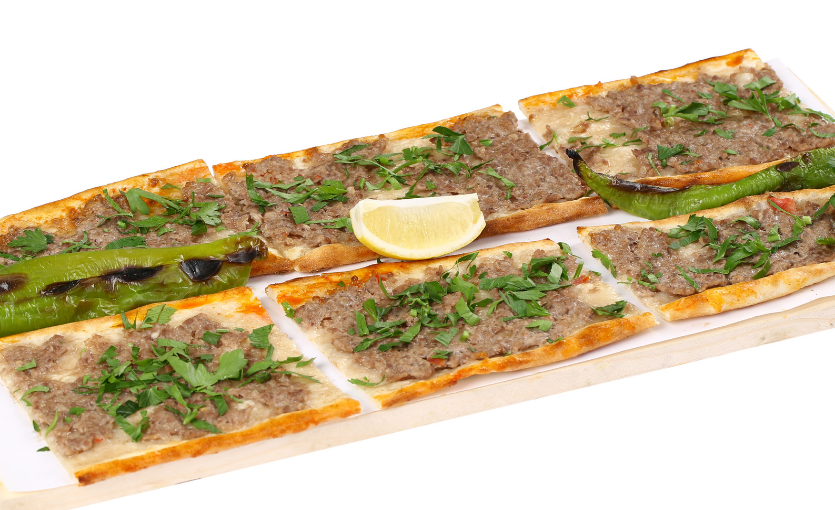
- Etli ekmek, a thin, boat-shaped flatbread topped with minced lamb, is Konya’s signature dish and the one thing you should not leave the region without trying
- Fırın kebabı, lamb slow roasted in a stone oven until it falls from the bone, is a Konya specialty best eaten at lunch
- Tirit, shredded flatbread soaked in meat broth and topped with browned butter, is Konya comfort food at its most unpretentious
- Konya is also famous for its rice pudding and for a dry, chewy grape-based sweet called Mevlana pekmezi, a fitting way to end a day spent nine thousand years in the past
How and When to Get to Çatalhöyük
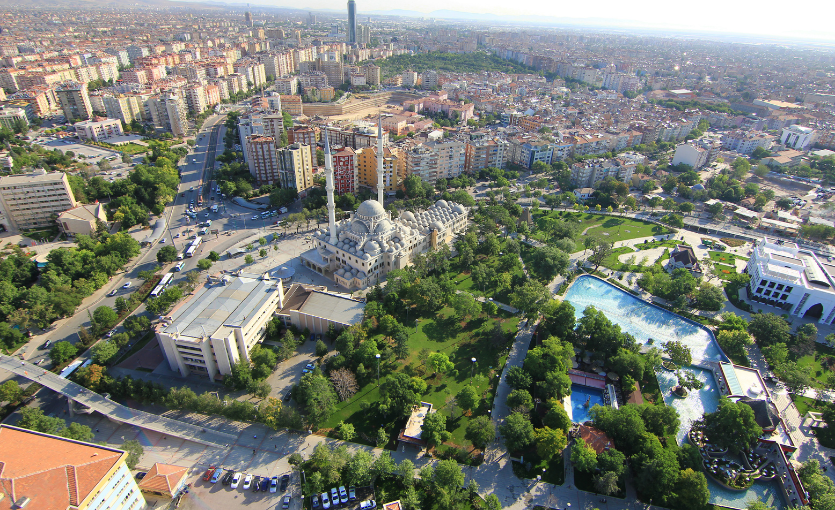
Fly first, and let the road handle the rest. Book your flight into Konya, where Konya Airport sits about 18 kilometers from the city center, reachable by shuttle, taxi, or rental car.
- By car: head toward Çumra from Konya, about an hour’s drive, with free parking at the site entrance
- By public transport: take a regular minibus from Konya to Çumra, then a shared minibus in summer or a taxi the rest of the year for the final stretch to the excavation
- By train: ride toward Karaman from Konya and get off at Çumra, then continue by taxi
- Best months: April to June and September to October, when temperatures are mild and the light across the open plain is at its best for photography
The site is open daily, 9 a.m. to 5 p.m., with the ticket office closing at 4:40 p.m. Much of the excavation sits under protective shelters, so light rain will not ruin your visit, but summer midday heat on the open plain is worth avoiding with an early start. Bring comfortable shoes, a hat, and water, since you will be walking in open ground with limited shade.
Beyond the Mounds: What Else to See
Çatalhöyük rewards a half day on its own, but Konya around it deserves at least two or three more. Base yourself in the city and this becomes a genuinely rich regional trip rather than a single stop.
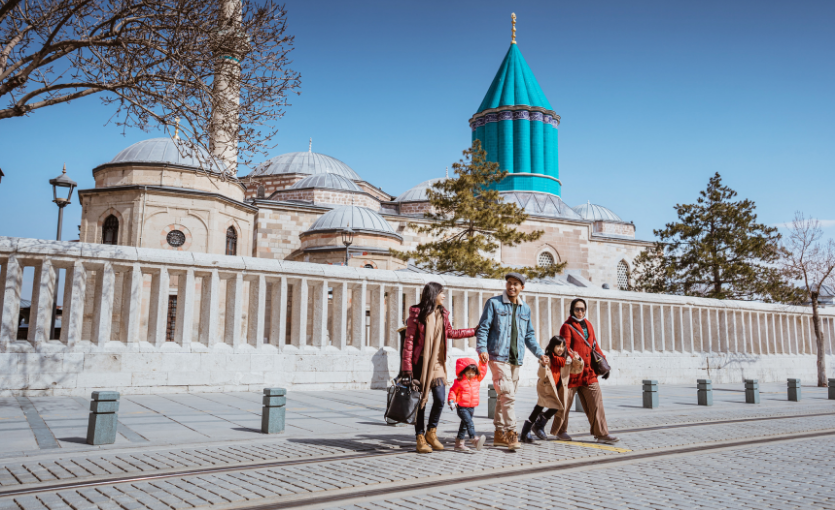
- The Mevlana Museum, resting place of the poet and mystic Rumi and the spiritual heart of the Mevlevi order, anchors Konya’s city center
- Karatay Madrasa, with its extraordinary tiled dome, and the Alaeddin Mosque on its hilltop park are essential stops for Seljuk architecture
- Sille, a stone village of rock-cut churches just outside the city, feels like a smaller echo of Cappadocia and makes an easy half-day trip
- Eşrefoğlu Mosque in Beyşehir, a UNESCO-listed wooden-pillared mosque, is worth the drive further out if your schedule allows
For the fuller list of what to see and eat in the city, the Konya travel guide and our own Everything You Need to Know About Konya both go deeper into the museums, madrasas, and street food scene, and our 10 Historical Destination in Turkey widens the lens further still, from Istanbul to Mardin. If Çatalhöyük leaves you hungry to travel even further back in time, our roundup of Places to Visit in Turkey covers Göbeklitepe, the site now believed to be the oldest known monumental structure on Earth, thousands of years older still, and a fitting next stop for anyone chasing the very beginning of human settlement.