 Central Asia has spent a decade quietly becoming one of the most rewarding regions you can fly to, and Pegasus has made it one of the easiest. Nine cities across Kazakhstan and Kyrgyzstan sit on the network now, so your Central Asia trip can start under the snow line of the Tian Shan, among Norman Foster tents and glass pyramids, on a Caspian beach or in a 3,000-year-old bazaar. Every one of them is a single Istanbul connection away, and the flying time from Sabiha Gökçen to Astana is under five hours.
The two Stans here are Kazakhstan and Kyrgyzstan. The third is a wink: Türkistan, the Kazakh pilgrimage city a couple of hours from Shymkent that gave the whole region its name and holds the finest Timurid monument outside Uzbekistan. Between them, these nine cities cover snow, steppe, sea, Soviet grandeur and Silk Road grit. Here is how to string them together.
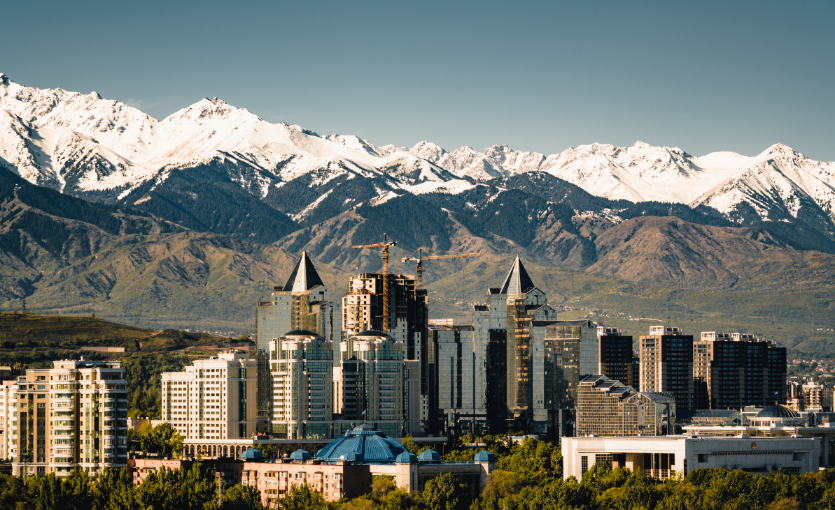
Almaty: The Original Big Apple
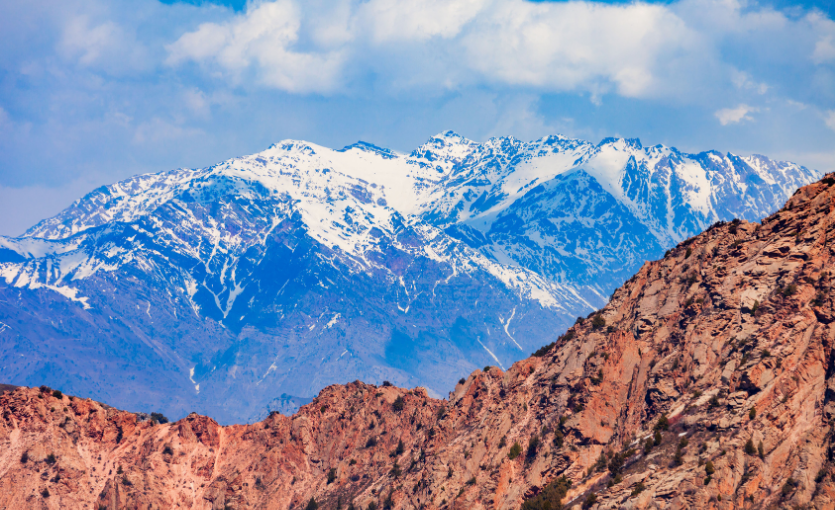
Almaty is the natural first landing in Central Asia, and the one city on this list where you can ski in the morning and eat in a leafy Soviet-era courtyard by dinner. The Tian Shan rise straight out of the southern suburbs, so the Medeu ice rink and the Shymbulak ski resort are a bus ride from the center, and the cable car up Kok-Tobe hill gives you the whole city with the peaks stacked behind it. Locals will tell you the name means “father of apples,” and the wild Malus sieversii in the surrounding valleys is a plausible ancestor of every apple you have ever eaten. New York can keep its nickname; this is the first Big Apple.
Downtown, walk the tree-lined grid from Panfilov Park, where the wooden Zenkov Cathedral was raised without a single nail and survived the 1911 earthquake, to the Green Bazaar for dried fruit, kurt cheese balls and horse sausage sold by the meter. Give yourself a day trip too. Big Almaty Lake is a turquoise reservoir at 2,500 meters, and Charyn Canyon, three hours east, is a red-rock rift that looks like a compressed Arizona. Book cheap flights to Almaty from both Istanbul Sabiha Gökçen and Antalya, which makes a Turkish beach week followed by a Kazakh mountain week entirely realistic. The Almaty travel guide has the seasonal detail and the airport-bus routes into the center.
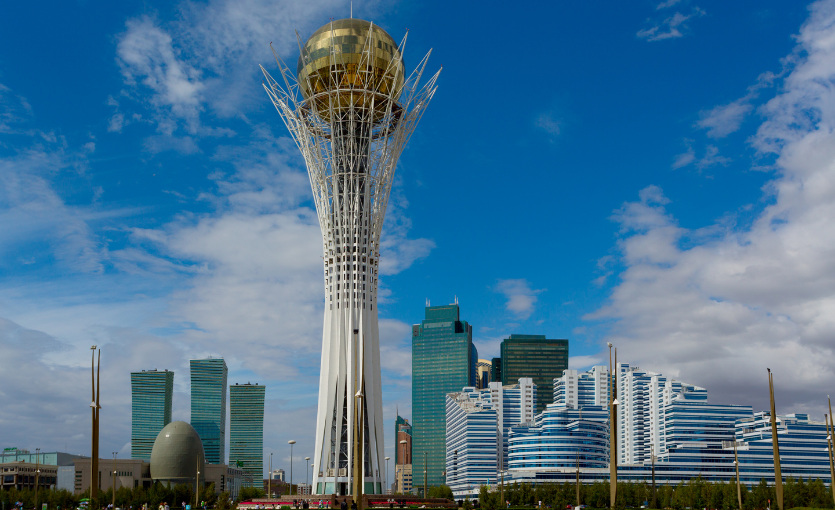
Astana: Sci-Fi on the Steppe
Astana is the opposite of Almaty in almost every way, which is exactly why you should see both. A modest provincial town until it became the capital in 1997, it has since been built at speed and scale on the open northern steppe, with a skyline that reads like a competition entry. The Bayterek Tower is the symbol, a 97-meter white trunk holding a golden egg, and from inside that egg the view down Nurzhol Boulevard takes in Norman Foster’s Khan Shatyr, a translucent tent sheltering a shopping center and an indoor beach with sand shipped from the Maldives, and his glass Palace of Peace and Reconciliation pyramid across the Ishim River.
Two mosques anchor the newer districts. The Hazrat Sultan is one of the largest in Central Asia, and the older Nur-Astana is the quieter neighbor, its gold dome visible from the river embankment. The National Museum on Independence Square puts the whole country in context, from Scythian gold to the cosmodrome at Baikonur. Winters here drop to minus 30, so treat this as a spring, summer or early-autumn city. Pegasus flies direct from Sabiha Gökçen; search cheap flights to Astana and let the Kazakhstan travel guide cover getting from the airport into the center on the number 10 and 12 buses.
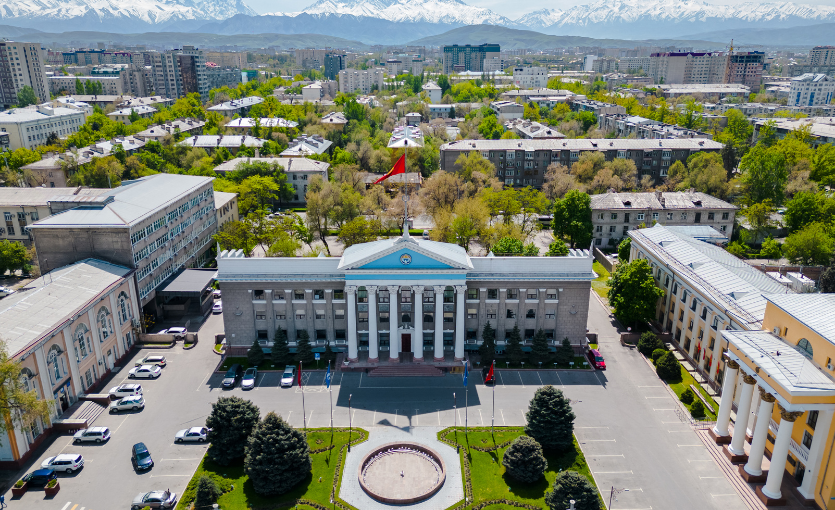
The Silk Road’s Southern Seam: Shymkent, Bishkek and Osh
The southern rim of Kazakhstan and the whole of Kyrgyzstan are where Central Asia feels most like the Silk Road you imagined. The cities are older, the bazaars louder, the food heavier on plov and laghman noodles, and the mountains never leave the edge of the frame.
Shymkent: The Road to the Third Stan
Shymkent is Kazakhstan’s third city and the one most travelers skip, which is a mistake, because it is the gateway to the country’s single greatest monument. Two hours north by road or rail lies Türkistan and the Mausoleum of Khoja Ahmed Yasawi, a UNESCO World Heritage Site raised by Timur in the 1390s, with a turquoise dome and a two-tonne bronze cauldron cast for pilgrims that still stands in the hall. Sayram, on Shymkent’s outskirts, is older still and dotted with the shrines of Silk Road saints. In April the hills of the Aksu-Zhabagly Nature Reserve, the oldest protected area in Central Asia, fill with wild Greig’s tulips, the crimson ancestors of the ones in Dutch fields. Find cheap flights to Shymkent direct from Sabiha Gökçen.
Bishkek: Boulevards with a Base Camp Attached
Bishkek is a low-rise, high-tree capital of wide Soviet avenues, and its real appeal is what surrounds it. Ala Archa National Park is 40 kilometers away, an alpine gorge of glaciers and larch where day hikes start at the car park and serious extreme sports begin higher up. Burana Tower, a leaning 11th-century minaret standing alone on the plain 80 kilometers east, marks the lost Karakhanid city of Balasagun and comes with a field of balbal stone grave markers. Push another two hours and you reach Issyk-Kul, the second-largest alpine lake on earth, ringed by beaches and yurt camps.
In the city itself, Osh Bazaar is the place for felt, dried apricots and a bowl of beshbarmak, boiled meat over flat noodles that is the national dish on both sides of the border. Try kumis, fermented mare’s milk, once, and then decide. Search cheap flights to Bishkek direct from Sabiha Gökçen.
Osh: Older Than Rome
Osh claims 3,000 years, and standing on Sulaiman-Too, the five-peaked sacred mountain that rises out of the middle of the city, you believe it. The mountain is Kyrgyzstan’s first UNESCO World Heritage Site, a place of pilgrimage since before Islam, with cave shrines, a small mosque built by a teenage Babur before he went on to found the Mughal Empire, and a museum drilled into the rock. Below it, the Jayma Bazaar runs for a kilometer along the Ak-Buura River and has traded without a break since the caravan days. Osh is also the doorway to the Pamir Highway and the Alay Valley, where 7,134-meter Lenin Peak fills the southern horizon, and to Arslanbob, the largest walnut forest in the world. Book cheap flights to Osh direct from Sabiha Gökçen, and let the Osh travel guide map the run from the airport into town.
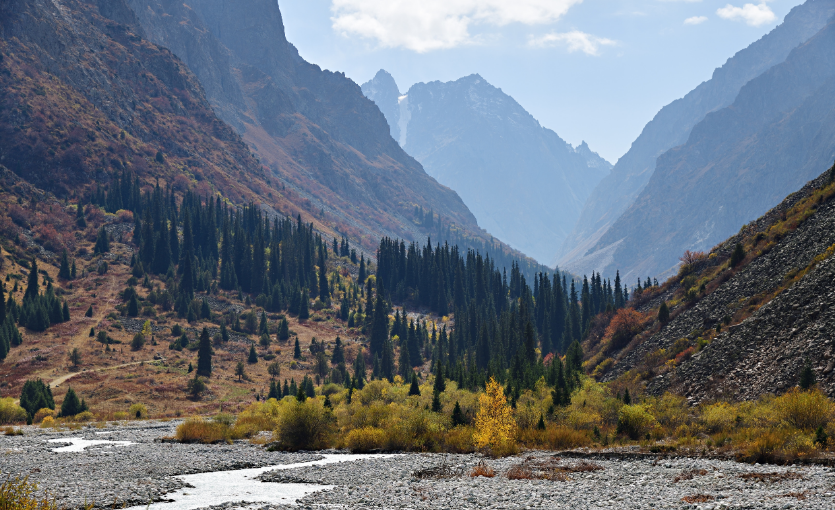
Kazakhstan’s Wild West: Aktau, Atyrau, Aktobe and Uralsk
Western Kazakhstan is where the country turns strange and beautiful. The four Pegasus cities out here are mostly oil and gas towns with an unhurried, frontier feel, and each one is a launch point for landscapes that almost nobody photographs. All four connect through Sabiha Gökçen.
Aktau: The Steppe Goes to the Beach
Aktau is the only city on this list with a beach. It sits on the eastern shore of the Caspian, so completely master-planned in the 1960s that it still has no street names, only numbered microdistricts. Come for the sea in summer and for the Mangystau region in every other season. Within a few hours’ drive are the Bozzhira chalk canyons, whose white fangs have become the most photographed spot in Kazakhstan, the flat-topped Sherkala mountain, the Valley of Balls scattered with stone spheres, and the underground mosques of Beket-Ata and Shakpak-Ata cut into the cliffs by Sufi mystics. Find cheap flights to Aktau direct from Sabiha Gökçen.
Atyrau: A Foot on Each Continent
Atyrau straddles the Ural River, the conventional dividing line between Europe and Asia, so a walk across the central bridge is a stroll between continents. This is the oil capital of Kazakhstan and the historic heart of the Caspian sturgeon trade, which is why the fish market still sells caviar by the spoon. The delta south of town is a birding paradise of pelicans and flamingos, and the regional museum tells the story of the Sarmatians who buried their gold here. Pegasus connects Atyrau through Sabiha Gökçen.
Aktobe: A Martian Coastline, No Spacesuit Required
Aktobe is a comfortable regional capital on the Ilek River, all parks, a good museum and the white-marble Nur Gasyr Mosque. Its trump card sits to the southwest: the Aktolagay plateau, a raised chalk tableland whose ridges and pinnacles glow pink at sunrise and look for all the world like a Martian coastline. Almost no foreign visitors make it out here, which is precisely the point. Pegasus connects Aktobe through Sabiha Gökçen.
Uralsk: Pushkin Slept Here
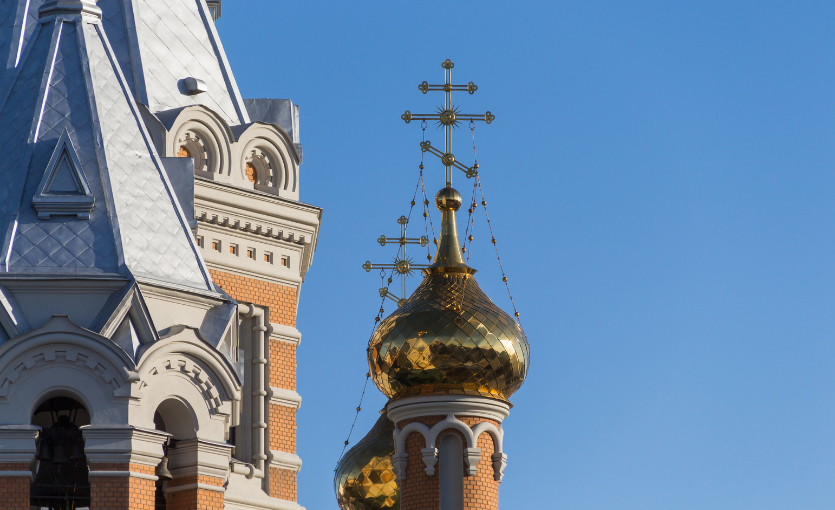
Uralsk, or Oral in Kazakh, is the oldest city in western Kazakhstan, founded by Cossacks in 1613 on the Ural River and once the center of the Pugachev rebellion. Pushkin came in 1833 to research that uprising, and the house he stayed in is now a museum. The old town keeps its merchant mansions and the golden-domed Cathedral of Christ the Savior, and the river beach fills with locals on summer evenings. Pegasus connects Uralsk through Sabiha Gökçen.
One Direct Flight Away
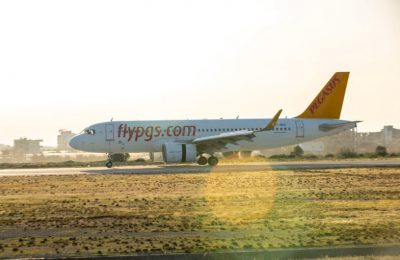
Pegasus connects all nine cities through Istanbul Sabiha Gökçen, with Almaty also served direct from Antalya, so Central Asia is a single stop from right across Europe, whether you start in London, Paris, Berlin or Rome. Time your booking with the tips in The Smart Traveler’s Toolkit: Booking, Baggage & Beyond, and check out the Pegasus route map for the full list of departure points and connection times.
Central Asia rewards a bigger bag, for felt, carpets and walnuts on the way home, so check the baggage allowance page before you fly. An upgrade package adds flexibility if your plans shift on the road, and you can order ahead from the Pegasus Café’s pre-order menu. Don’t forget you can order your meal up to 24 hours before the flight. And if your Istanbul layover runs long, the city is 45 minutes from Sabiha Gökçen, so cheap flight tickets to Türkiye can turn a connection into a stopover.