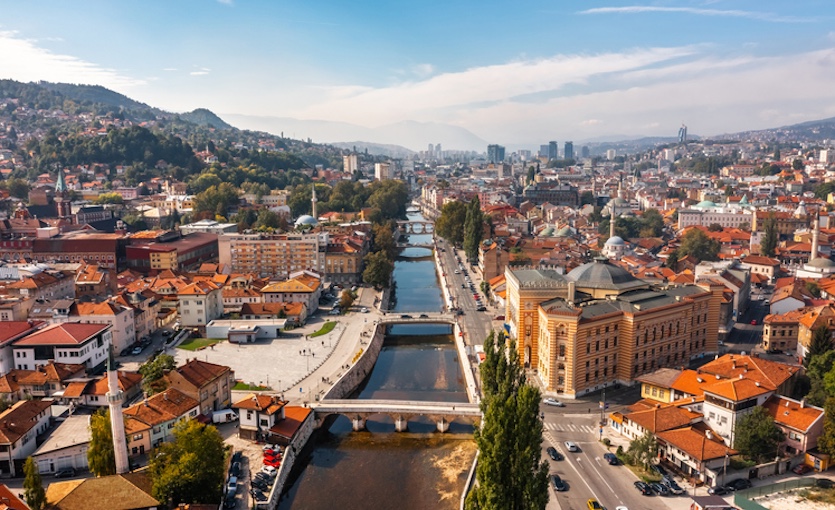
Aerial view of Sarajevo downtown the capital of Bosnia and Herzegovina
Sarajevo is not a city you just visit — it’s a city you feel. Cobblestone alleys echo with the call to prayer, church bells ring across the valley, and the aroma of strong coffee lingers in every corner. The city has endured sieges, empires, and revolutions, yet it greets you with warmth and rhythm. Getting here is straightforward with cheap flights to Sarajevo, often via an Istanbul flight ticket, giving you the perfect excuse to spend a day in Türkiye first.
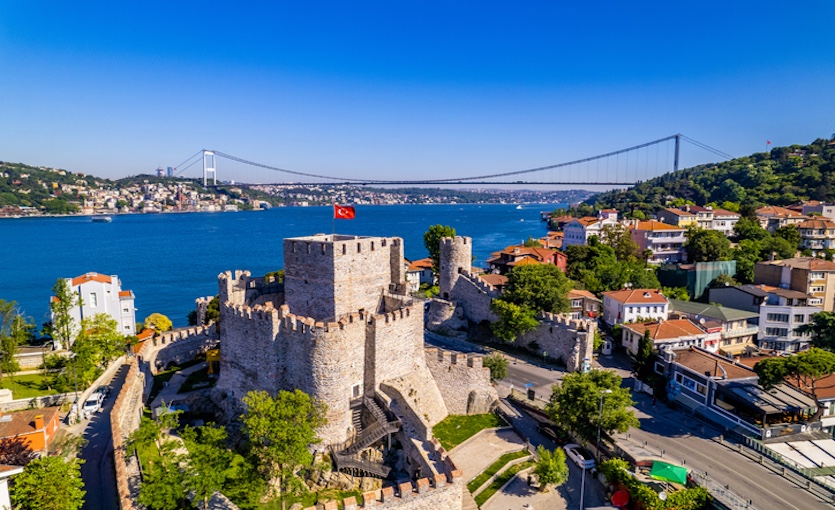
Fatih Sultan Mehmet Bridge and Anadolu Hisari (Anatolian Fortress) in Istanbul, Turkey. Beautiful Istanbul bosphorus landscape. Drone shot.
Start in Istanbul: The Perfect Cultural Warm-Up
Every Balkan trip seems to begin in Istanbul, and what a starting point it is. Use the Istanbul travel guide to stroll Sultanahmet Square, where the Hagia Sophia and Blue Mosque face each other like old rivals. Taste Turkish cuisine at a meyhane — grilled kebabs, smoky eggplant dips, and baklava dripping with honey.
In between stops, you grab a simit (sesame bread ring) from a street cart, sip tea by the Bosphorus, and browse centuries-old bazaars. With Pegasus Cafe snacks on your flight, an upgrade package for extra comfort, and the baggage allowance page checked so you’re not weighed down, you’re ready to fly onwards. (To see more about pairing Türkiye with Europe, see: Stopover Europe: Where to Go with One Istanbul Ticket).

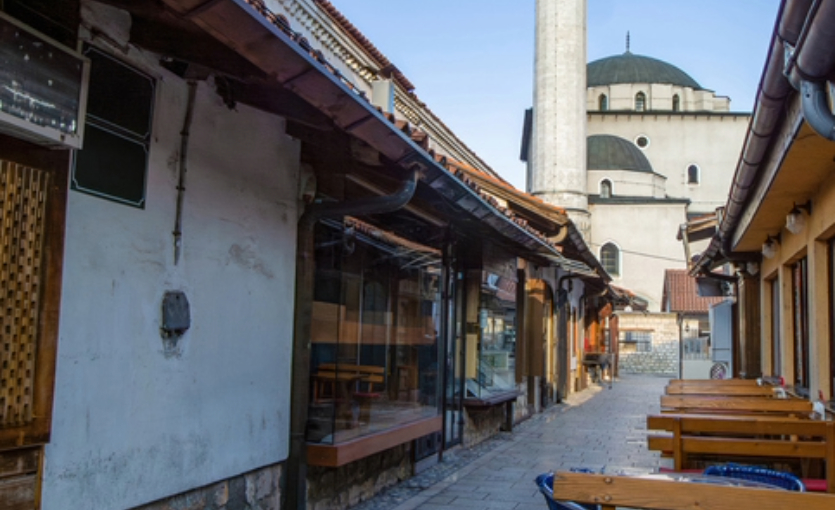
Sarajevo, Bosnia-Dec 01, 2022-the Baščaršija old market in Sarajevo
Day One in Sarajevo: Ottoman Soul in Baščaršija
You arrive in Sarajevo and head straight for Baščaršija, the Ottoman-era bazaar that’s still the city’s heart. The smell of ćevapi (small grilled sausages) sizzling on open grills mixes with the sweetness of baklava in shop windows. You hear copper smiths hammering plates and coffee sets in Baščaršija’s tiny alleys, their metallic rhythm as timeless as the city itself.
Breakfast is burek, warm and flaky, with yogurt on the side. You wander from stall to stall, admiring handwoven rugs, carved wooden boxes, and antique silver coffee pots. Shopkeepers welcome you with smiles, quick to offer a taste of lokum (Turkish delight) or a cup of rich Bosnian coffee.
Sacred Spaces: Gazi Husrev-beg Mosque and Beyond
Just a few minutes’ walk from the bazaar stands the Gazi Husrev-beg Mosque, a masterpiece of Ottoman architecture from the 16th century. Its stone courtyard, shaded by ancient trees, is a peaceful place to pause. Step inside and feel the hush, sunlight slanting through stained glass, prayer carpets soft beneath your feet.
Nearby, you find the Old Orthodox Church, Catholic Cathedral, and Synagogue — Sarajevo’s unique “multicultural mile.” Within a few streets, you hear echoes of multiple faiths, a reminder of why the city is often called “the Jerusalem of Europe.”
Lunch is simple but filling: a plate of sogan-dolma (stuffed onions) or klepe (Bosnian dumplings), paired with a glass of ayran.
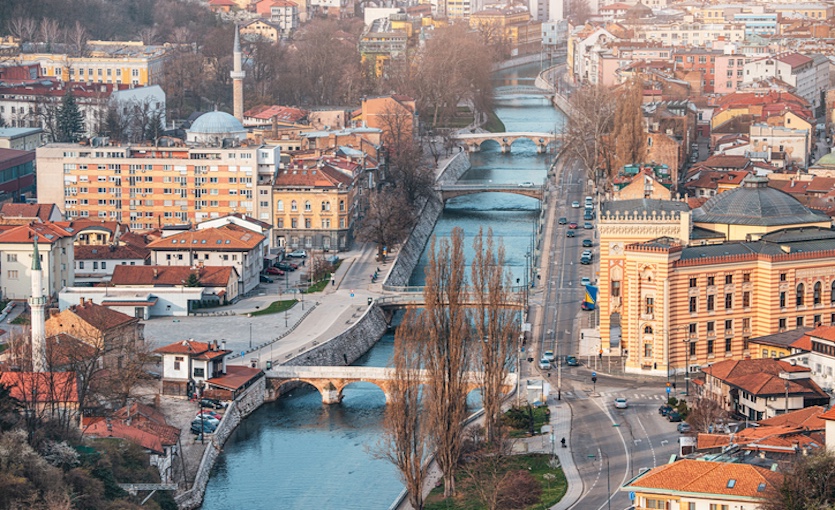
Sarajevo’s enchanting cityscape, nestled amidst rolling hills, captures the essence of Bosnia’s historic capital.
Historic Bridges: Latin Bridge and Its Tragic Tale
By afternoon, you’re standing on the Latin Bridge, looking over the Miljacka River. This is where Archduke Franz Ferdinand was assassinated in 1914, sparking World War I. The bridge is small and unassuming, yet it holds the weight of history.
As you lean over the stone rail, the river murmurs below, and you imagine how one event here changed the course of the 20th century. A nearby museum gives context, displaying photos and artifacts from the time.
Dinner is in the Old Town again, maybe at a courtyard restaurant serving grilled trout or roasted lamb. The lanterns glow, the chatter rises, and Sarajevo feels both ancient and alive.
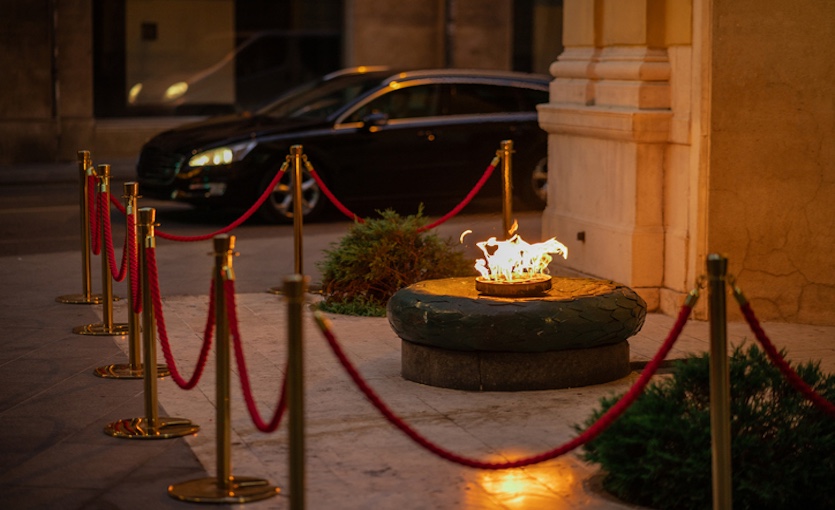
Eternal flame at a small chaplet in the city of Sarajevo at an evening. Flame surrounded by protective fence, lush and fierce flame.
Day Two: Austro-Hungarian Elegance Meets Balkan Buzz
The next morning, you shift gears. Sarajevo’s Austro-Hungarian quarter feels entirely different — wide boulevards, ornate facades, and Viennese-style coffee houses. You begin with a pastry and thick coffee at a grand café, chandeliers overhead and marble tables beneath your fingers.
You wander along Ferhadija Street, where European architecture blends with Balkan energy. Shops sell everything from leather shoes to books, and street performers keep the energy buzzing.
Lunch is schnitzel or goulash, dishes left over from empire days, but seasoned with Balkan warmth.
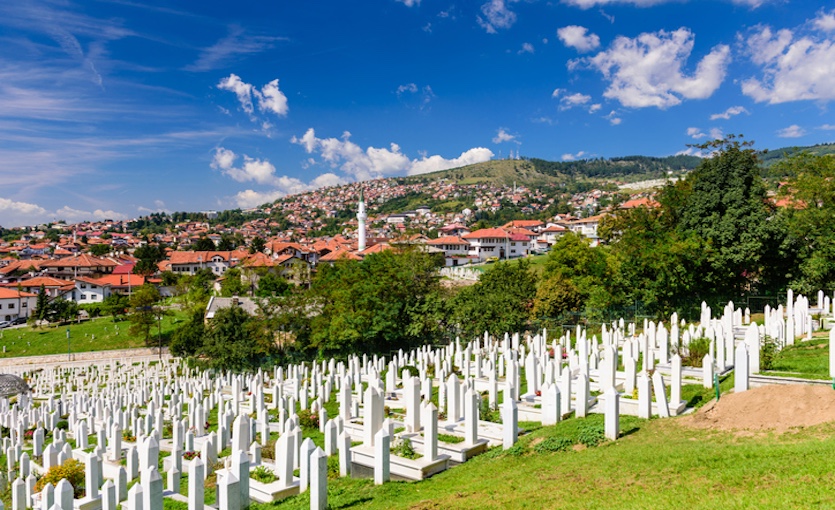
View of the historic centre of Sarajevo, capital city of Bosnia and Herzegovina
War Childhood Museum: Tender Stories from Troubled Times
In the afternoon, you head to the War Childhood Museum. Here, instead of heavy war machinery, you find small, intimate objects — a teddy bear, a school notebook, a letter from a child to a lost parent. Each item tells a deeply personal story from the siege of Sarajevo in the 1990s.
It’s not an easy visit, but it’s essential. You leave quieter, thoughtful, but also moved by the resilience of the city and its people.
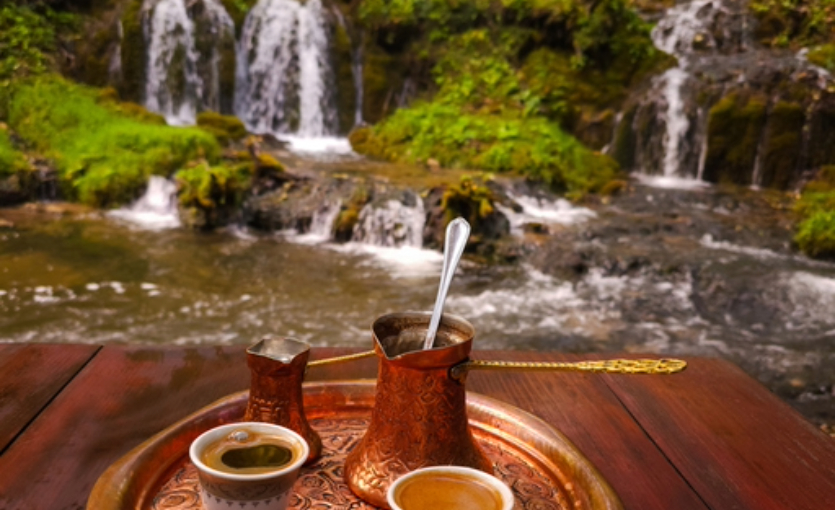
Café Culture: Strong Coffee and Stronger Conversations
Back in Baščaršija, it’s time for Bosnian coffee. Unlike Turkish coffee, it’s served in a džezva pot with a cube of sugar and lokum on the side. You sit on a low stool, steam rising from your tiny copper cup, and chat with locals.
Coffee in Sarajevo isn’t just a drink; it’s a ritual. Conversations stretch for hours, politics are debated, jokes are told, and friendships are sealed.
Dinner could be pita filled with spinach and cheese, or slow-cooked beef in clay pots. The flavors are hearty, and you feel the comfort of Balkan kitchens in every bite.
OLYMPUS DIGITAL CAMERA
Day Three: Cable Car Ride to Trebević Mountain
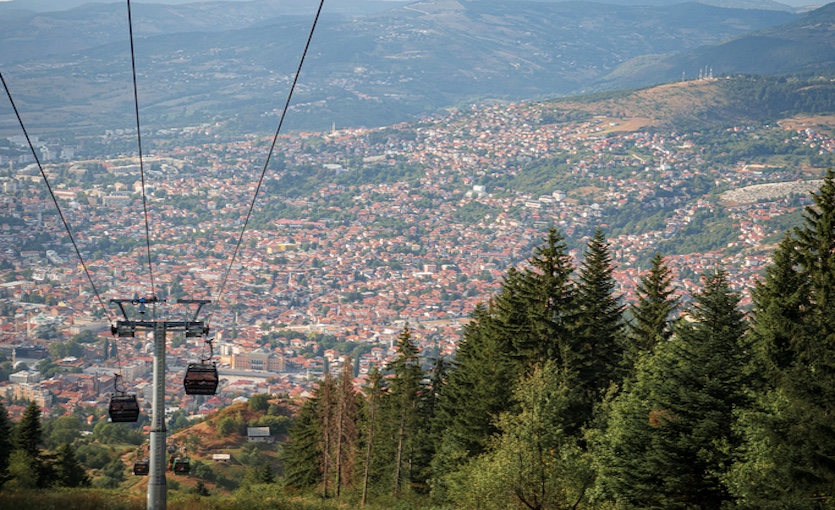
Your final morning begins with a ride on the Sarajevo Cable Car. As the city falls away beneath you, pine forests rise up, and in 10 minutes, you’re in pure alpine air. Trebević Mountain is where locals hike, picnic, and sled in winter. You walk along trails, listening to birdsong and the rustle of trees.
If you’re adventurous, try mountain biking or even paragliding — perfect for extreme sports lovers. The view back over Sarajevo is unforgettable: a red-roofed city nestled in a green valley, minarets and church spires piercing the skyline.
Lunch is a mountain meal — grilled meats, fresh bread, and kaymak (clotted cream).
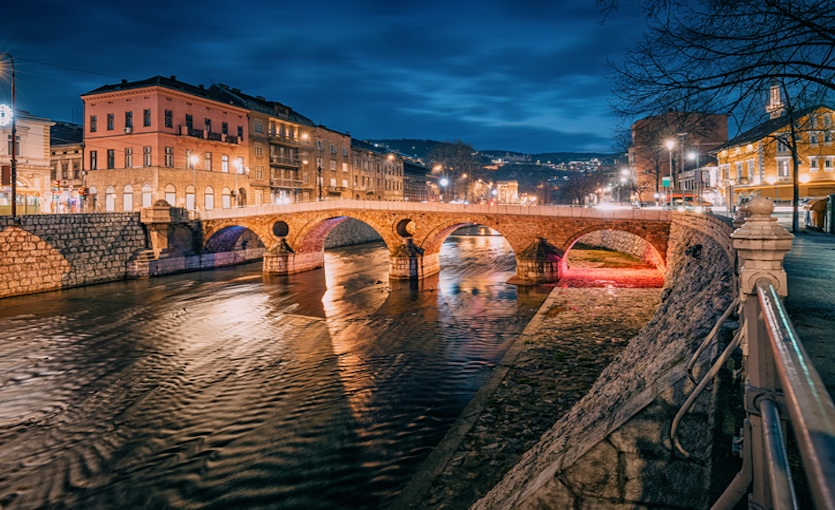
Sarajevo’s old town at dusk, where the iconic Latin Bridge and traditional houses along the Miljacka River create a picturesque view of the city’s historical charm.
Evening Beats: Sarajevo’s Lively Bars and Jazz Haunts
Back in town, your final evening is spent in Sarajevo’s vibrant bars. Some are smoky jazz clubs where the music feels like velvet, others are lively pubs with Balkan folk bands. Order a glass of rakija (fruit brandy) and let the rhythms carry you.
Dinner is light — perhaps a cheese platter and fresh bread — because here, the night is about music, conversation, and that ineffable Sarajevo spirit.
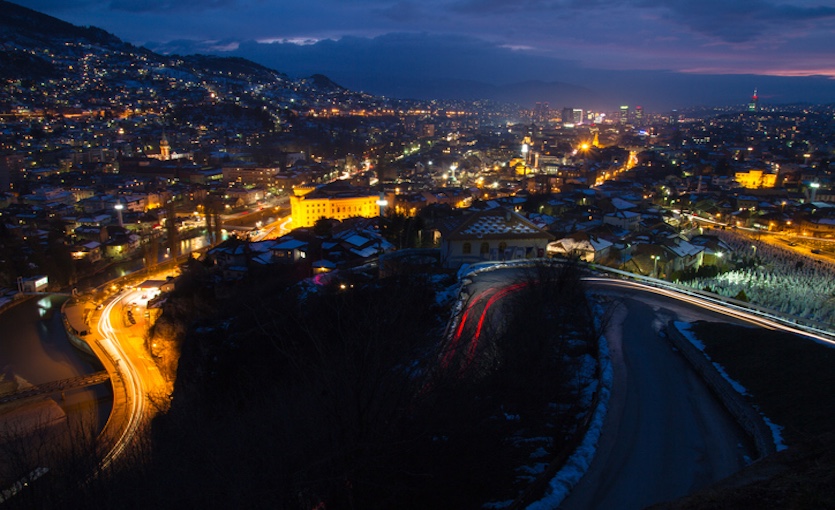
Sarajevo at night seen from a hilltop with lights of traffic
Sarajevo in 72 Hours: Echoes and Energy
Three days in Sarajevo feels like stepping through layers of history — Ottoman bazaars, Austro-Hungarian avenues, war-torn memories, and youthful beats. With cheap flights to Sarajevo, and connections via Istanbul, it’s easier than ever to experience this mix of East and West.
(To see more on regional adventures, see: Cross-Border Adventures: Türkiye and the Balkans on a Budget).