
You arrive in Antalya expecting beautiful beaches, turquoise coastline, and a week of uncomplicated sunshine. And you get all of that. But somewhere between wandering through a Roman gate into a labyrinth of Ottoman streets, eating the best white bean salad of your life at a pavement table, and standing at the edge of a canyon the mountains seem to have swallowed whole, you realize this place is doing something much more interesting than a standard beach holiday. Antalya is one of Türkiye’s most visited cities for very good reasons — but the people who get the most out of it treat the beach as the opening chapter, not the whole story. Grab a cheap flight to Antalya with Pegasus, check the Pegasus route map to see how easily it connects with the rest of the region, and give yourself room to be surprised. This guide covers everything: the beaches, the food, the mountains, the after-dark scene, the spots most visitors never find, and how to put it all together.
Six Hundred Kilometers of Coastline, and Where to Start
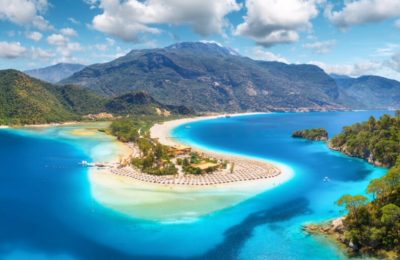
The first thing to understand about Antalya’s beaches is that they are not all the same experience, and choosing the right one changes the entire shape of your day. Lara Beach, the long sandy arc closest to the city’s resort strip, is the classic choice: wide, social, well-equipped, and lined with beach clubs where you can move seamlessly from swimming to lunch without leaving the sand. It’s the obvious pick for families or anyone who wants everything within easy reach.
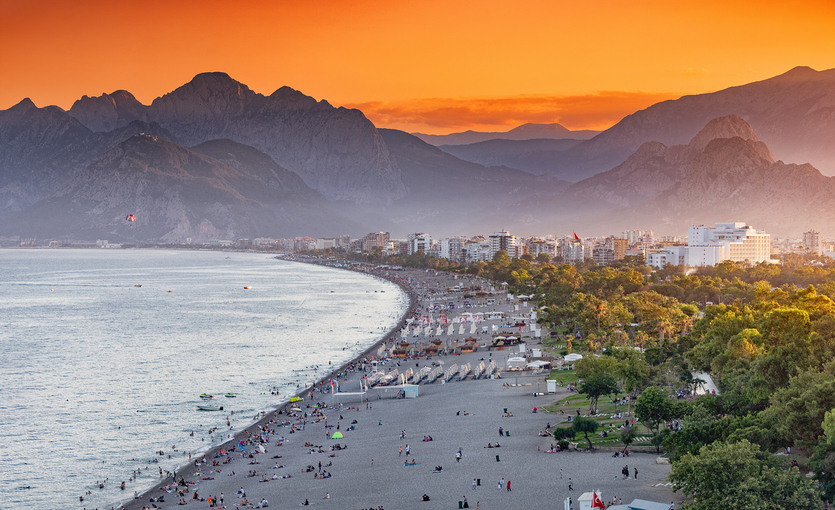
Konyaaltı is a different proposition entirely. This is where Antalya’s own residents swim — a pebbly bay backed by a long promenade with the Taurus mountains rising dramatically behind it. There’s no entry fee, no performance, and a genuinely local atmosphere that no resort beach can replicate. Go in the morning before the heat settles, then walk up into the old city for coffee. And then there’s Kaputş: a small strip of almost unreal turquoise water at the foot of a staircase cut into limestone cliffs near Kaş. It’s the kind of place that appears on screensavers and then turns out to actually look like that in real life. For more on the wider area, our guide to the best places in Kaş covers the full stretch of Lycian coastline.
- Quick tip: the infographic below breaks down five of Antalya’s best beaches by vibe, season, and who they suit best — use it before you decide where to base yourself.
Why Families Fall in Love with This City
Traveling with children in Antalya is genuinely easy, partly because the city has the kind of visual spectacle that keeps kids engaged without requiring much effort on anyone’s part, and partly because the Turkish approach to family life means children are welcomed pretty much everywhere. The old city of Kaleçi is a good example: compact, pedestrianized, full of interesting things to look at, and structured around a Roman harbor you can walk all the way around. Roman gates, Ottoman houses, ice cream vendors, and enough winding streets that even a reluctant nine-year-old will find something to investigate.
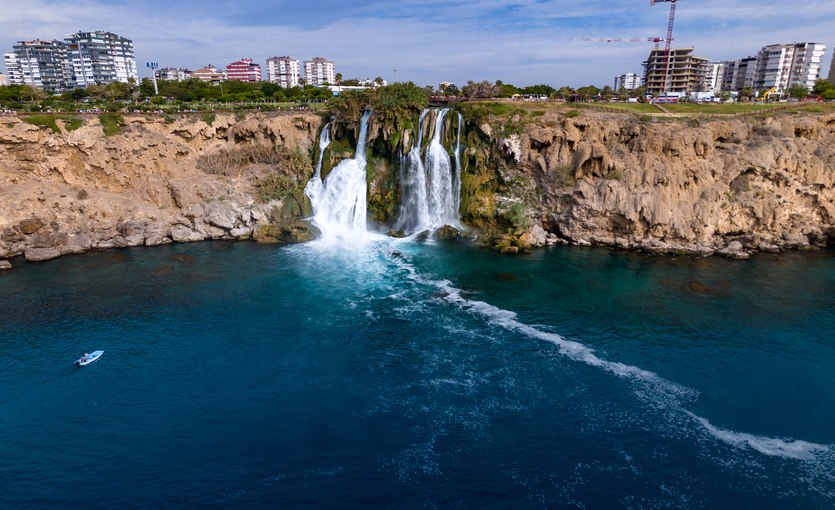
The Düden Waterfalls are worth the short drive from the city center, and the lower falls — where the water drops directly into the sea from a clifftop — are best seen from a boat. Most harbor tours include them, and the moment the waterfall comes into view from the water tends to produce a strong reaction from passengers of all ages. Aspendos, the Roman theater 47 kilometers east of the city, is one of the best-preserved amphitheaters in the world and still hosts live performances in summer. Seeing a nearly 2,000-year-old building actually being used for its original purpose is a genuinely different experience from a standard ruin visit, and the acoustics have to be heard to be believed. Our top holiday destinations in Antalya guide has a full breakdown of family-friendly areas across the region if you’re still deciding where to stay.
- Practical note: Antalya’s aquarium complex near Konyaaltı is one of the largest in Europe and makes for a reliable half-day when the midday heat makes outdoor exploring less appealing.
When the Mountains Call Louder Than the Sea
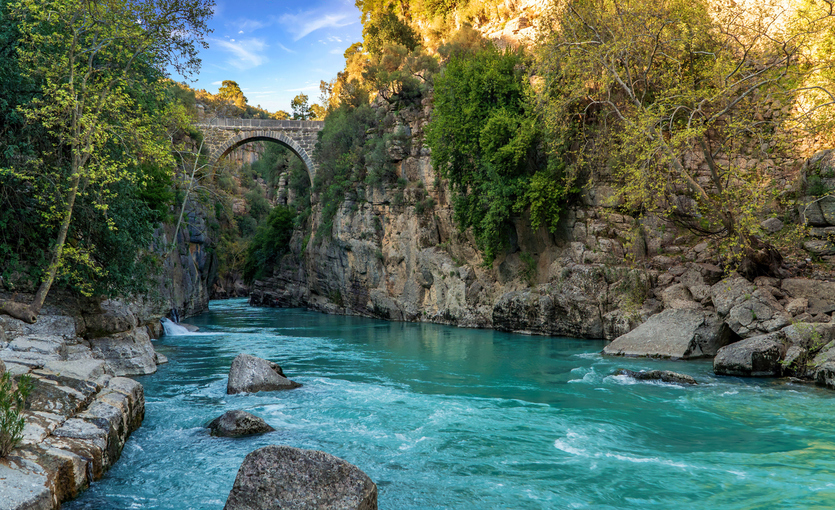
The mountains behind Antalya belong to the Taurus range, and they are extraordinary: limestone peaks, pine forests, canyon systems, and ancient footpaths that have been walked for thousands of years. Most visitors never go near them, which means you essentially have them to yourself. The drive up from the coast takes less than an hour, and the landscape changes completely — by the time you reach the higher trails, the Mediterranean is a glittering line far below and the air smells of pine resin and cold water.
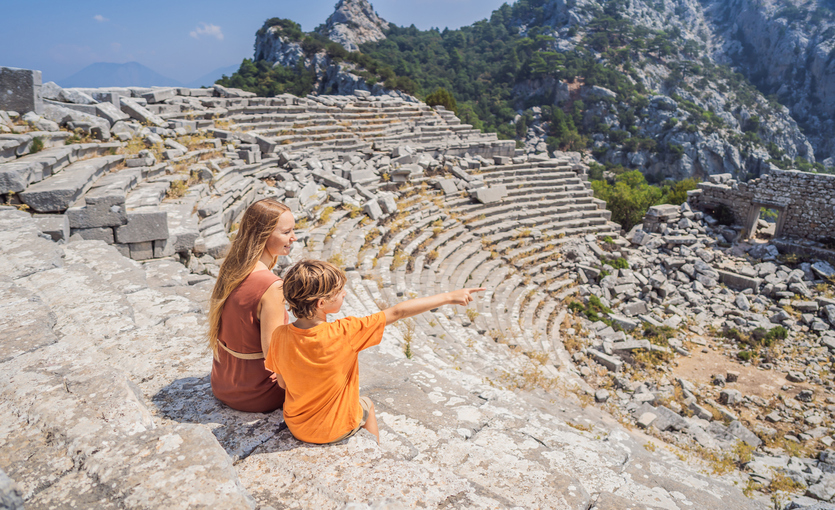
Köprülü Canyon National Park, about 90 kilometers from the city, is the most dramatic introduction to this side of Antalya. The canyon is deep and narrow, the river runs fast and cold, and the Roman bridge spanning it has been standing for nearly two millennia. Rafting is popular here, but the canyon walks are equally worthwhile and considerably quieter. Higher up, Termessos is the experience that tends to genuinely astonish people: an ancient mountain city perched at 1,050 meters, largely unexcavated, with a theater, a necropolis, and views that stretch all the way to the coast. The Lycian Way, one of the great long-distance trails anywhere in the world, passes through the broader region — the stretches around Kaş and Kekova are among the most rewarding, with coastal paths above impossibly blue water and ancient Lycian tombs carved into the cliffs. Our guide to Antalya as a gateway to 100 routes explains exactly what’s reachable as a day trip and what’s worth staying closer to.
- Best months for hiking: April to early June and September to October. July and August are possible at altitude but genuinely punishing at lower elevations.
Eat Like a Local, Not Like a Guest
Antalya’s food culture is rooted in the Mediterranean and shaped by the Taurus mountains, and the result is a cuisine more distinctive than most visitors expect. The hotel buffet will give you a perfectly acceptable version of Turkish food. The pavement restaurants in the old city and the working-class lokantas away from the tourist center will give you something that actually tastes like it comes from here. There is a difference, and it’s worth going to find it.
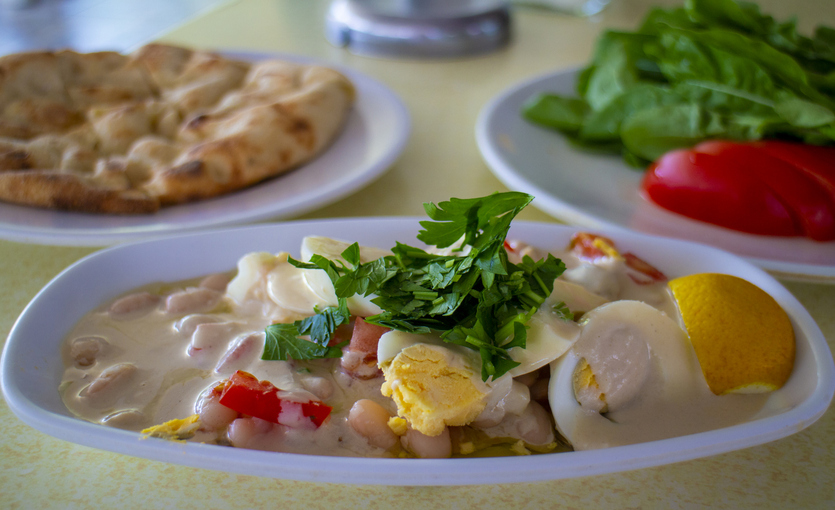
Piyaz is the Antalya dish that locals will bring up unprompted: a white bean salad dressed with tahini, vinegar, and olive oil, topped with hard-boiled egg and served alongside grilled meat. It sounds understated. It’s not. The Antalya version is specific to this city and noticeably different from similar dishes elsewhere in Türkiye, and every local has a strong opinion about which restaurant does it best. Tanır kebabı is the other dish worth seeking out: slow-cooked lamb prepared in a clay oven buried underground, a method that goes back centuries and produces meat with a depth of flavor that straightforward grilling can’t match. It’s not on every menu, so ask locally. The old city bazaar, meanwhile, is worth visiting with no shopping agenda: dried figs, local olive oil, citrus products — Antalya grows exceptional oranges — and pomegranate molasses that you will absolutely be putting in your bag for the flight home.
- Where to eat: The streets immediately behind the harbor in Kaleçi have the best concentration of traditional restaurants. The further you get from the waterfront, the more honest the cooking tends to be.
Antalya After Dark: Slow Evenings and Late Nights
Antalya doesn’t rush its evenings. Dinner at 9pm is completely normal, the harbor area stays lively well past midnight in summer, and the transition from afternoon swimming to evening drinking to late-night eating happens so gradually you barely notice the day has ended. It’s a city that understands pace, and that’s part of what makes it so easy to spend time in.
Kaleçi is the most atmospheric place to be after dark: rooftop terraces above the Roman walls, candlelit tables in courtyards, narrow streets lit just enough to feel cinematic without being overdone. It suits people who want character and conversation over volume and DJ sets. The Konyaaltı promenade offers something looser and more casual — families, couples, and groups sharing the same waterfront in a way that feels genuinely local, with tea stalls, ice cream, and the kind of unhurried energy that is very specifically Türkiye in summer. And when the trip is over and you’re headed back to the airport, don’t forget the Pegasus Café pre-order menu lets you sort your in-flight meal up to 24 hours before departure.
- Note on nightlife: The bar and club scene is more concentrated in the Lara and Belek areas. Kaleçi is better for atmosphere; the resort strips are better for late nights.
Finding Your Corner of the Coast
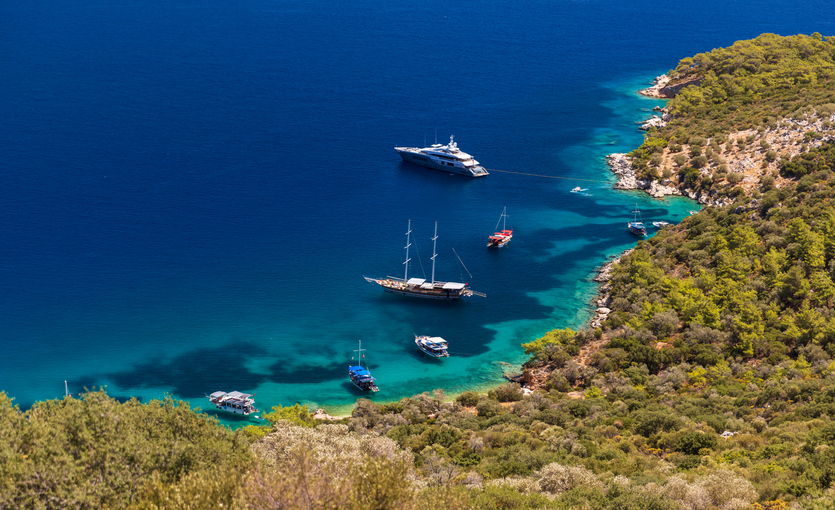
The Antalya region covers a significant stretch of coastline, and where you choose to base yourself shapes everything. Antalya city center is the right base if you want history, food, and day-trip flexibility — the old town alone justifies staying in the city rather than out on a resort strip. Belek, east of the city, is built around golf courses and large resort hotels and suits people for whom the beach and all-inclusive facilities are genuinely the entire point: polished, well-organized, and very good at what it does.
Side manages to combine a well-preserved Roman town with resort beaches in a way that works better than it sounds on paper — the ruins sit right at the sea’s edge, so you can walk from a colonnaded ancient street into the water without getting back in a vehicle. Kaş and Kalkan, further west toward the Lycian coast, are smaller, quieter, and more boutique in character: independent restaurants, diving schools, rooftop bars with views over the islands, and a pace noticeably slower than the resort zones. For the full picture of how these areas compare, our top holiday destinations in Antalya guide breaks down the region area by area.
- Quick guide: Antalya city for culture and flexibility. Belek for resort comfort. Side for history-plus-beach. Kaş and Kalkan for boutique, independent travel.
Hidden Gems and Off-the-Beaten-Track Experiences
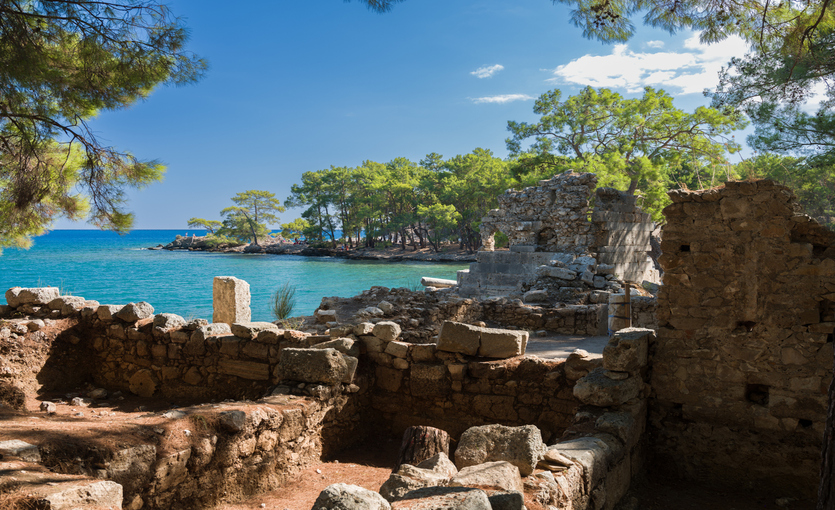
The thing about Antalya is that even the things that don’t make the main itinerary are worth going out of your way for. Phaselis, a Lycian coastal site with three separate harbors, a colonnaded street, and Roman baths surrounded by pine trees and swimming bays, rarely feels overcrowded even in peak season. The combination of ruins and accessible swimming means you can spend a full morning moving between archaeology and the sea, and the site has a particular quality of light in the early morning that makes it feel genuinely remote.
Termessos, the ancient mountain city at 1,050 meters in the Taurus range, is the hidden gem that stops feeling like a hidden gem the moment you arrive and realize it’s one of the most extraordinary ancient sites in the country. Largely unexcavated, it has a wildness and a sense of discovery that the more famous sites have long since lost. The hike to reach it filters out the casual visitors, and what you find at the top is worth every step. For anyone curious about how far you can stretch a single base, our Antalya gateway guide lays out the full picture of what’s within reach.
- Also worth knowing: boat trips along the coastline between Antalya and Phaselis pass bays only accessible from the water. A day on the sea, stopping to swim in coves you couldn’t otherwise reach, is one of the best things you can do here.
Before You Go: Getting the Timing and Logistics Right
May, June, and September are the months locals will tell you about when you ask when to come. The water is warm enough to swim, the air is warm enough to eat outside every night, and the city hasn’t yet hit the full intensity of the July and August peak. If you’re coming with children, June is the sweet spot: school holidays haven’t peaked across Europe, prices are still reasonable, and everything is open and running at full capacity without the crowds that follow. Before you travel, check the baggage allowance page if you’re packing beach gear for the whole family, and consider the upgrade package for extra flexibility if your plans might shift.
For a day-by-day breakdown of how to structure your time, our Antalya 72-hour itinerary is the most efficient way to see the highlights without feeling rushed. And if you want to extend the trip across the wider region, the Pegasus route map shows exactly what’s reachable from Antalya and how easily it all connects. Don’t forget the Pegasus Café pre-order menu lets you sort your in-flight meal up to 24 hours before departure — worth doing when you’ve been eating your way around Kaleçi and arrive at the gate with specific cravings.