An empire had three capitals before it settled on the one the world remembers, and you can stand in all three inside a single week. Book cheap flights to Istanbul, and you land in the last and grandest of them, the city that took the Ottoman story to its final, glittering chapter. But push west into Thrace and you find Edirne, where the empire first learned how to rule Europe. Push south across the Sea of Marmara and you find Bursa, green and quiet, where it all began in 1326 with a single conquered hilltop town. Five days is enough to walk the whole arc backward, from the empire’s height to its birth, and every leg of it starts with a flight to Türkiye.
Think of this less as a checklist and more as watching an empire grow up in reverse. Istanbul is where the story ends, all marble and minarets and four centuries of accumulated splendor. Edirne is the empire mid-stride, ambitious and already building masterpieces. Bursa is the empire as a teenager, green hills and a first grand mosque, still finding its feet. Your Istanbul flight ticket is the easiest way in, since it is the only one of the three with an airport at all, so Istanbul becomes both your gateway and your final chapter, with Edirne and Bursa as journeys out and back.
If straight Istanbul is more what you are after, our own 5-Day Istanbul Itinerary covers the city alone in unhurried detail. This route borrows its spirit but spends only half the week there, leaving room for two more capitals most visitors never see.
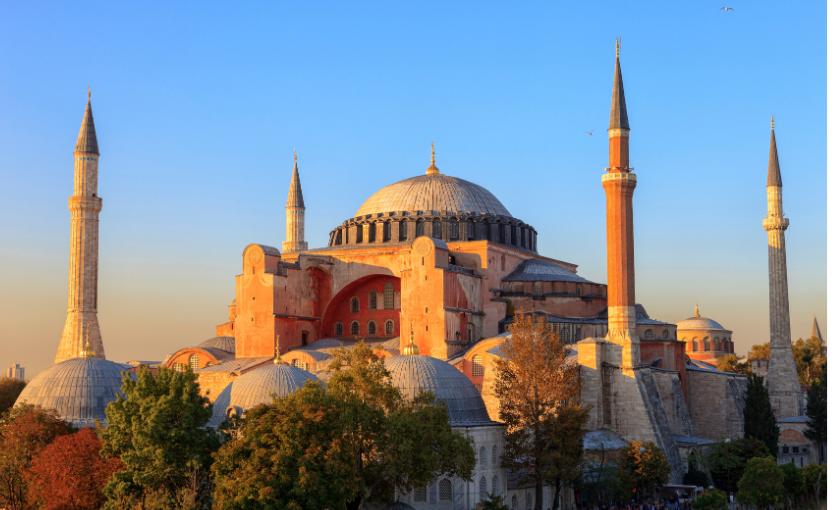
Istanbul: The Empire’s Final and Grandest Capital
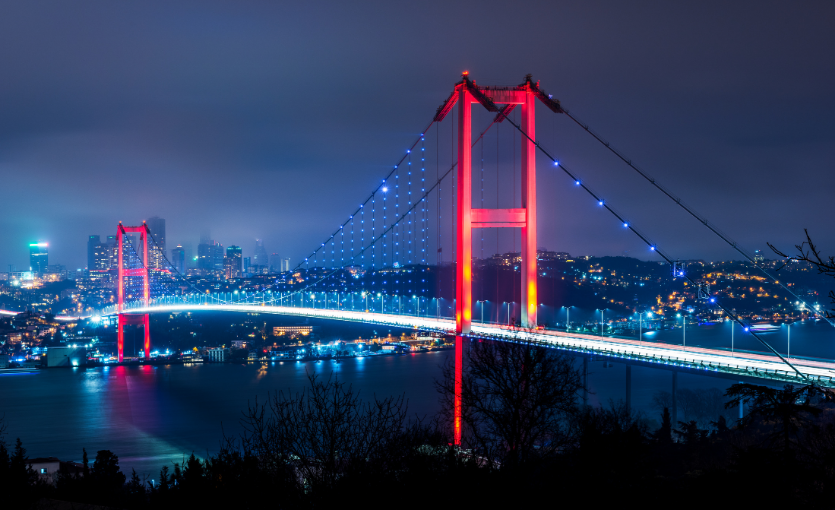
You feel Istanbul before you understand it. Ferries cut white wakes across the Bosphorus while gulls wheel over domes that have stood since before the printing press existed. Climb the worn stone steps into the Hagia Sophia and stand beneath a dome that seems to float, mosaics of saints and sultans layered over one another across fifteen centuries of shifting empires. A few hundred meters away, the Blue Mosque answers it in tile, more than 20,000 handmade İznik panels turning sunlight blue as it filters through the windows. Between them, the old Hippodrome remembers Byzantine chariot races that no longer echo anywhere but in stone.
Spend a morning losing yourself underground in the Basilica Cistern, its forest of columns reflected in water lit an eerie green, then surface into the sensory overload of the Grand Bazaar, four thousand shops of lamps, carpets, and gold pressed under one vaulted roof. Climb Galata Tower at golden hour for a view that stretches from the Golden Horn to the open Bosphorus, and end the day the way Istanbul has ended its days for five hundred years, in a hamam, steam curling off heated marble as a scrub and a soak wash off everything the city put on you.
What to See
- Hagia Sophia and the Blue Mosque, facing each other across Sultanahmet Square
- The Basilica Cistern and Topkapi Palace, the Ottoman sultans’ home for four centuries
- The Grand Bazaar and the Spice Bazaar for color, noise, and unmatched people watching
- Galata Tower at sunset and a proper hamam session, both essential and both covered in more depth in our own Best Museums in Istanbul and Turkish Baths & Hamams in Istanbul guides
What to Eat
- A proper Turkish breakfast, menemen and honey-drenched kaymak stretched out over an hour, no rushing allowed
- Simit fresh off a street cart, still warm, paired with a tulip glass of black tea
- Balık ekmek, grilled fish in bread, eaten standing at the Galata Bridge as boats rock below
- A full meze spread by the water in Kumkapı, followed by baklava for the walk home; the Turkish cuisine guide maps out the rest of what the city eats
How to Get There
- Pegasus flies cheap flights to Istanbul into Sabiha Gökçen, on the Asian side and an easy start point for the rest of this route
- From the airport, buses, metro connections, and taxis all reach the historic peninsula within an hour
- The Istanbul travel guide covers neighborhood-by-neighborhood transport if you plan to stay longer than the two days this route allows
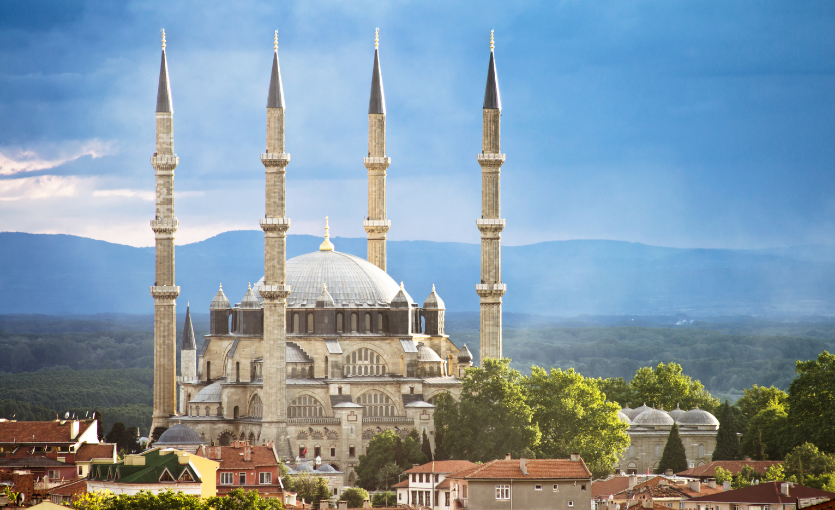
Edirne: Where the Empire Learned to Rule Europe
The road out of Istanbul unspools through the flat green farmland of Thrace, and somewhere along it, the noise of the megacity finally falls away. Edirne was the Ottoman capital for nearly a century before Constantinople fell, the base from which sultans planned the conquest that would make Istanbul theirs, and it still carries the confidence of a city that once ruled an empire rather than merely remembering one.
Nothing prepares you for the Selimiye Mosque. Mimar Sinan, the empire’s greatest architect, called it his masterpiece, the achievement of his old age, and standing beneath its single vast dome, wider even than the Hagia Sophia’s, you understand why. Four needle-thin minarets pierce the sky above a courtyard so perfectly proportioned it feels calculated to make you feel small in the best possible way. Walk from there to the older Üç Şerefeli Mosque, its four mismatched minarets a study in architectural experimentation, and to the Old Mosque, where giant calligraphy panels cover the walls in place of tile. If you happen to be here in late June or July, the Kırkpınar oil wrestling festival, held on the same grounds for over 650 years, turns the whole city into a roaring outdoor arena of oiled wrestlers and brass bands.
What to See
- The Selimiye Mosque, Mimar Sinan’s self-declared masterpiece and a UNESCO World Heritage Site
- Üç Şerefeli Mosque and the calligraphy-covered Old Mosque, both a short walk from the Selimiye
- The riverside ruins of Edirne Palace at Sarayiçi, once the sultans’ summer residence
- The Kırkpınar oil wrestling grounds, alive with festival crowds each summer and quiet the rest of the year
What to Eat
- Tava ciğeri, Edirne’s signature dish of thin-sliced, deep-fried calf’s liver, eaten with raw onion and a squeeze of lemon
- Edirne badem ezmesi, a dense marzipan the city has made its own for generations
- Ayva tatlısı, candied quince, if you visit in the cooler months when the fruit is in season
How to Get There
- Edirne has no commercial airport, so this leg runs entirely by road, about two and a half to three hours from Istanbul
- Regular intercity buses leave Istanbul’s main terminals throughout the day, or rent a car for more flexibility on the return
- A day trip works, but an overnight lets you see the Selimiye lit up after dark, when the crowds thin and the dome seems to glow from within
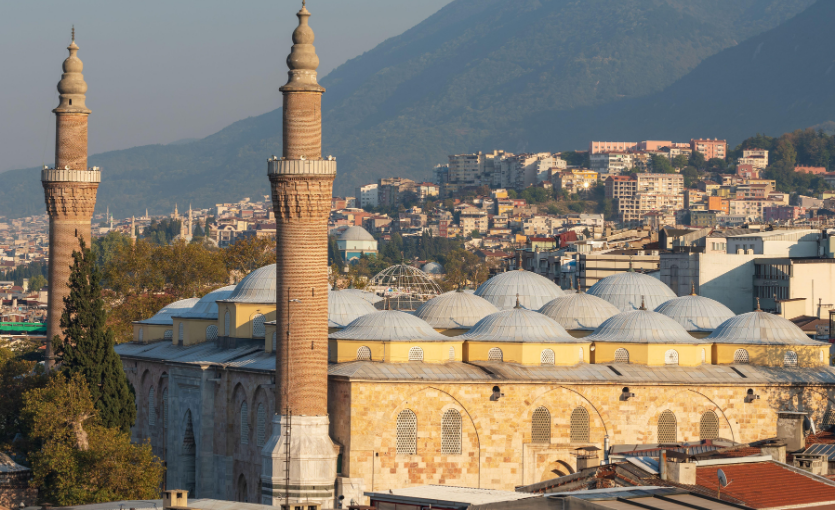
Bursa: The Green Capital Where It All Began
Getting to Bursa is its own kind of pleasure. Skip the road entirely and take the fast ferry from Istanbul’s Yenikapı terminal, a calm two hour crossing of the Sea of Marmara that trades traffic for open water and gulls trailing the wake. Watch Istanbul’s skyline shrink behind you, then watch Uludağ’s forested slopes rise ahead, the mountain that gives Bursa its nickname, Yeşil Bursa, Green Bursa. By the time you dock at Mudanya and roll into the city center, you have already left the pace of Istanbul behind.
Bursa was the Ottomans’ first true capital, conquered in 1326, and it still feels like the empire’s quieter, more contemplative side. The Ulu Cami’s twenty domes shelter a soaring interior centered on an indoor ablution fountain, its walls covered in Ottoman calligraphy so dense it functions almost as wallpaper. The Green Mosque and Green Tomb, tiled floor to ceiling in the turquoise glaze that gives them their name, hold the remains of Sultan Mehmed I in quiet, jewel-box rooms. Wander into Koza Han, still a working silk market after six centuries, cocoons and bolts of fabric traded under the same courtyard arches as always. On the city’s outskirts, the UNESCO-listed village of Cumalıkızık preserves Ottoman timber houses lived in, not preserved behind glass, and a cable car up Uludağ trades the historic center for pine forest and, in winter, snow.
End your visit the way Bursa has ended its days since Ottoman sultans first soaked here: in a Çekirge hamam, fed by the same thermal springs that made this the empire’s first spa town. Our own Wellness Weekends guide goes deeper into Bursa’s thermal tradition and the Ottoman heritage that shaped it, part of the wider Türkiye story our UNESCO Uncovered guide traces across the country’s heritage sites, Bursa and Cumalıkızık very much included.
What to See
- The Ulu Cami, Bursa’s Grand Mosque, and its twenty domes
- The Green Mosque and Green Tomb, tiled in the turquoise that names them
- Koza Han’s still-working silk market and the UNESCO-listed village of Cumalıkızık
- The Uludağ cable car for pine forest views, and a Çekirge hamam to end the day
What to Eat
- İskender kebab, invented in Bursa and still best eaten here, sliced lamb over pide with tomato sauce, browned butter, and yogurt
- İnegöl köfte, grilled meatballs from a nearby Bursa district, usually served with white beans and pickled peppers
- Kestane şekeri, candied chestnuts, Bursa’s signature sweet, best bought fresh from a shop near Koza Han
How to Get There
- Take the fast ferry from Istanbul’s Yenikapı terminal to Mudanya, a calming roughly two hour crossing, then a short drive or dolmuş into central Bursa
- Alternatively, fly direct into Bursa Yenişehir Airport, or connect through a cheap flight to Istanbul and continue by road or ferry
- Plan on two days here to see the old town, Cumalıkızık, and Uludağ without rushing any of it