
You already know pizza. You’ve ordered it a hundred times, debated toppings, argued about thin versus thick. But until you’ve stood at a sticky counter in Naples at midnight with grease on your fingers, or eaten a square of sfincione from a street cart in Palermo while the vendor eyes you for a reaction, you don’t really know pizza at all. Italy doesn’t have one pizza. It has dozens, and each city guards its own version like a state secret. The good news is that a flight to Türkiye with Pegasus puts you in the heart of the Mediterranean, making Italy’s greatest pizza cities closer than you think. Here’s where to go, what to eat, and what the dough will tell you about the place.
Naples: Where It All Began
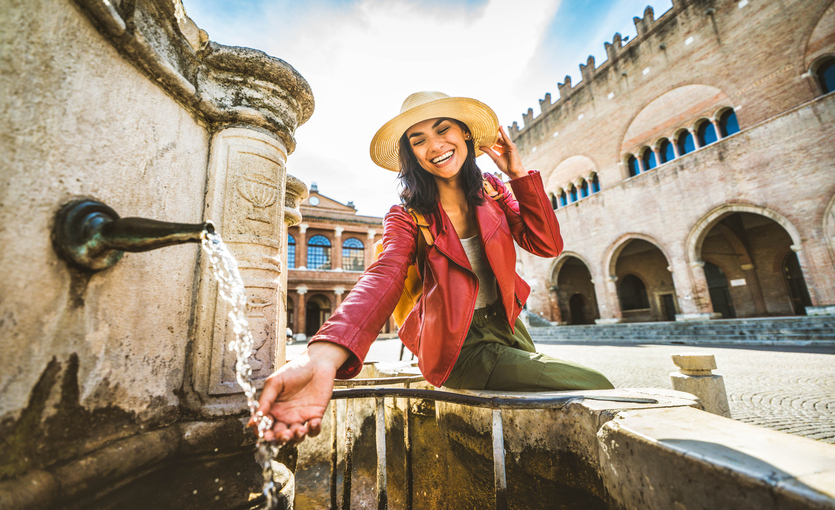
Pull up to Naples and the city hits you all at once: the chaos, the color, the smell of wood smoke and tomato drifting out of every other doorway. This is where pizza Napoletana was born, and the city has absolutely no intention of letting you forget it. The rules here aren’t suggestions. The dough must be hand-stretched, never rolled; it goes into a wood-fired oven at around 900°F; it comes out in roughly 90 seconds, charred at the edges and billowing at the center with a soft, chewy crumb that collapses under its own warmth.
Wander the Spaccanapoli, the long straight street that splits the old city, and feel the layers of the place: Roman ruins, Baroque churches, crumbling palaces, and the best fried food you’ll eat anywhere. Naples is messy and magnificent, and so is its pizza. Book your cheap flight to Naples with Pegasus and you can be standing at that counter within a few hours of landing. If you’re building out a broader southern Italian trip, the Istanbul travel guide is a great starting point for connecting flights into the region.
- What to order: Margherita (San Marzano tomatoes, buffalo mozzarella, basil) or a fried pizza folded in paper and eaten standing up.
- Top 3 sites to visit: Spaccanapoli, the National Archaeological Museum, and the underground city of Napoli Sotterranea.
- Vibe of the city: Loud, layered, magnificent. A city that moves on its own schedule and rewards anyone who slows down to match it.
Rome: The Art of the Slice
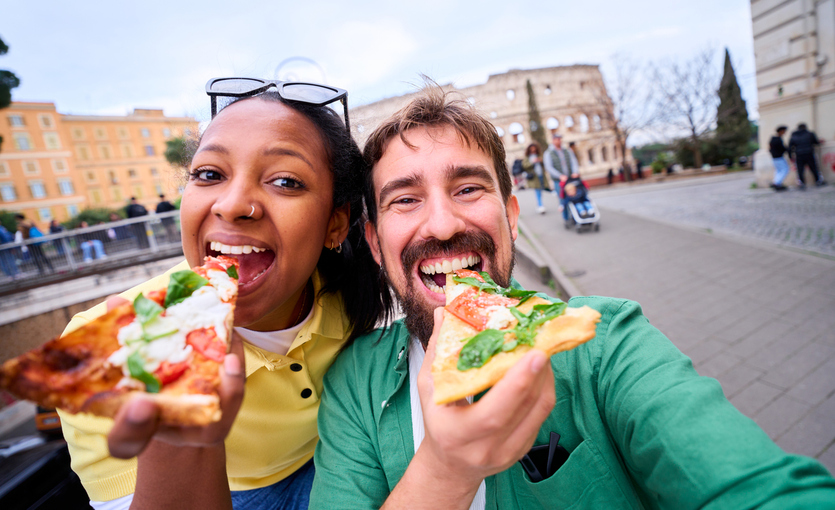
Rome does pizza differently, and if you arrive expecting the puffy Neapolitan style, you’ll need to recalibrate. The pizza al taglio culture here is about the slice: cut from a large rectangular tray, weighed, priced by the gram, and handed to you on a sheet of paper. The crust is thin and crackerlike, almost scrocchiarella (meaning “crunchy” in Roman dialect), and the toppings tend toward the creative: potato and rosemary, mortadella and burrata, zucchini flowers and anchovies. This isn’t a sit-down meal. It’s a walk-and-eat city.
Get lost in Trastevere, the neighborhood that still feels like old Rome, with ivy-covered walls, golden evening light, and trattorias that have been serving the same three pasta dishes for forty years. Eat cacio e pepe the night you arrive, then spend the next morning working out which slice joint to hit first. Our 3 Days in Rome: From Ancient Stones to Late-Night Trattorias
guide has a full itinerary if you want to do the city properly. Grab a cheap flight to Rome and you can be eating al taglio by lunchtime. For anyone planning a longer Italian loop, check out how to find cheap flights so you can piece together Rome, Naples, and Sicily without blowing your budget on getting between them.
- What to order: Pizza al taglio with potato and rosemary, or zucchini flowers and anchovies. Ask for it warmed up.
- Top 3 sites to visit: The Colosseum, Trastevere neighborhood, and the Borghese Gallery (book ahead).
- Vibe of the city: Ancient and alive at the same time. Every piazza feels like a stage set, and somehow it’s all completely real.
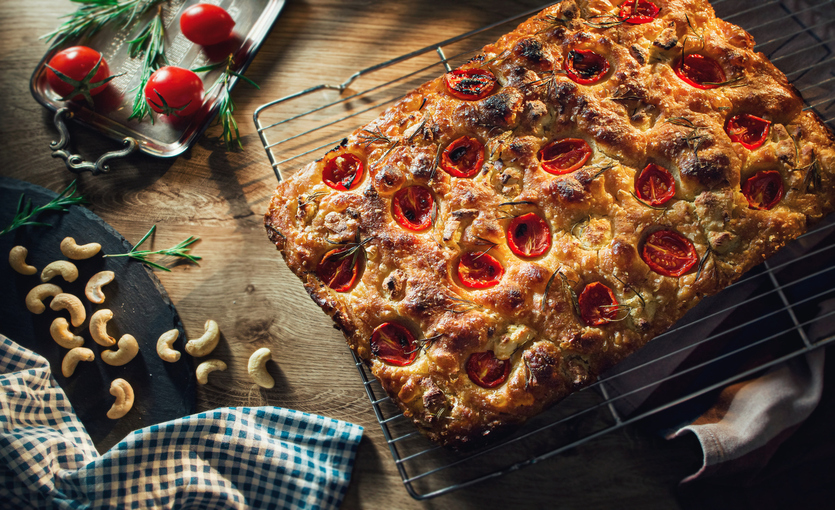
Genoa: Focaccia Is the Pizza Here
Genoa is the city that will make you question every assumption you have about what pizza is. Here, the thing people eat the way Neapolitans eat pizza is focaccia genovese: thick, dimpled, drenched in olive oil, dusted with coarse sea salt, and golden enough to make you stop walking mid-street. Genoese eat it for breakfast. They dunk it in cappuccino. This sounds insane until you try it, at which point it sounds completely obvious.
The city itself is one of Italy’s great underestimated destinations: a port city with a medieval center, the caruggi (narrow alleyways) twisting in on themselves like a maze, full of hole-in-the-wall shops selling pesto, dried pasta, and the above-mentioned focaccia. Genoa invented pesto alla genovese, and the version you’ll eat here, made with tiny local Ligurian basil leaves and a generous hand with the Parmesan, will permanently ruin supermarket pesto for you. It sits comfortably among Top Coastal Escapes in Europe with Pegasus Airlines that most people haven’t discovered yet. Book a cheap flight to Genoa and pair it with a cheap flight to Istanbul
for a seriously underrated two-city break.
- What to order: Focaccia genovese, plain or topped with olives. Eat it for breakfast with a cappuccino, local-style.
- Top 3 sites to visit: Via Garibaldi (UNESCO-listed palaces), the old port redesigned by Renzo Piano, and the Caruggi medieval alleyways.
- Vibe of the city: Atmospheric and slightly secretive, like a city that has no interest in performing for tourists and is all the better for it.
Milan: The North’s Answer
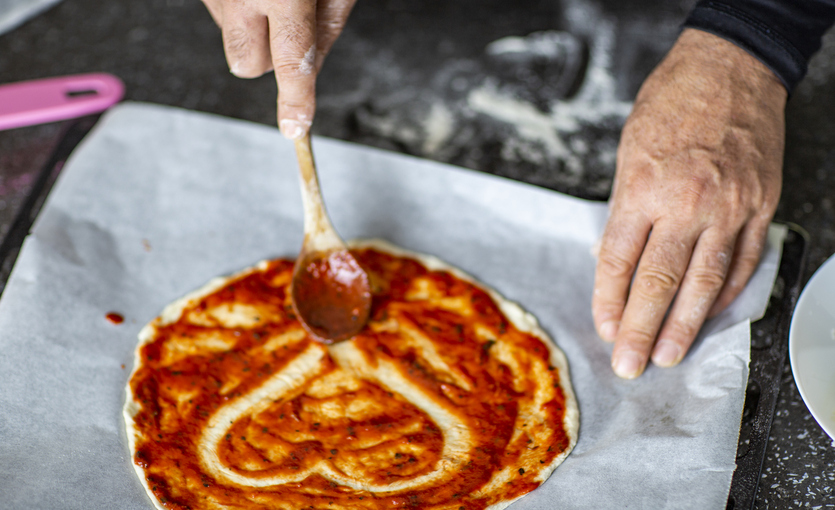
Milan’s relationship with pizza is more complicated than in the south. The city is wealthy, fast, and fashion-forward, and its food culture reflects that, with a lot of creative reinvention happening at every price point. Pizza in teglia (pan pizza) is the classic Milanese format: thick, bready, baked in rectangular trays, with generous and sometimes unexpected toppings. You’ll find it at panifici (bakeries) and counter-service spots, often with queues of office workers at lunchtime who know exactly what they want. If you’re interested in where the city’s food scene reaches its ceiling, check out our guide to the The Ultimate Guide to Michelin-Starred Restaurants — Milan has plenty of entries.
Beyond the pizza, Milan delivers the Duomo (even if you’ve seen a thousand cathedral photos, standing in the square as the light hits the marble at dusk is still something), the Brera district for galleries and aperitivo, and the canals of Navigli for a long, slow evening drink. Search for a cheap flight to Milan and see how easily it connects with the rest of your Italian itinerary. Heading onward from there? Run a search for airline flights tickets and see what Pegasus connects.
- What to order: Pizza in teglia with gorgonzola and speck, or truffle cream if the counter has it. Go at lunch when it’s fresh.
- Top 3 sites to visit: The Duomo, the Pinacoteca di Brera, and the Navigli canal district at aperitivo hour.
- Vibe of the city: Fast, stylish, and serious about quality. Milan doesn’t shout; it just does everything slightly better than you expected.
Palermo: Sicily’s Ancient Street Food
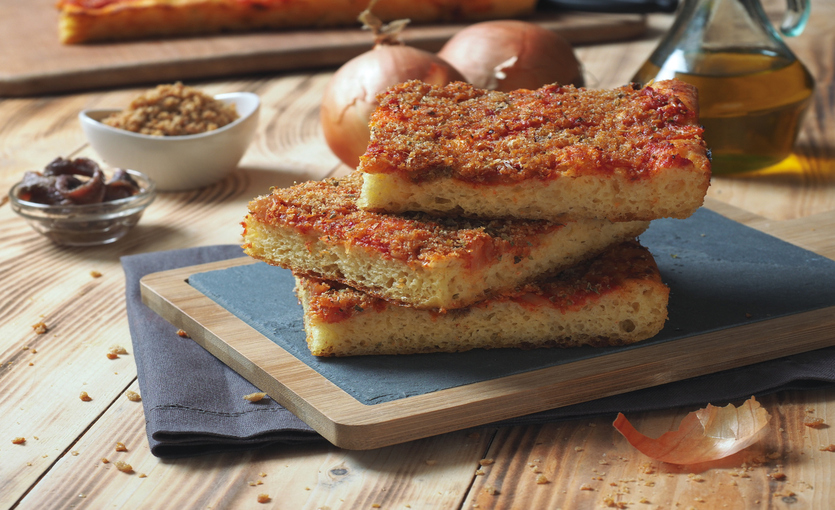
Sicily operates on its own logic, and Palermo makes that clear about thirty seconds after you arrive. The street food culture here is ancient and unapologetic: you eat on your feet, from vendors who’ve been working the same spot for decades. The city’s version of pizza is the sfincione: a thick, spongy base topped with a deeply cooked tomato sauce, onions, anchovies, breadcrumbs, and caciocavallo cheese. It’s sold from three-wheeled carts called lapini, the vendor shouting “sfincione caldo!” to announce warm ones. It is intensely savory, a little funky, and completely addictive. For the full story on Italy’s street food culture, our Street Food Passport Stamps from Istanbul to Naples guide covers the whole journey.
Palermo itself is one of the most historically layered cities in the Mediterranean. Arab-Norman architecture sits alongside Baroque churches and crumbling Liberty-style palazzos, all within walking distance of each other. The Ballarò market is one of the great sensory experiences in Italy: noise, color, offal, citrus, spices, and sfincione all competing for your attention at once. Go hungry. Go early. Book a cheap flight to Palermo and connect through Rome or Milan to get there. Check cheap flight tickets to Türkiye if you’re adding an Istanbul stopover on the way back, and don’t forget you can pre-order your meal up to 24 hours before the flight via the Pegasus Café’s Pre-order menu so you’re sorted before you even get to the gate.
- What to order: Sfincione from a street cart, and then whatever else the Ballarò market vendor is handing you.
- Top 3 sites to visit: The Ballarò market, the Palatine Chapel (Arab-Norman architecture at its peak), and the Quattro Canti crossroads.
- Vibe of the city: Raw, layered, deeply human. Palermo wears its history on its sleeve and its chaos like a second skin.

Plan Your Pizza Pilgrimage
You don’t need to choose just one. Italy’s cities are well-connected by train, with high-speed rail linking Milan, Florence, Rome, and Naples, and Palermo is a short flight or an overnight ferry from the mainland. The smartest move is a south-to-north itinerary: land in Naples, eat your way up the boot, finish in Genoa or Milan. Or go rogue, fly straight into Palermo, spend a few days in the market, and work your way north from there. Our guide slips neatly into the middle of that route if you want a ready-made Roman itinerary to anchor the trip.
If you’re combining this with a Türkiye leg, the Türkiye travel guide has everything you need to bolt on a few days in Istanbul or along the Aegean coast. check out the Pegasus route map to see what connects where, review the baggage allowance page if you’re planning to bring back a serious quantity of olive oil and dried pasta, and consider the upgrade package if you want a little more comfort on the longer legs. Either way, you’ll come home with strong opinions, olive oil on your shirt, and a serious problem with pizza back home.