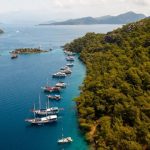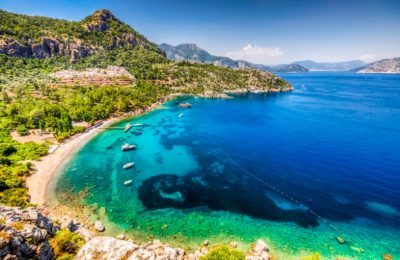
The Datça Peninsula does something that most coastal destinations don’t: it gets better the further you go. The road from Marmaris runs west for 70 kilometers, narrowing as the peninsula narrows, the Aegean on one side and the Mediterranean on the other, and with every kilometer the landscape becomes more spare, the bays more remote, and the water — if that’s possible — more clear. By the time you reach the end of the road, where the ancient city of Knidos stands on a promontory looking out at the point where the two seas meet, you understand why people who come to Datça once tend to come back every year for the rest of their lives. There is no resort here in the usual sense. There is a peninsula, a road, some mastic trees, almond groves, and water that you can read the bottom of at ten meters’ depth. Book your cheap flights to Türkiye early, check the Pegasus route map for the best connection, and use the bay guide below to plan which coves to hit and in which order.
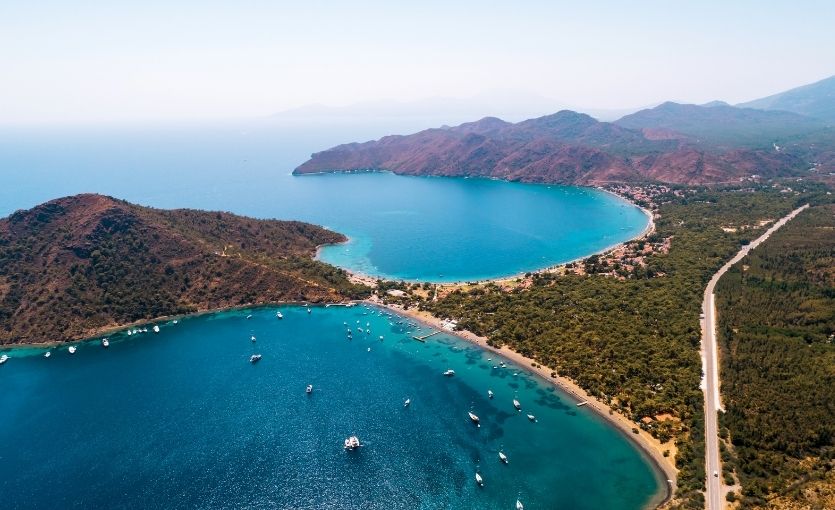
Aktur Çiftlik Koyu: Where the Road First Meets the Sea
The first thing that strikes you about Aktur Çiftlik is the scale of it. This is the widest, sandiest bay on the eastern peninsula, a Blue Flag beach with water sports equipment available for rent and a setup that makes it immediately clear that someone has put thought into the logistics of a day here. The bay faces south, the water is calm for most of the season, and the bottom shelves quickly enough that swimmers feel the depth beneath them before they’ve gone far from the shore. It is the most organized of the Datça bays and, by the standards of everything to the west, relatively sociable.
The fact that Aktur is the most developed bay on the peninsula is worth noting: by most other Turkish coastline standards, it would be considered extremely simple. There are no large hotels, no beach clubs with bottle service, and no DJ sets. There is sand, a Blue Flag, and the particular quality of Datça light — which has something to do with the peninsula’s position between two seas and the clarity of the air at the very end of a long thin stretch of land. Blue Flag and Family Friendly: The Best Beaches in Antalya, Muğla and İzmir covers what the Blue Flag designation actually means if you want the detail.
Getting there: Fly into cheap flights to Dalaman — about 120 kilometers east. From Dalaman, drive via Marmaris and follow the D400 peninsula road west. The drive from Marmaris to Datça center takes around 75 minutes. A hire car is essential for exploring the bays.
Karaincir Plajı: The Family Bay
Karaincir is the exception that proves the peninsula rule. Most of Datça’s bays are pebble and rock; Karaincir is fine sand and gently shelving, which is why it fills with families in July and August and why it fills with them entirely reasonably. The water is warmer here than further west — the bay’s position and orientation mean it holds the heat — and the shallow bottom means children can swim a long distance from shore without the depth becoming unmanageable. There are changing facilities, sunbed rentals, and restaurants close by, all of which are present in the understated, functional way that Datça does amenities.
The beach is not the place to come for solitude — for that, keep driving west. But if you have children who need predictable, manageable water, or if you want your first Datça swim to be an easy one before you commit to the more remote bays, Karaincir delivers exactly what it promises.
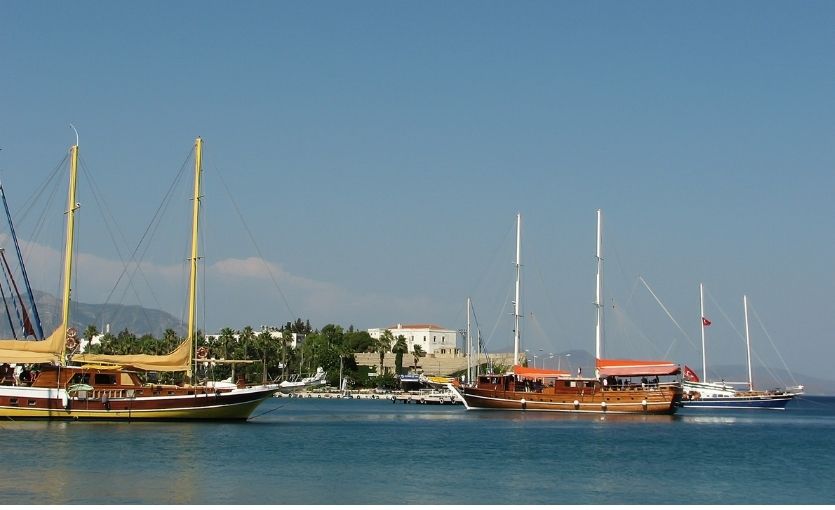
Taşlık and Kumluk: The Town Beaches
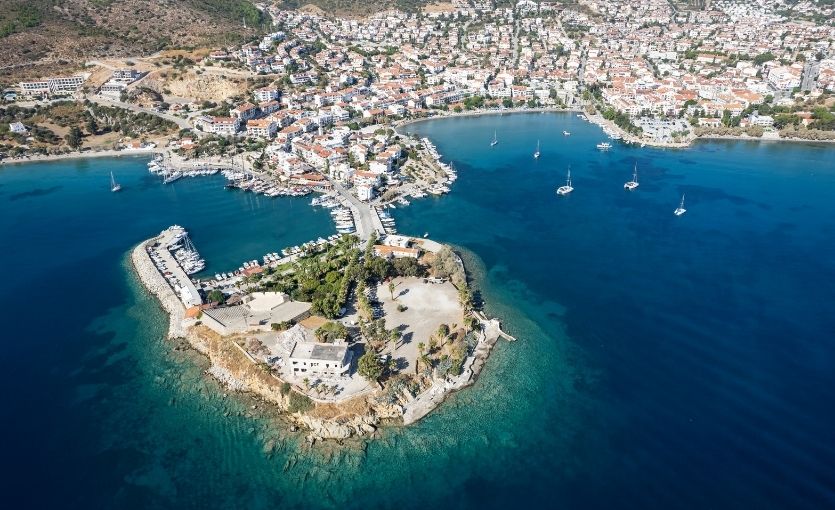
Datça’s two central beaches sit either side of the marina and serve the town’s year-round residents as much as its visitors. Taşlık is the better swimming beach: pebble and sand, Blue Flag, cool and clear, with the sulfurous mineral pool of Ilıca Göleti sitting directly behind it — the same spring water that feeds the pool also cools the sea slightly, which makes Taşlık one of the more refreshing swims on the peninsula in high summer. The restaurants and cafes along the waterfront fill up in the evening and the sunset from this stretch of coast, facing southwest, is extremely good.
Kumluk, just around the point, is sandier and shallower — better for sitting on than swimming from, and better at golden hour than at noon. The seafood restaurants along the beach are honest and good. Neither beach is the reason to drive to Datça, but both are the reason you don’t feel like you’ve been short-changed when you arrive and discover the town center has its own coastline.
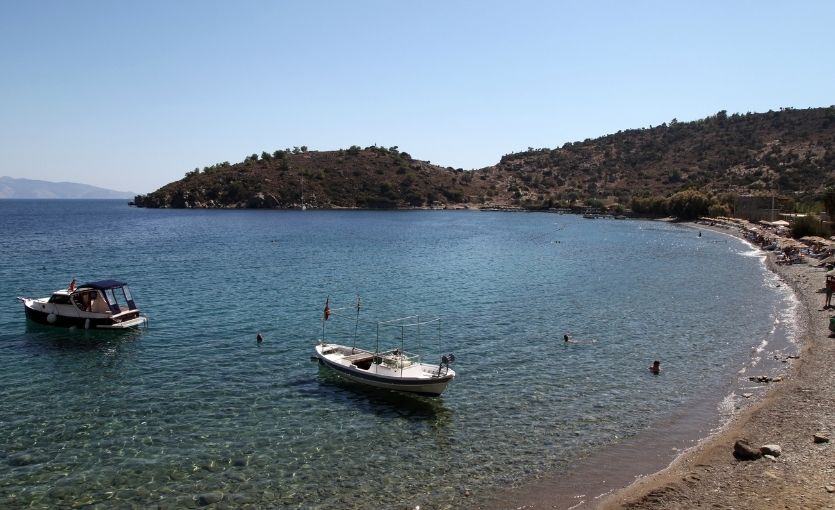
Kargı Koyu: Consistent, Warm and Worth Every Visit
A few kilometers west of the town center, Kargı is where Datça locals go when they want a reliable swim that isn’t the town beach. The water is calm and warm — warmer than the bays further west because the cove is more sheltered — and the pebble shore is comfortable enough that you’ll spend an entire afternoon here without particularly noticing the time passing. There are restaurants on the beach, sunbeds for rent, and enough of a local crowd that the place has a character distinct from anywhere trying to be a tourist attraction.
The most useful thing to know about Kargı is that it’s one of the few Datça bays easily reachable from town by minibus if you don’t have a hire car. It is also consistently good across the whole season — the sheltered position means it doesn’t rough up in the afternoon the way some of the more exposed western bays can. If you have one swim in Datça and no transport, make it Kargı.
Gerence Koyu (Akvaryum): Named for a Reason
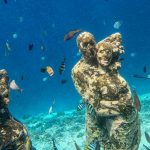
The locals call it the aquarium bay, and when you arrive you understand why immediately. The water at Gerence is the kind of clear that makes you wonder if you’ve misread the depth — you can see the individual pebbles on the bottom at several meters, the light refracting through the water in the particular way that only genuinely pristine water produces. There are no facilities here: no sunbeds, no restaurant, no changing rooms. What there is instead is a rocky shore, a forest track in from the road, and water that is cold enough in early summer to make you catch your breath and warm enough by August to stay in for an hour.
Gerence is technically reachable by car and a short walk, but it’s also one of the bays that the day-trip boats from Datça stop at, which means that in peak season it can be busier than its remoteness suggests. Go in the morning before the boats arrive, or go in September. The Hidden Bays and Ancient Ruins Along the Muğla Shoreline covers Gerence alongside the other boat-access bays of the Gökova gulf. The consistent winds through the gulf also attract windsurfers — Ride the Wind: The Best Kitesurfing Spots in Europe and Türkiye covers the Gökova bay conditions in detail.
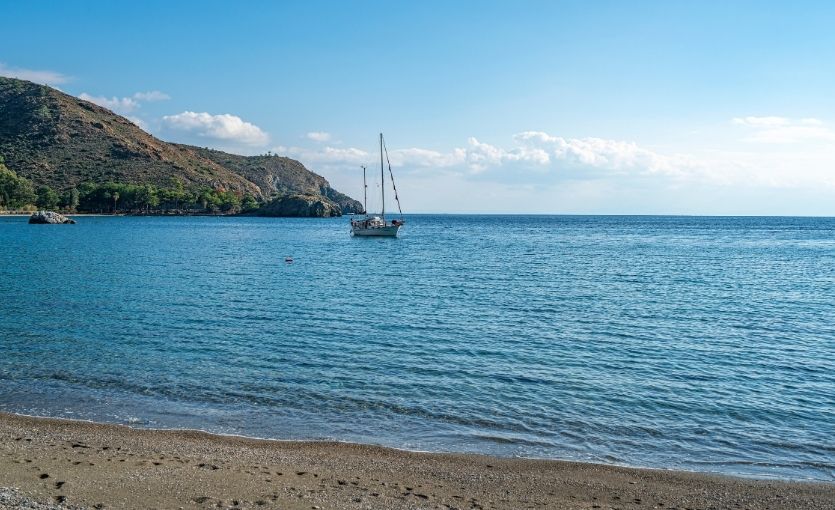
Hayıtbükü and Ovabükü: The Village Bays of Mesudiye
The village of Mesudiye sits in the folds of the hills above three bays, and these two are the heart of the peninsula’s slow-travel culture. Hayıtbükü is the livelier of the pair: protected from the wind, shallow and warm, with a small floating jetty, a handful of pensions running along the hillside, and restaurants that set tables on the beach in the evenings. The water is genuinely calm here — the bay’s orientation means it rarely roughens — and the mornings, before the heat builds and before anyone arrives from the road, have a particular stillness.
Ovabükü, one kilometer further west, is more nature and less infrastructure: a few small restaurants and pensions, a pebble and sand shore, and an afternoon swell that makes the mornings better for swimming than the afternoons. The hillside above the village is dotted with Datça’s famous almond trees, and the local stalls along the road sell dried almonds, wild herbs, and the kind of provisions that make spending a few days here feel like a genuinely self-contained holiday rather than a stop on a longer route. Harvesting Local Flavors: Agritourism and Slow Food in Türkiye covers the Datça almond harvest and the food culture of these villages in depth.
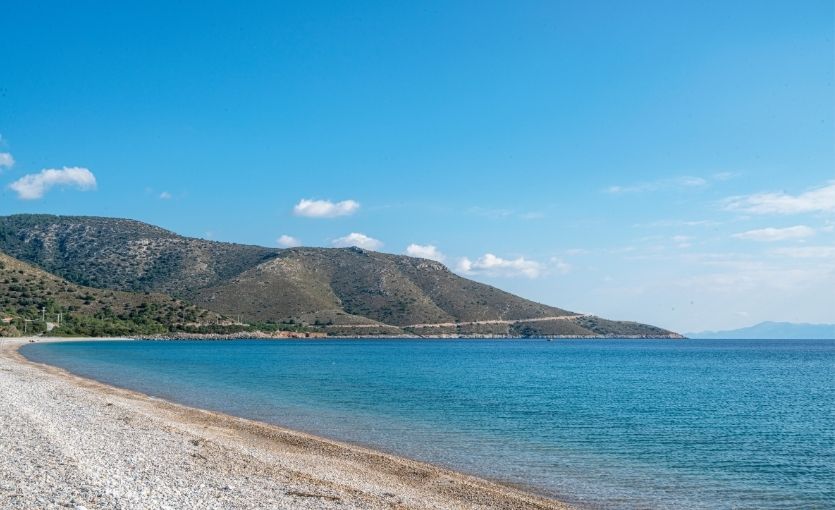
Palamutbükü: The Bay That’s Becoming Hard to Keep a Secret
Until recently, Palamutbükü was the kind of place that people who knew Datça well mentioned with slightly possessive affection, the implication being that you should go before too many others did. That moment may have passed — the bay now has a growing number of small hotels and restaurants, and the road to it from Mesudiye has been improved enough that it’s no longer the deterrent it once was. But the essentials remain: a long bay backed by almond and pine trees, cool and clear water, a pebble and sand shore that extends far enough to absorb a reasonable number of people without feeling crowded, and the quality of light that comes from being this far west on a peninsula that ends in open sea.
The restaurants along the waterfront are family-run and the fish is the catch of whoever went out that morning. The almond trees on the hillside above the bay produce the nuts for which Datça is famous, and in August the almonds are ripening. Palamutbükü is also the last bay before the road turns to track and the peninsula commits itself to wilderness. From here west, it is Knidos or nothing, which makes this an excellent place to pause, eat, swim, and decide whether you’re ready for the end of the road.
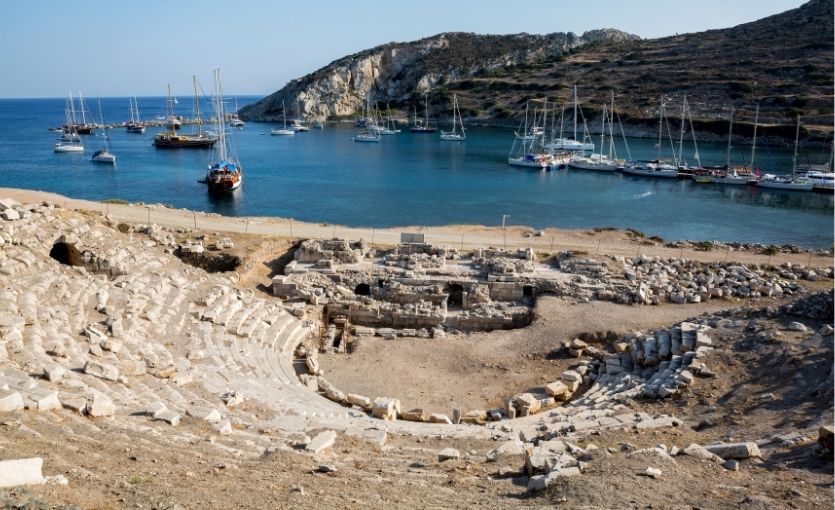
Knidos: Where the Road Ends and the Ancient World Begins
The road to Knidos runs the full length of the Datça Peninsula, continuing west past Palamutbükü along a rough track that rewards the effort at the end of it. The promontory comes into view as the road drops toward the sea — the ruins of the ancient city visible on the hillside, and then the two harbors simultaneously: one facing the Aegean to the north, one facing the Mediterranean to the south, and the open sea beyond both of them stretching to the horizon in two different directions. The road is reportedly being upgraded, but for now come prepared for a slow final stretch and consider the hire car your co-pilot in the archaeology.
Knidos was one of the great cities of the ancient world. Its school of medicine was among the most respected in antiquity, its astronomical observatory helped establish the length of the solar year, and the statue of Aphrodite by Praxiteles — the first life-sized female nude in Western art — stood here and drew visitors from across the Mediterranean specifically to see it. The ruins that remain are substantial: a theater, temples, a circular structure whose purpose is still disputed, and the harbor walls that engineers of two and a half millennia ago built to withstand the combined force of two seas. Sitting on the theater steps in the late afternoon, the two seas visible below and the Greek island of Kos a few kilometers across the water, is one of those travel experiences that earns the word unforgettable without apology. The South Aegean Experience Route covers the broader Datça and Knidos context as part of the peninsula route south. The Lace Up & Hit the Trails: Türkiye’s Top 7 Treks covers the Carian Trail, a long-distance walking route that passes through the Datça and Bozburun peninsula and is one of the best ways to understand this landscape on foot.
Getting there: The road to Knidos from Datça runs along the peninsula tip and is rough in places — a hire car will get you there, though the track requires patience and a reasonable ground clearance. The road is reportedly being improved. Day-trip boats from Datça marina are also an option and make for a scenic approach by sea.
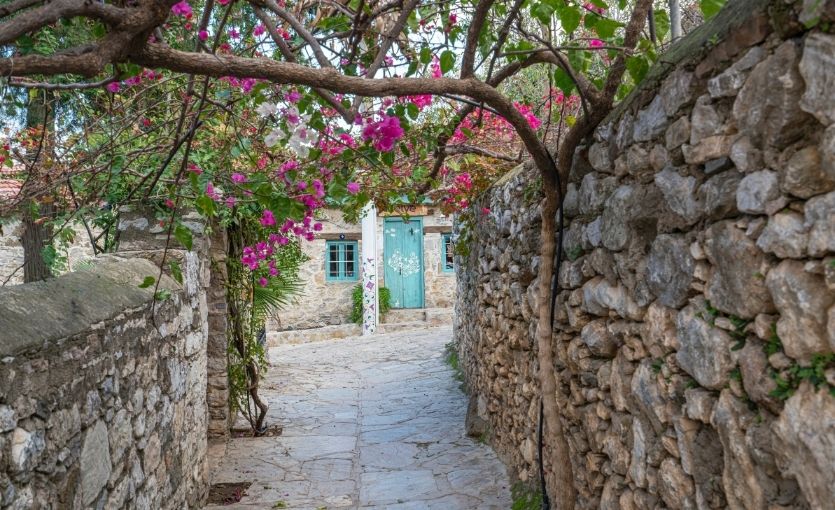
Bonus: Eski Datça
Three kilometers inland from the modern town, the old village of Eski Datça is the version of Datça that existed before the marina and the beach restaurants. The stone houses are 200 to 400 years old, many of them restored with enough sensitivity that the village reads as a place where people live rather than a museum of how people used to. The lanes are too narrow for cars, the bougainvillea grows over the walls, and the handful of restaurants and wine bars tucked into the old stone buildings serve food and drink with the unhurried confidence of places that have never needed to compete for attention.
Eski Datça is worth at least an evening and ideally a morning too, when the light is low and the village is quiet and the stone takes on a warmth that the harsh midday sun flattens. It is a ten-minute drive from the coast and a reminder that the peninsula’s attraction is not only its bays. What Does Slow Travel Mean? is worth reading before you go — Eski Datça is one of its best practical illustrations.