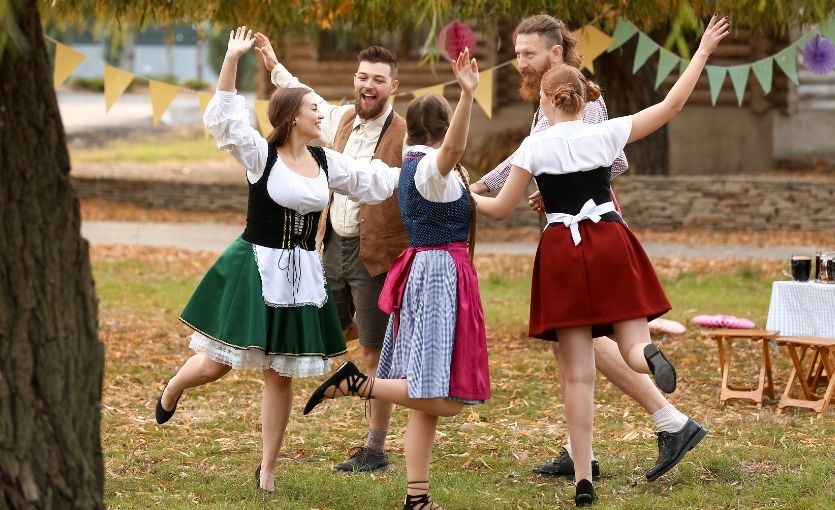
By the third week of September, something happens to Munich. The beer tents fill to capacity by 9am. A Maß — the one-liter stein that is the festival’s basic unit of consumption — costs €15 or more. Hotel rooms within a reasonable distance were booked a year ago. The crowds are global, the queues are long, and the Theresienwiese has become, in many ways, a performance of itself. None of this means you shouldn’t go. But it does mean there’s a strong case for going somewhere else instead — or going to both, which the calendar actually makes possible.
Germany has an extraordinary tradition of autumn folk festivals that predate Oktoberfest, rival it in scale, and outdo it comprehensively in local character. Several of them are reachable from the same airports in the same trip. Pegasus flies directly to Stuttgart and Nuremberg — the two cities that anchor this guide — and the beer culture that radiates outward from both is among the best reasons to visit Germany in autumn. Use the Pegasus route map to plan your connections.
The Cannstatter Volksfest, Stuttgart: You Can Actually Do Both
September 25 – October 11, 2026 | Founded 1818 | 4.2 million visitors | Free entry
Book a cheap flight to Stuttgart and you land 13 kilometers from one of the best-kept secrets in European festival culture. The Cannstatter Volksfest is the world’s second-largest beer festival — 4.2 million visitors over 17 days in 2025 — and almost nobody outside Germany knows it exists. More importantly: Oktoberfest 2026 runs September 19 to October 4, and the Cannstatter Volksfest runs September 25 to October 11. There is an overlap. You can take the two-hour train between Munich and Stuttgart and attend both. Thousands of people do it every year. You are now one of those people.
The festival takes place on the Cannstatter Wasen, a 25-hectare meadow on the banks of the Neckar river in the Bad Cannstatt district, with Stuttgart’s vine-terraced hills rising above and the city’s riverfront providing a backdrop that feels genuinely different from Munich’s Theresienwiese. Founded in 1818 by King Wilhelm I of Württemberg after an agricultural crisis — the 23-meter Fruchtsäule, or fruit column, still symbolizes that harvest origin and is tapped ceremonially each opening day — the Volksfest has spent most of its 200-year history being nearly as large as Oktoberfest and considerably less famous.
What Makes It Different
- It’s 70% local. Swabians and Stuttgarters make up the vast majority of visitors, which means easier access to tables, more spontaneous conversations, and a crowd that isn’t there for the bucket-list experience.
- The beer is Swabian, not Bavarian. Eight tents pour Stuttgart and Württemberg breweries — Dinkelacker, Stuttgarter Hofbräu, Schwaben Bräu, Wulle — at 6 to 6.5% ABV, with a Maß running €14.50 to €15.80 in 2024.
- There’s a wine tent. Württemberg produces genuinely good Trollinger and Lemberger reds — light, food-friendly, and almost unknown outside the region. The wine tent is a real alternative, not an afterthought.
- The funfair is full-scale. Ferris wheel, carnival rides, and enough attractions that a family with young children can spend a whole day without setting foot in a beer tent.
- Table reservations are easier. Each tent manages its own bookings; weekday visits are generally walk-in. Nothing like the Munich scramble.
What to Order
- Dinkelacker Festbier — the Stuttgart house festival lager, golden and clean, the local benchmark.
- Stuttgarter Hofbräu Jubiläums-Festbier — a slightly fuller version of the house style, worth trying side by side.
- Württemberg Trollinger — from the wine tent: the local red that pairs well with Maultaschen, the Swabian pasta parcels stuffed with meat and spinach.
- The Swabian Maultaschen themselves — Stuttgart’s answer to the Bavarian Brez’n, and considerably more substantial.
Beyond the Wasen, give yourself a day for Stuttgart itself: the Mercedes-Benz Museum (eight levels of automotive history in a building shaped like a double helix) and the Porsche Museum across the city together make up the best car museum experience in Germany, possibly in Europe.
Nuremberg: The Gateway to Franconia’s Beer Country
Altstadtfest: Early September | Franconian beer culture: year-round | Best in September–October
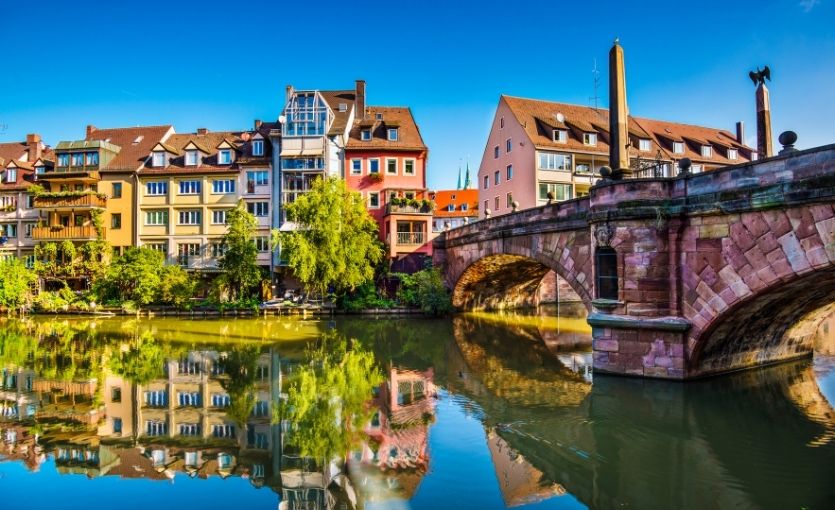
After a cheap flight to Nuremberg, you’re 30 minutes by U-Bahn from one of Germany’s finest medieval old towns and under an hour by train from Bamberg, the UNESCO Heritage city that serious beer travelers have been quietly preferring over Munich for years. The old town of Nuremberg itself — intact city walls encircling a hilltop castle, cobblestone streets leading down to the Hauptmarkt square, the half-timbered houses of the Weißgerbergasse — is one of the great walking cities in Germany, and in early September it hosts the Nürnberger Altstadtfest: Germany’s largest old town festival, spreading across Schütt Island and Hans Sachs Square with multiple music stages, restaurant stalls extending onto the cobblestones, and the particular energy of a city celebrating in its own historic streets.
But Nuremberg is really the entrance to a broader landscape. Upper Franconia has more breweries per capita than anywhere else on earth — over 200 still active across the region, including farmhouse and monastery breweries in villages that have been brewing the same way for centuries. The Keller culture here — outdoor beer gardens built into forested hillsides, served from centuries-old underground cellars — is entirely different from the big-tent festival experience and, for many visitors, considerably more memorable. Flight Hacks: How to Plan a Multi-Stop Trip with Pegasus covers how to combine Nuremberg with a wider German itinerary.
What Makes It Different
- It’s a beer culture, not a beer event. Franconia operates year-round. You don’t need to time a specific festival to experience the Keller, the smoky taverns, and the farmhouse breweries — though September and October are the best months.
- The sausage is protected by law. The Nürnberger Rostbratwurst — 3 centimeters long, grilled over beechwood, served in sixes, eights or twelves — has Protected Geographical Indication status. It can only officially be produced within Nuremberg city limits.
- Bamberg is one train stop away. One of Germany’s most beautiful and best-preserved cities is under an hour by regional train. Plan a day trip at minimum; two nights if you can.
- You can cycle between breweries. Marked routes through the Fränkische Schweiz connect village breweries. You can do this unsupported, in a day, starting from Bamberg.
- The Altstadtfest has no beer tent dress code. No dirndl required — though nobody will mind if you wear one.
What to Order
- Schlenkerla Märzen — Bamberg’s smoked-beer benchmark. Start here. The beechwood smoke gives it a flavour unlike anything else in Europe. If you don’t like it after one glass, try the Weizen version instead — it’s gentler.
- Franconian Kellerbier — unfiltered, naturally carbonated, poured cloudy straight from the cellar. The everyday lager of the region; you will drink a lot of it without noticing.
- Annafest Festbier (if your timing works) — the special seasonal brew from Forchheim’s Annafest, available only in late July, but worth planning around if you’re flexible on dates.
- Nürnberger Rostbratwurst — in sixes from a street stall, with mustard, on a paper plate. This is non-negotiable.
The Erlangen Bergkirchweih: The World’s Oldest Beer Festival (Yes, Older Than Oktoberfest)
Whitsun, June 2027 | Founded 1755 | 1 million+ visitors | Free entry | 55 years older than Oktoberfest
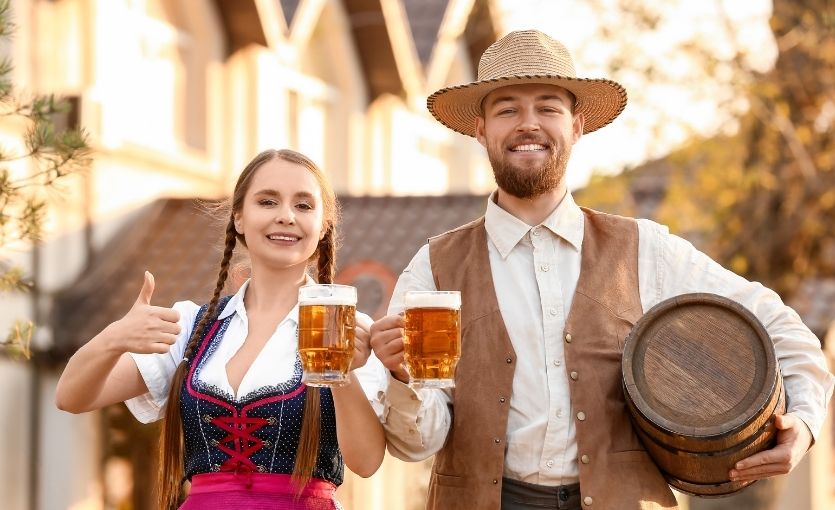
From Nuremberg, a 20-minute regional train north brings you to Erlangen — and to a fact that tends to stop beer enthusiasts mid-sentence: the Erlangen Bergkirchweih, established on April 21, 1755, is the oldest beer festival in the world. It predates Oktoberfest by 55 years. Over a million people attend across 12 days each June — approximately ten times the population of Erlangen itself. You will find no equivalent ratio in European festival culture.
The festival’s setting is its great distinction. Fourteen Keller — beer cellars originally dug into the forested castle hillside to keep beer cool before refrigeration — operate as outdoor serving areas under chestnut trees during the festival. There are no reserved tables, no service charges, and no dress code. You walk up the hill, you find a space at a long wooden table, and whoever sits down next to you is now your drinking companion for the afternoon. The beer is kept cold by the earth above it and served in half-liter glasses at prices that reflect the unpretentious, genuinely local character of the whole event. The Bergkirchweih runs at Whitsun (June for 2027), making it a summer rather than autumn destination — but if your travel window is flexible, or if you’re planning ahead, it is the most authentic beer festival in Germany and among the most overlooked.
What Makes It Different
- It’s the oldest. That’s 55 years before the first Oktoberfest in 1810. No argument, no asterisk.
- The atmosphere is genuinely relaxed. No reservations, no dress code, no rush. You arrive, you find a seat under the trees, you stay as long as you like.
- The setting is unlike any other festival. Beer served from hillside cellars under chestnut trees on a forested slope below a castle. You won’t see this anywhere else.
- The crowd is overwhelmingly local. A million visitors to a city of 100,000 means the ratio of locals to tourists is still very high compared to Munich.
- It’s free. No entry fee, no wristband, no ticket. Just show up.
What to Order
- Entla’s Keller beer — one of the most celebrated of the hillside cellars, with a Franconian lager that regulars return to year after year.
- Franconian Kellerbier (see above — this is the natural drink of the region and the Berch, as locals call it, is its ideal setting).
- Steckerlfisch — whole fish grilled on a stick over an open fire, the traditional festival food of the Bergkirchweih. Order one while the grill is hot.
- Local Bratwurst from the stalls on the hillside — smaller and more herbed than the Nuremberg version, typical of the Erlangen breweries’ preferred food pairing.
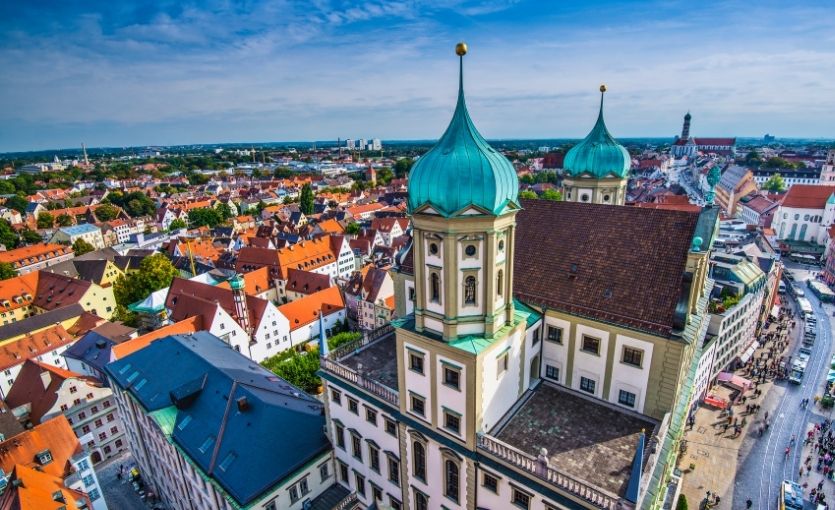
Augsburg: A Thousand-Year Tradition and the Best Friday Night Fireworks in Germany
Herbstplärrer 2026: September 25 – October 4 | Over 1,000 years old | ~1 million visitors
A cheap flight to Munich with Pegasus puts you 36 minutes by ICE train from Augsburg — and from a folk festival tradition that predates even the Bergkirchweih. The Augsburg Herbstplärrer has been running on the Plärrer fairground for over a thousand years, which makes it one of the oldest popular festivals in Europe by any measure. The city around it is equally old: founded by the Romans as Augusta Vindelicorum in 15 BC, home to the Fugger banking dynasty that financed Holy Roman Emperors, and site of the 1555 Peace of Augsburg that helped end the first phase of the German Reformation. The Fuggerei, the world’s oldest social housing complex — still inhabited, still charging the same nominal rent set in 1521 — is a ten-minute walk from the Plärrer grounds and worth an hour of your time.
The Herbstplärrer itself is a full Bavarian Volksfest: beer tents, carnival rides, funfair stalls, and the social energy of a city turning out in numbers that dwarf any ordinary weekend. But the thing that draws people back year after year is simpler: the Friday evening fireworks above the Plärrer grounds are among the best in Germany, spectacular enough that locals plan their year around them. If you’re already doing Oktoberfest and the Cannstatter Volksfest, Augsburg adds a third festival with minimal extra effort and a completely different character.
What Makes It Different
- It’s over 1,000 years old. The oldest festival on this list by quite some margin — older than Bamberg’s recorded brewery history, older than most of the buildings in Munich.
- It sits inside one of Germany’s great historic cities. The Augsburg Altstadt is extraordinary — the Fuggerei, the Renaissance Rathaus, the Dom — and worth a full day beyond the festival.
- The Friday fireworks. They are genuinely remarkable. Plan to be there on a Friday evening.
- It’s an easy add-on. 36 minutes from Munich by ICE. If you’re already in Bavaria for Oktoberfest, Augsburg costs you an afternoon and a train ticket.
- The crowd is Swabian, not international. Augsburg’s festival-going population turns out in force; the tourist layer is thin.
What to Order
- Augsburg Festbier — local breweries pour for the Herbstplärrer; the house style is slightly maltier than the Stuttgart equivalent.
- Schweinshaxe — the great Bavarian slow-roasted pork knuckle, crackling caramelized, served with Knödel and sauerkraut. The festival tent version is typically excellent.
- Obatzda — the Bavarian cheese spread made with camembert, butter, onion and paprika, served with a pretzel. The ideal thing to eat while watching fireworks.
- A pre-festival coffee in the Fuggerei — the old almshouse has a small café; the contrast between the medieval quiet inside its walls and the noise of the Plärrer a ten-minute walk away is one of the better juxtapositions in German tourism.
Bamberg: The City That Doesn’t Need a Festival to Be Worth the Visit
Year-round | Best: September–October | Keller season closes October | Via Nuremberg
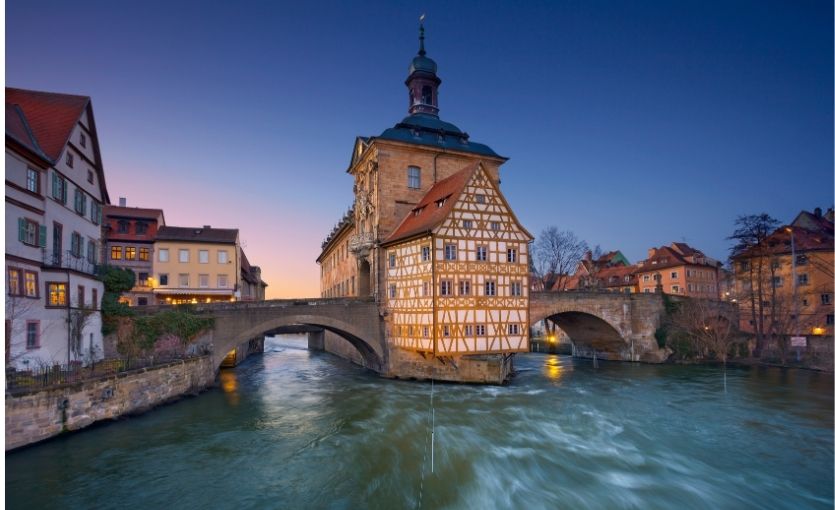
After a cheap flight to Nuremberg and a 52-minute regional train north, you step out in a city that quietly makes the case for itself without trying very hard. Bamberg’s old town — spread across seven hills above the Regnitz river and the Main-Danube Canal — is one of the best-preserved medieval city centers in Germany, spared significant wartime bombing and retaining a density of original buildings that most German cities lost in the 1940s. The Altes Rathaus, built on an artificial island in the middle of the river, has been photographed so many times it has become iconic, and it is still genuinely extraordinary when you walk across the bridge and see it in person. The cathedral holds the only papal tomb north of the Alps. The rose garden above the Neue Residenz has views across rooftops and spires that painters have been attempting to capture for 300 years.
September and October are the Keller season: the outdoor beer gardens carved into the Stephansberg hillside above the city are still running, the chestnut trees are turning, and the evenings have the exact quality of cool and golden that makes sitting on a hillside terrace with a beer feel like the right thing to be doing. The Spezial Keller at the top of the Stephansberg has a terrace view across Bamberg’s rooftops that is among the better views in Germany. Walk back down through the Altstadt in the October evening and you will understand why people who come to Bamberg once tend to come back.
What Makes It Different
- It’s a beer city, not a beer festival. Nine breweries within the city limits, dozens more within cycling distance. The whole city is the festival.
- Rauchbier is a genuine revelation. If you’ve never had smoked beer, Bamberg is the only place to have it for the first time. Schlenkerla’s tavern has been serving it since 1405.
- The architecture is extraordinary. UNESCO-listed old town, intact medieval and baroque streetscapes, the river-island Rathaus. Budget a full day for walking before you start drinking.
- The Keller culture is seasonal. The hillside beer gardens are open April through October. Come in September or early October and you catch the best of both the weather and the autumn color.
- It’s a day trip from Nuremberg or a destination in itself. Both work. Two nights gives you time to do both the city and the brewery cycling properly.
What to Order
- Schlenkerla Märzen — the smoked-beer flagship, the thing you came for. Order it in the medieval tavern on Dominikanerstraße. If the smokiness is too much on first sip, persist: most people find it clicks by the second half of the glass.
- Schlenkerla Weizen — the wheat beer version, gentler smoke, easier entry point if the Märzen is too intense.
- Spezial Lager — from the Keller on the Stephansberg. A naturally smoked lager, lighter than Schlenkerla, with the terrace view included.
- Fränkische Bratwurst — Bamberg’s version: longer and thinner than the Nuremberg sausage, heavily seasoned with marjoram, grilled over beechwood. Get one from a street stall before you sit down to drink.
Planning Your Trip: How to Combine These Festivals
The Double-Festival Route (Late September, 7–10 Days)
The most satisfying combination uses what the calendar gives you. Fly into Stuttgart and spend two or three days at the Cannstatter Volksfest (September 25 onwards). Take the two-hour train to Munich for the final days of Oktoberfest (which closes October 4). Then head north by train to Nuremberg for the Franconian beer culture — Bamberg day trip included — before flying home. You’ve covered the full range of what German autumn folk festival culture actually looks like: from a near-Munich-scale Volksfest in Stuttgart to the intimate Keller culture of Franconia. The 50 Best Music Festivals in Europe covers the wider European festival calendar if you want to add a music event to the mix, and Budapest and Vienna by Train covers a natural extension if you want to keep moving east after Germany.
A Quick Franconian Beer Glossary
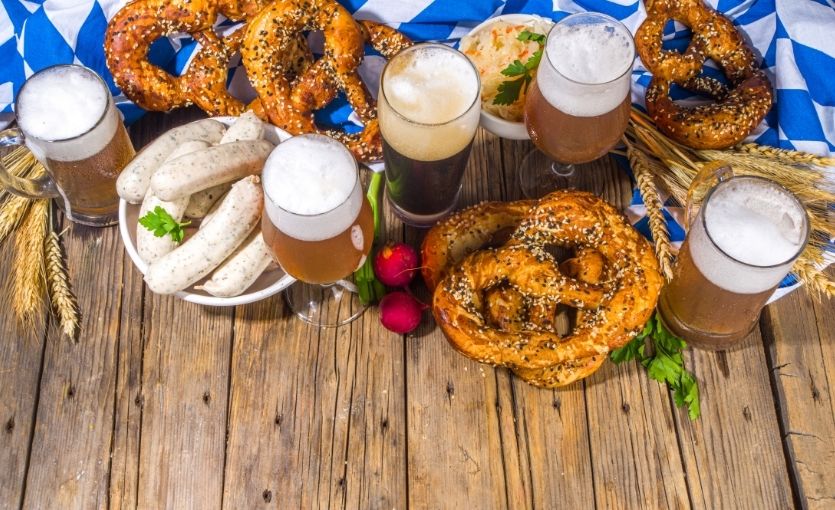
- Kellerbier: Unfiltered, naturally carbonated lager served straight from the cellar. Cloudy, fresh, lower alcohol than Festbier. The everyday drink of Franconia. Order it anywhere.
- Rauchbier: Smoked beer, made with malt dried over beechwood fires. Bamberg specialty. Start with the Märzen at Schlenkerla — it’s the most approachable version.
- Festbier: The golden, slightly stronger (6–6.5% ABV) lager brewed specifically for folk festivals. Standard across Stuttgart, Augsburg, and the Bavarian festivals.
- Maß: One liter. The standard festival serving. Do not ask for a smaller measure in a beer tent. This will not improve your standing.
Booking Notes
Stuttgart beer tent reservations open months ahead and require food and drink voucher pre-purchases — book weekends early, walk in on weekdays. Hotel prices in Stuttgart spike sharply during the Volksfest. Nuremberg’s old town has enough accommodation that last-minute bookings are more viable, though September is busy. Use how to find cheap flights to lock in fares early. Check the baggage allowance page before you pack — dirndl and lederhosen add more weight than you expect. Consider the upgrade package for the flexibility a festival trip benefits from. Pre-order your in-flight meal via the Pegasus Café pre-order menu up to 24 hours before departure. The beer will be cold when you land.