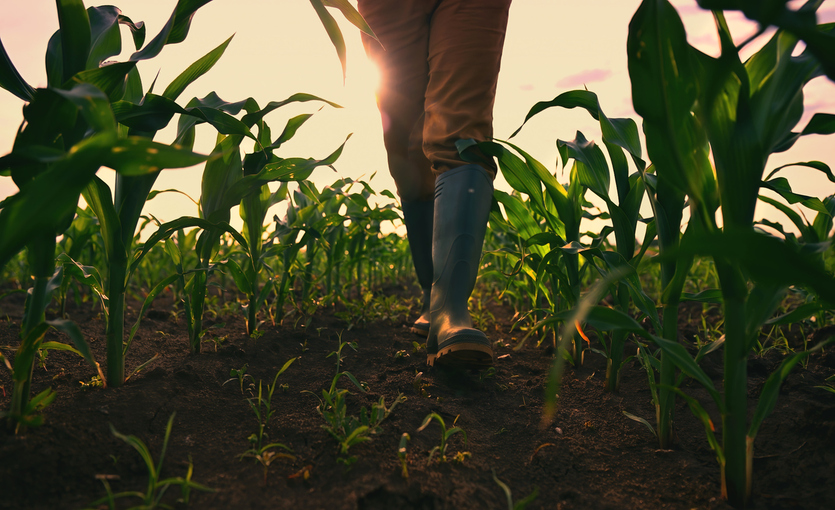
Farmer walking through maize field, low angle view with selective focus
There is a particular quality to food that you have watched being made. Not watched in the sense of a cooking demonstration or a restaurant kitchen tour, but watched in the full sense: seen the soil it came from, felt the weight of the fruit before it was pressed, understood the season that made it possible. Türkiye has been producing food this way, in the same places by the same methods, for long enough that the distinction between agriculture and culture has largely dissolved. The olive groves of Çanakkale, the vineyards of Bozcaada, the cheese caves of Kars, the almond orchards of Datça: these are not attractions bolted onto a destination. They are the destination. Agritourism in Türkiye is not a trend. It is what Türkiye has always been, finally being recognized as something worth traveling specifically for. Book a cheap flight to Çanakkale or a cheap flight to İzmir with Pegasus, check the Pegasus route map for the connection that gets you closest to harvest season, and use the calendar below as your guide to timing. What Does Slow Travel Mean? covers the philosophy; The Culinary Heart of Türkiye covers what this country’s food culture looks like at its most concentrated.
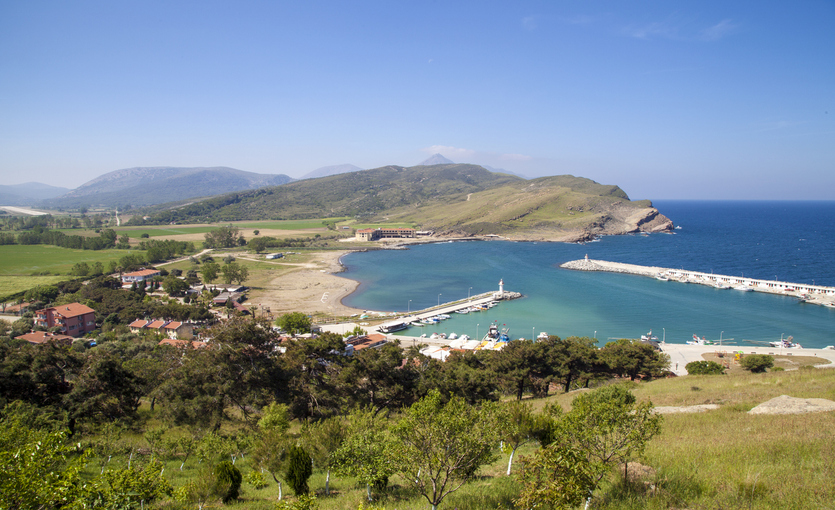
Kalekoy port view from Kale village, Gokceada, Turkey
Gökçeada: An Island That Still Lives by the Season
Gökçeada, Türkiye’s largest island, sits in the northern Aegean off the coast of Çanakkale, and it operates on a logic that the mainland has largely abandoned. The island’s small Greek-origin villages, many of them partly depopulated and now slowly being resettled by young producers drawn by cheap land and clean air, are organized around a seasonal agricultural calendar that has not changed much in a century. The wildflower honey comes first, in June, when the hillside meadows are at peak bloom and the bees are working continuously. The grain harvest follows in late summer, still done on some farms with machinery old enough to qualify as museum pieces. The dried herb season runs through autumn, with oregano, thyme, and sage cut and bundled in quantities that perfume entire streets.
What makes Gökçeada interesting as an agritourism destination rather than simply a pleasant island is that the producers here are genuinely small-scale and genuinely welcoming. The weekly market in Zeytinliköy is the most direct way in: you buy directly from the person who grew it, and if you ask the right questions you will usually end up with an invitation to come and see the operation. The island’s organic food culture has developed a reputation serious enough to draw chefs from Istanbul and beyond. Getting there requires a ferry from Geyikli or Çanakkale, which is itself part of the experience. Türkiye’s Hidden Highlands: Cool Escapes for Summer covers the broader northern Aegean region that Gökçeada sits within.
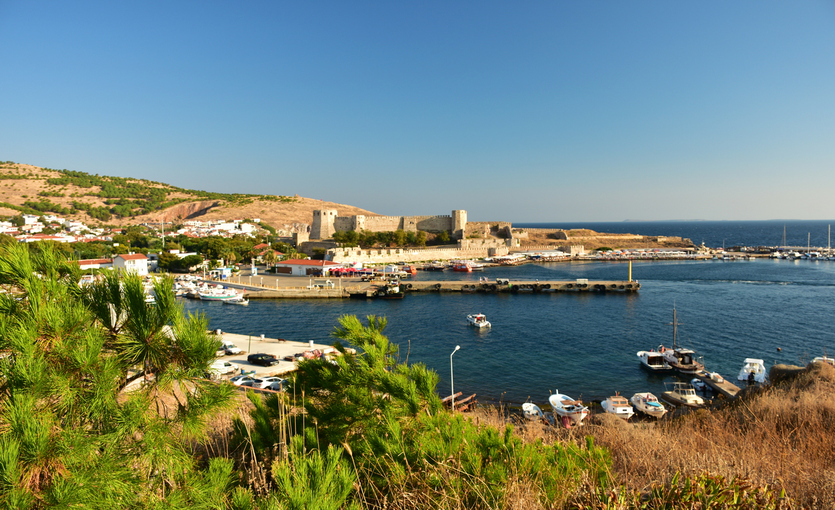
Bozcaada, or Tenedos with its former name, is the third largest island in Turkey, the second largest island in the Aegean Sea after Gokceada, and the smallest district of Canakkale province in terms of population.
Bozcaada: The Grape Harvest as an Event Worth Flying For
The bağ bozumu, the grape harvest, is the moment when Bozcaada stops being a charming Aegean island and becomes something closer to a collective act of memory. The harvest runs through August and into September, and during those weeks the island’s vineyards, which cover a significant portion of its interior in rows of red soil and low-trained vines, are full of people picking by hand. The island’s winemaking tradition goes back to antiquity, and the grape varieties grown here, particularly Vasilaki and Kuntra whites and a local Karalahna red, are not found anywhere else in the world. The wines they produce are not internationally famous. They taste of the place they come from in a way that internationally famous wines rarely manage.
Most of the island’s producers are small enough that a visitor who arrives during harvest and asks politely will be put to work. This is not a guarantee, but it is a reasonable expectation. The physical experience of harvest, the weight of the basket, the particular smell of must, the way the light falls on the vine rows in the late afternoon, is not something a wine tasting can replicate. After the picking is done, the evening in the island’s harbor, with a glass of the local white and grilled fish and the particular quiet that the island maintains even in summer, completes the day in a way that justifies the journey entirely. Türkiye’s Best Wine Villages You Haven’t Visited Yet covers Bozcaada alongside the other great wine destinations of the Aegean, and Best Wine Routes in Europe You Didn’t Know places it in the broader European context it deserves.
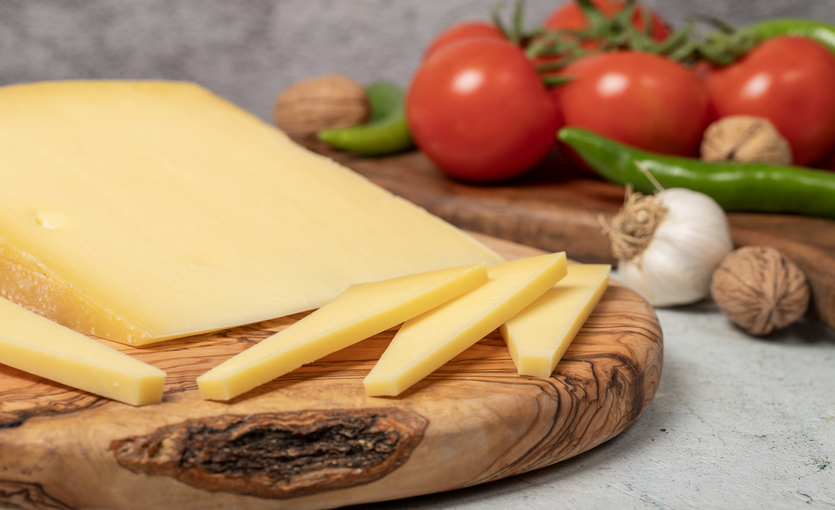
Kars old kashar. Kars old kashar on a cutting board. Local name kars eski kasari. Close up
Kars: Where Cheese Is Made the Way It Has Always Been Made
Kars sits in the far northeast of Türkiye at 1,750 metres above sea level, and the plateau that surrounds it is one of the great grazing landscapes in the world: vast, cold, wind-swept, covered in a grass that the cattle eat through the summer months with a thoroughness that produces milk of extraordinary quality. The gravyer cheese that Kars is famous for is made from this milk, using a method brought by Russian and Swiss settlers in the nineteenth century and now practiced by a community of small producers who have adapted it to the specific conditions of this plateau. It is a serious, complex cheese: firm, nutty, slightly sweet, capable of aging for years, and not found in this form anywhere else.
The agritourism offer in Kars is less developed than in the western destinations on this list, which is itself a quality. Visiting a cheese producer means visiting a working farm, not a visitor center. The dairy cooperatives that process the plateau milk are functional operations that happen to allow curious visitors, and the experience of watching the curd being cut and pressed by hand in a room that smells of warm milk and rennet and the particular funk of aging caves is one that no restaurant cheese plate can adequately prepare you for. The honey from the plateau, produced from the same diverse wildflower meadows that feed the cattle, is equally distinctive. Everything You Need to Know About Turkish Breakfast covers how Kars cheese and honey feature in one of the great breakfast traditions in the world. Fly into cheap flights to Kars directly with Pegasus.
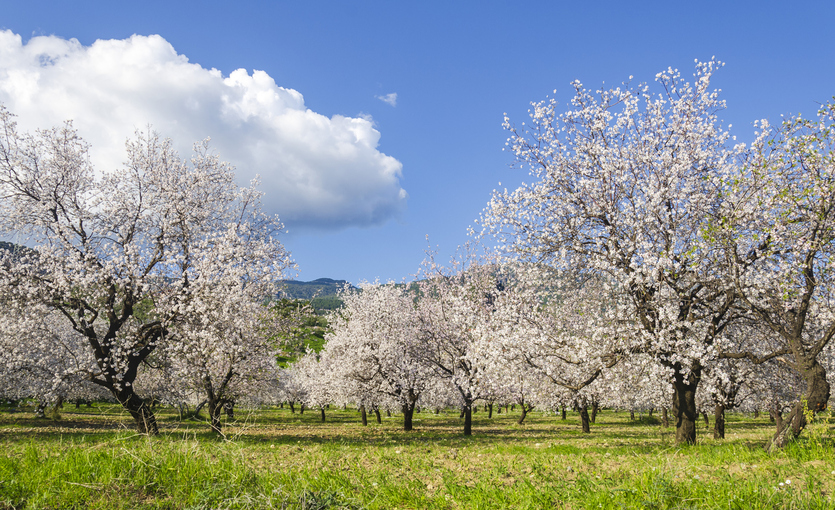
Almond trees blooming in orchard against blue, Spring sky. Datca, Mugla, Turkey
Datça: Almonds, Mastic and the Patience of the Peninsula
The Datça Peninsula produces almonds the way it does everything: slowly, on its own terms, with no particular interest in what is happening elsewhere. The almond trees on the peninsula’s hillsides blossom in February and March, earlier than almost anywhere in Türkiye, and the blossom period is one of the most beautiful things the Aegean does: white and pale pink flowers on bare branches above rocky ground, the bees working the flowers in the February cold, the sea visible below. The harvest comes in July and August, when the green hulls split and the nuts inside are picked by hand and laid out to dry in the sun.
Datça also produces mastic, the aromatic resin tapped from lentisk trees, and a range of dried herbs including thyme, oregano, and sage that grow on the peninsula’s dry hillsides with an intensity of flavor that is directly attributable to the thin soil and the constant wind. The local olive oil, pressed from trees that grow on terraces above the sea, has a freshness and fruitiness that reflects the proximity of the water. The town of Datça has a small but serious producer community, and the Saturday market is the best introduction to what the peninsula grows and who is growing it. Hidden Bays and Ancient Ruins Along the Muğla Shoreline covers the wider peninsula. Fly into cheap flight to Dalaman and drive the seventy kilometres west.
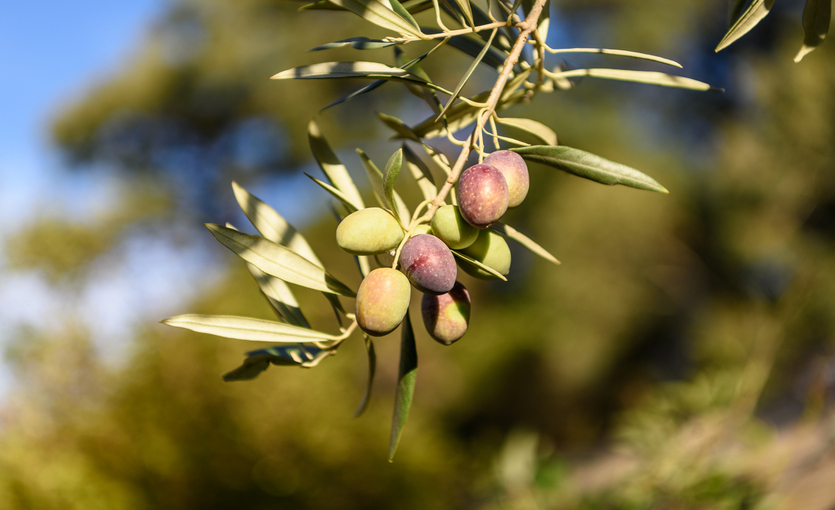
Closeup of fresh olives hanging on a tree, blurred background.
Çanakkale: Olive Groves That Have Been Counting the Centuries
The olive harvest in Çanakkale province runs from September through November, and it is one of the most deeply rooted agricultural traditions in Türkiye. The trees here are old: many of the groves on the hillsides above the Aegean contain trees that are hundreds of years old, their trunks twisted into shapes that look more like sculpture than agriculture, their root systems reaching into soil that has not been disturbed in living memory. The harvest is done by hand or with rakes and nets, the olives falling onto canvas spread below the branches, the whole operation smelling of green oil and bruised leaf in a way that is almost narcotic.
The olive culture of Çanakkale is not organized for tourism in the way that, say, Tuscany’s is. Which means that engaging with it requires a degree of initiative: showing up at a village press during harvest season, asking to see the operation, buying oil directly from the producer. The reward is access to something unmediated and genuine. The early-harvest oil, pressed from green olives before they fully ripen, is intensely flavored and does not travel well or keep long, which means the only way to experience it properly is to be there when it is made. Türkiye’s Aegean Turquoise Riviera covers the broader coastal landscape that Çanakkale’s olive groves sit within. Book a cheap flight to Çanakkale with Pegasus in September or October and arrive during the harvest.
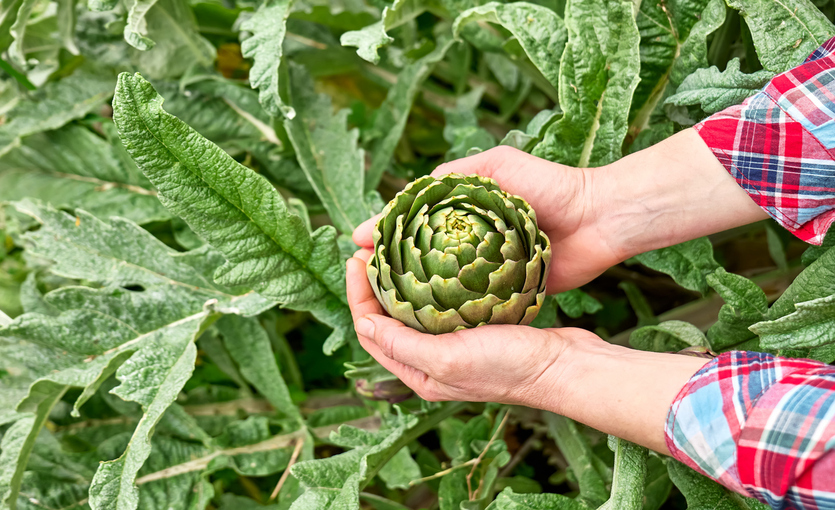
Artichoke plant in spring garden. Ripe artichoke in the hands of woman gardener. Seasonal healthy eating. Organic gardening.
Alaçatı and Çeşme: Where the Artichoke Comes Before the Wine
The Çeşme Peninsula is best known for its wind and its kitesurfing and its beautifully preserved stone village, but it also grows one of the finest artichokes in Türkiye. The enginar harvest runs from April through June, and in that window the peninsula’s fields are full of the tall, architectural plants, their heads tightening in the spring warmth. Eating a freshly cut artichoke in Alaçatı, dressed with lemon and olive oil grown on the same peninsula, is a straightforward pleasure that costs almost nothing and tastes completely specific to place and season. The wild herb and caper season follows immediately after, with capers picked from the stone walls and terraces by hand in a practice that has not changed in centuries.
In autumn the peninsula shifts into its second harvest: grapes and pomegranates. The local wine producers, several of whom operate small but serious cellars around Alaçatı, welcome visitors with genuine enthusiasm during the pressing season, and the pomegranate juice pressed from local fruit in October has a depth and sweetness that bears no resemblance to the commercial version. The peninsula is also, across all seasons, one of the best places in Türkiye to eat simply and well: the market food, the seafood, the olive oil: all of it connected to land that is still being farmed by people who live on it. Best Wine Routes in Europe You Didn’t Know places the Çeşme Peninsula’s emerging wine scene in a European context.