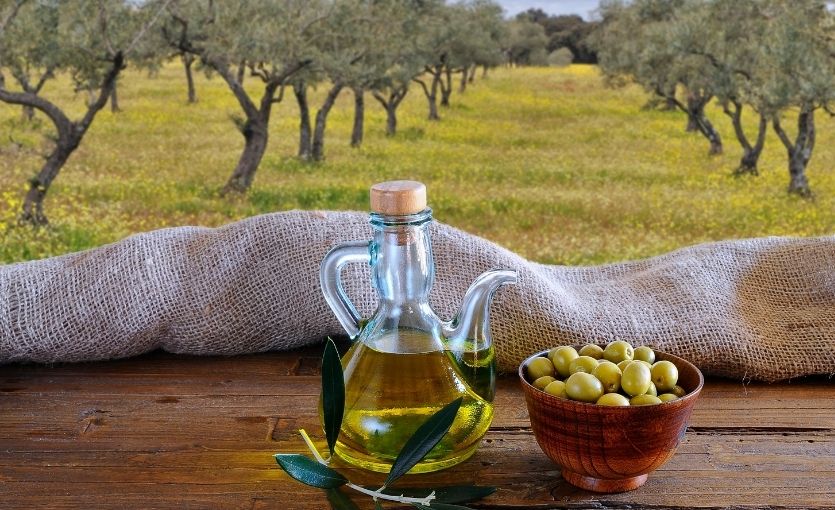
There is a particular smell that hits you when a new-season olive oil is poured over something warm — a grassy, peppery sharpness that has nothing in common with the mild, buttery oils that fill supermarket shelves in other parts of the world. In Türkiye, that smell is everywhere: at market stalls, in the kitchen of every grandmother’s house, at the back of a good restaurant where someone is finishing a pot of beans with a generous hand. Türkiye is the world’s fourth-largest olive oil producer, and the groves that run along the Aegean and Mediterranean coasts have been there long enough that some of the oldest trees predate the Ottoman Empire, the Byzantine Empire, and several of the civilizations that came before them.
But olive oil in Türkiye is not an ingredient. It is a cooking tradition with its own name — zeytinyağlılar, the olive oil dishes — and its own philosophy: vegetables cooked slowly in good oil, served at room temperature, eaten without hurry. These are the dishes that define summer on the Aegean and Mediterranean coasts, and the best way to understand them is to eat them where they come from, in the towns and villages that have been making them for generations. This is a guide to doing exactly that. Book your cheap flights to Türkiye with Pegasus, check the Pegasus route map for the best connections, and follow the oil south.
Ayvalık: The Town That Runs on Olive Oil
The Dish: Kabak Dolması and Deniz Börülcesi
Ayvalık sits on the northern Aegean coast of Balıkesir province, surrounded by olive groves so old and numerous that the town and the tree have become essentially the same thing. The pressing season runs from November through January, but the culture of olive oil is present in every meal, every month of the year. In summer, two dishes define Ayvalık’s table in ways that are difficult to replicate elsewhere.
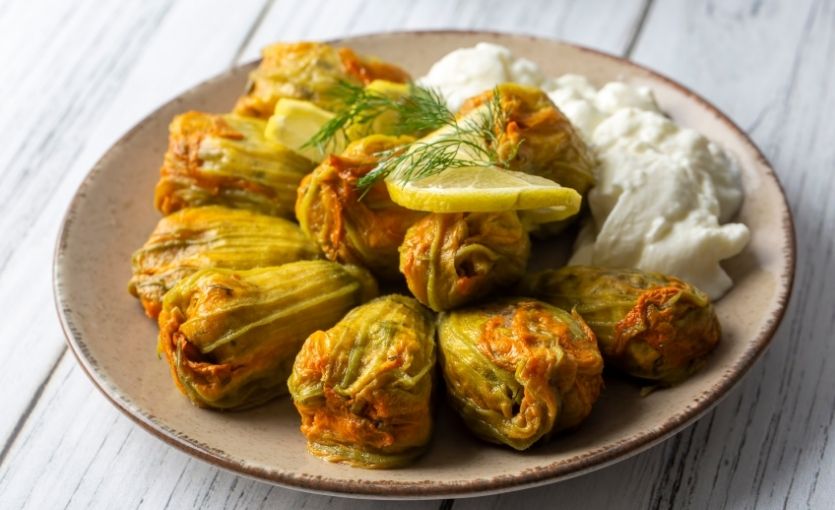
Kabak dolması — zucchini stuffed with rice, herbs, and a generous pour of local oil — arrives at the table at room temperature, the way all proper zeytinyağlılar should, glistening and fragrant. But the dish that will genuinely surprise you is deniz börülcesi: sea purslane, a fleshy coastal plant that grows in the salt marshes around Ayvalık and is blanched briefly, dressed with nothing but olive oil and lemon, and served as a salad. It tastes of the sea and the land simultaneously. It is one of those dishes that exists only here, only in this season, made from something that was growing at the water’s edge a few hours ago. You won’t find it on a menu in Istanbul. Order it immediately.
What to Do in Ayvalık
Ayvalık’s old quarter is a labyrinth of 19th-century Greek-era stone buildings, now home to olive oil shops, small restaurants, and meyhanes where you eat small plates and drink rakı until late. The surrounding archipelago of small islands is best explored by boat — ask locally about morning trips, which stop at coves that can’t be reached any other way. Cunda Island, connected to Ayvalık by a causeway, adds another layer of seafood restaurants and the quietly beautiful ruins of a Greek Orthodox church left deliberately unrestored. The olive oil itself is worth taking home: the Ayvalık variety, pressed from the local Ayvalık cultivar, has a fruitiness and a pepper finish that the more widely distributed oils rarely match. Türkiye’s Best Wine Villages You Haven’t Visited Yet covers Bozcaada and the northern Aegean island culture that Ayvalık sits within.
Getting there: Fly into cheap flights to Balıkesir-Edremit with Pegasus — the airport is around 30 kilometers from Ayvalık, a short drive or taxi connection.
Çeşme and Alaçatı: Where Wind Meets the Table
The Dish: Fava
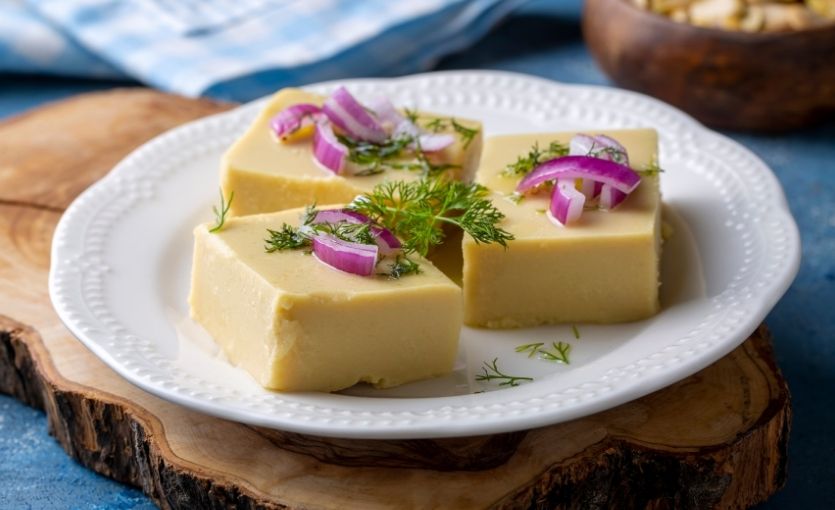
Order fava in Alaçatı and what arrives is a smooth, pale-yellow purée of dried broad beans, poured into a wide bowl and finished with olive oil, dill, and thinly sliced red onion. It is one of the oldest dishes in the Aegean, traced to the ancient Greeks, and it has changed almost nothing in the intervening centuries because it doesn’t need to. The oil on top is not decoration: it is the point. In Alaçatı, where the local producers press from groves on the Çeşme Peninsula, the oil has a grassiness and a slight bitterness that cuts through the bean’s creaminess and makes every spoonful a negotiation between richness and freshness. Eat it with bread, slowly, at an outdoor table, ideally with a glass of local white wine from one of the peninsula’s small cellars.
The dish is simple enough that its quality depends entirely on its ingredients, which means eating fava well is essentially a test of the olive oil. The good news is that in Alaçatı, the olive oil passes.
What to Do in Çeşme and Alaçatı
Alaçatı is the kind of town that takes a Saturday morning and turns it into an entire day. The weekly herb and produce market fills the stone-laned streets with the peninsula’s growers, and the transition from market browsing to a long lunch at an outdoor table to an afternoon glass of wine happens so naturally that you’ll wonder why every town isn’t designed this way. The beaches at Ilıca are thermal-spring-warm and clear; the bay below the town is the best kitesurfing spot on the Turkish Aegean. Çeşme itself has a Genoese castle, a harbor full of ferries heading to the Greek island of Chios, and a pace of life that slows visibly as the day goes on. 3 Days in İzmir covers how to combine these towns with the city as a base.
Getting there: Fly into cheap flights to İzmir. Alaçatı is about 80 kilometers west — an easy hour’s drive or a direct bus connection from the city.
Urla and Seferihisar: The Artichoke Towns
The Dish: Enginar
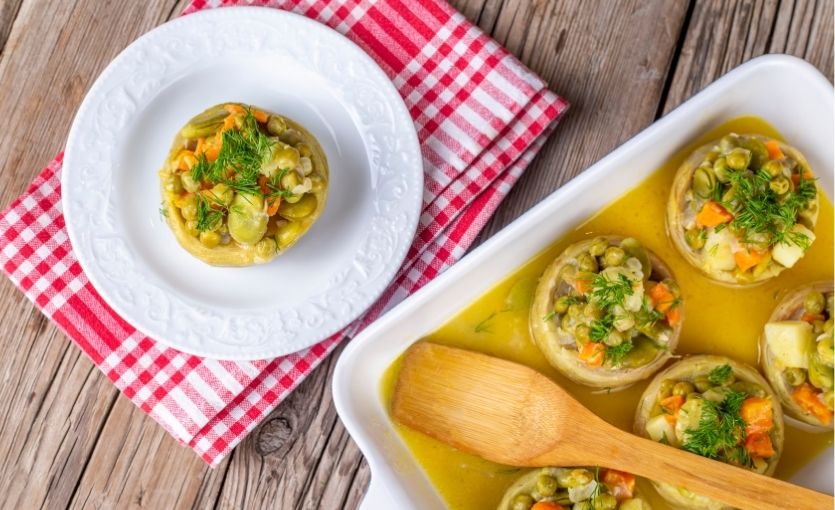
The artichoke harvest on the Çeşme Peninsula runs from April through June, which means that by August the season is over — but the enginar dishes it produces are preserved in the memories of everyone who ate them and in the pickled and preserved versions that good restaurants carry through the summer. A properly made zeytinyağlı enginar — artichoke heart braised in olive oil with carrots, onion, fresh dill, and lemon — arrives at the table looking architectural, the artichoke cup filled with vegetables that have absorbed hours of low heat and a quantity of olive oil that would seem excessive until you taste it. It is one of the great cold vegetable dishes in the world, and in Urla and Seferihisar, where the artichokes are grown seriously and the oil is pressed locally, you are eating the best possible version of it.
Seferihisar, Türkiye’s first Cittaslow town, has a weekly organic market where the growers sell directly, and the transition from buying an artichoke at the market to eating a dish made from the same variety an hour later at a lokanta two streets away has a satisfying circularity to it. Harvesting Local Flavors: Agritourism and Slow Food in Türkiye covers both towns in the context of the broader Aegean food culture they represent.
What to Do in Urla and Seferihisar
Urla’s old market street is worth an entire morning: ceramics studios, small galleries, wine bars in restored stone buildings, and a food scene built around local producers that is serious enough to justify the trip on its own. The ruins of Klazomenai, one of the twelve cities of the Ionian League, sit partly underwater in the bay north of town. Seferihisar has a harbor at Sığacık that operates as an actual working fishing port, a Venetian castle on the hill, and an organic food culture that the Cittaslow designation reflects accurately. Both towns reward the slow approach: come with time and no particular agenda.
Getting there: Fly into İzmir (see above). Urla is about 45 kilometers west; Seferihisar is about 40 kilometers south of the city. Both are reachable by public bus, though a hire car gives you the flexibility to move between them comfortably.
Bodrum: Oil, Beans and the Blue Evening
The Dish: Zeytinyağlı Bakla
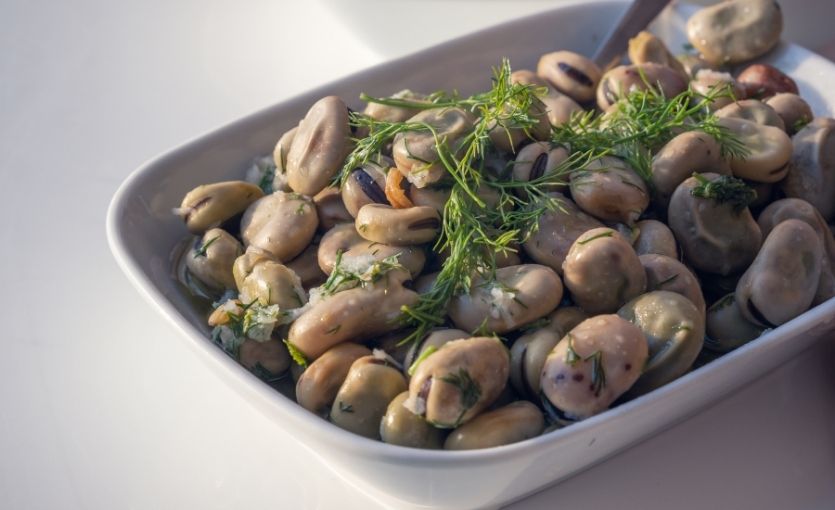
There is a specific kind of late-afternoon contentment that Bodrum produces — the heat beginning to ease, the light turning amber on the castle walls, a cold glass of local white on the table — and zeytinyağlı bakla belongs in that moment. Broad beans braised in olive oil with onion and dill, served cold or at room temperature with a squeeze of lemon: the dish is simple, the ingredients are few, and the quality of the oil is everything. Bodrum’s surrounding peninsula produces olive oil from groves that run down to the sea, and the character of the oil — lighter and fruitier than the more northerly Ayvalık variety — suits the beans perfectly. You eat it as a meze, one of several small plates that arrive before the fish, and you find yourself returning to it between the other dishes because it keeps tasting better the longer it sits.
What to Do in Bodrum
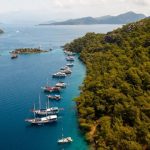
Bodrum is the stop on this route where the olive oil tradition intersects most visibly with everything else the town does well. The Castle of St. Peter houses one of the world’s great underwater archaeology museums. The ancient theater carved into the hillside is still intact after two millennia. The gulet boats in the marina offer day trips to bays that can only be reached by water, and the peninsula’s northern coast has coves that feel genuinely remote despite being within an hour of the town. In the evenings, the old town’s restaurants and meyhanes serve zeytinyağlılar with the confidence of a place that has been cooking this way for a very long time. Hidden Bays and Ancient Ruins Along the Muğla Shoreline covers the wider peninsula.
Getting there: Fly into cheap flights to Bodrum directly with Pegasus.
Fethiye and Kaş: Where the Olive Meets the Lycian Coast
The Dishes: İmambayıldı and Kaya Koruğu Salatası
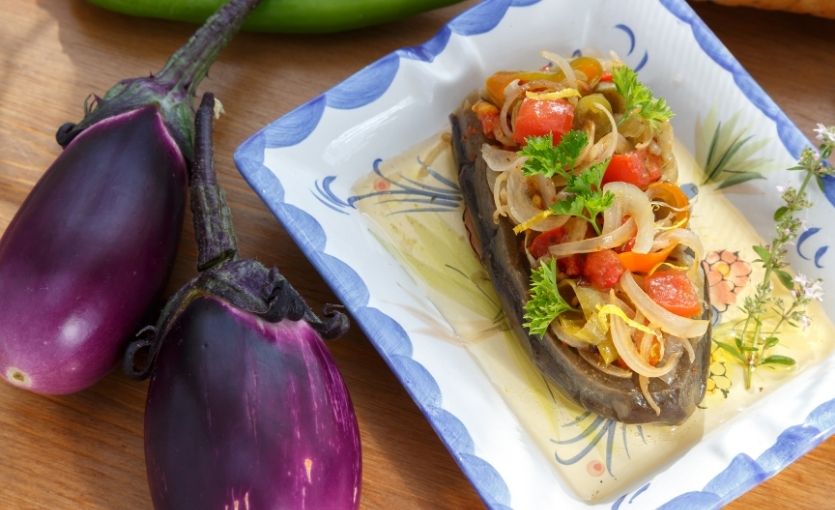
The name imambayıldı translates as ‘the imam fainted,’ and the story — disputed, embellished, probably apocryphal — is that a religious scholar fainted with either pleasure or horror when he learned how much olive oil had gone into the dish. The dish itself is eggplant: halved, salted, dried, then cooked low and slow in enough olive oil that the flesh becomes completely saturated, then stuffed with a mixture of onion, tomatoes, and garlic that has itself been softened in more olive oil, then cooked again until the whole thing collapses into something that is simultaneously a vegetable and a sauce. It is served cold. It is extraordinarily good. In Fethiye, where the olive groves come down close to the sea and the oil is pressed in the villages inland, imambayıldı reaches the version of itself that every other version is aspiring to.
Kaya koruğu salatası is the local discovery: a salad made from the small unripe grapes harvested from the abandoned vineyards of Kayaköy, the ghost village above Fethiye where a Greek Orthodox community was displaced in the 1923 population exchange between Greece and Türkiye. The village has been empty for a century but the vines still produce, and the unripe grapes are picked in summer, dressed with olive oil and salt, and served as a salad that is tart and unusual and impossible to find anywhere else. Eating it in Fethiye, in view of the rock tombs carved into the cliff above the town, with the story of Kayaköy in the background, is one of those meals that is about more than the food.
What to Do in Fethiye and Kaş
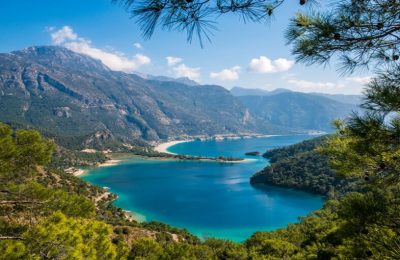
Fethiye is a working harbor town with Lycian rock tombs above its streets, a bazaar that operates for locals as much as tourists, and easy access to Ölüdeniz — the Blue Lagoon whose photographs have appeared on screensavers for twenty years and which is genuinely as beautiful as advertised. Kayaköy itself, the ghost village above the town, is a UNESCO-listed site of extraordinary atmospheric density: hundreds of roofless stone houses on a hillside, the churches intact but empty, the vines growing untended through the ruins. Kaş, further east along the Lycian coast, is smaller and more boutique: a harbor town with Lycian tombs in its streets, diving schools, and the Greek island of Kastellorizo visible across a kilometre of sea. The Best Places in Kaş covers the town in full, and The South Aegean Experience Route covers the broader Lycian coastline.
Getting there: Fly into cheap flights to Dalaman for Fethiye — about 50 kilometers east by road. For Kaş, Dalaman is the nearest airport at around 100 kilometers; a hire car is recommended.
Bonus: Three More Dishes Worth Ordering Everywhere
Barbunya
Borlotti beans — barbunya — slow-cooked in olive oil with tomato, onion, and herbs until the liquid reduces to a thick, fragrant sauce. Served cold. One of the most comforting dishes in the zeytinyağlılar repertoire, and a reliable test of any restaurant’s patience: good barbunya cannot be rushed.
Taze Fasulye
Green beans — taze fasulye — braised in olive oil with tomatoes until the beans are very soft and the tomatoes have dissolved into the oil. The version you encounter on the Aegean coast, made with the flat romano-style beans that come in from local farms through the summer, is particularly good. Eat it with bread to absorb the oil at the bottom of the bowl. This is not optional.
Zeytinyağlı Sarma
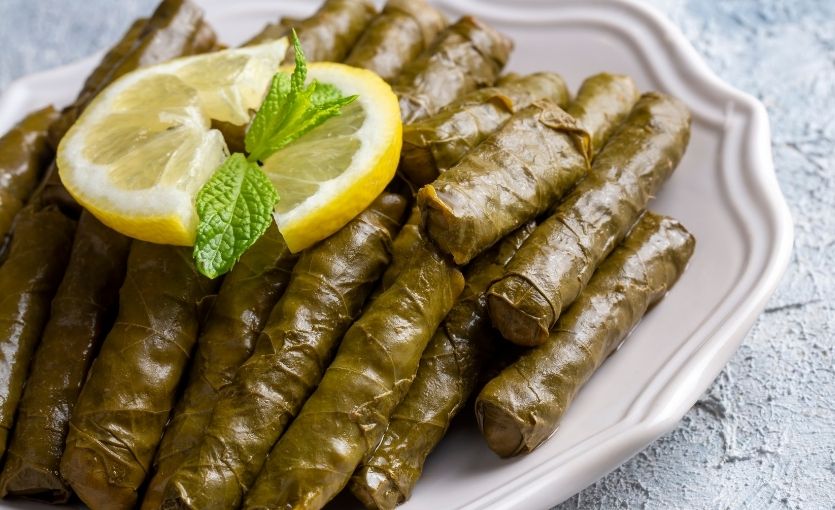
Vine leaves stuffed with rice, pine nuts, currants, and herbs — zeytinyağlı sarma — rolled tight and cooked in olive oil and lemon until the leaves are tender and the rice has absorbed everything. Served cold, with extra lemon. The version made with fresh vine leaves in early summer, before they toughen, is the best; the preserved-leaf version that appears year-round is good but different. On the Aegean coast in August, you are in exactly the right place to find both.