The Iberian Peninsula does summer differently from the rest of Europe. The light is older and more insistent, the evenings run long and warm, and the Atlantic coast gives the whole trip a freshness that landlocked cities can’t match. This route covers seven days and five stops: two in Porto, one in Lisbon, one combining Sintra and Cascais, two in the Algarve, and a final day in Seville to close things out with flamenco and heat. You can fly into Porto and fly home from Seville, or reverse it entirely. The Pegasus route map shows all the connections, and Flight Hacks: How to Plan a Multi-Stop Trip with Pegasus covers how to route a trip like this efficiently. Use how to find cheap flights to lock in fares early — July and August are peak demand across the whole peninsula.
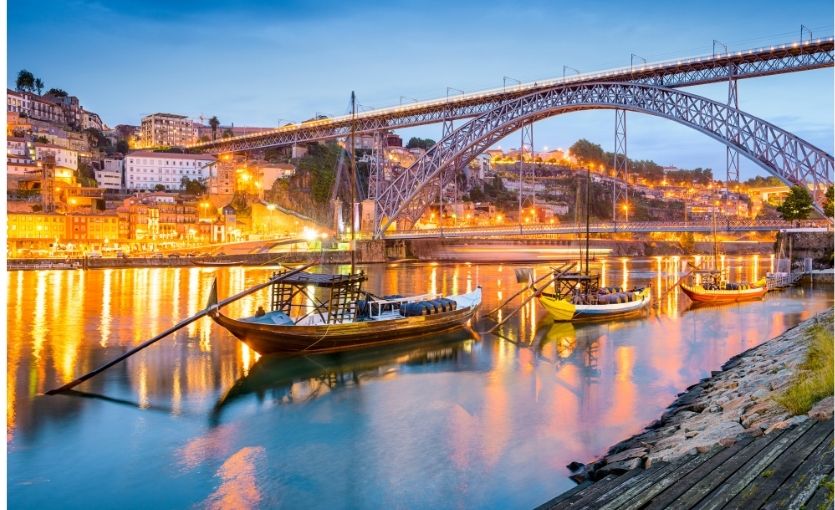
Day 1 — The River, the Bridge and the Wine Cellars
Book a cheap flight to Porto and arrive into a city with a particular mood: steep, melancholy, magnificent. Porto climbs from the Douro River in tiers of granite and terracotta, the washing lines strung between buildings, the trams grinding up gradients that would defeat most cities’ public transport. Start in the Ribeira district at the water’s edge, where the rabelos — the flat-bottomed boats that once carried port wine barrels from the Douro Valley — are moored below the medieval riverfront houses. Walk the lower deck of the Ponte de Dom Luís I, and return across the upper deck in the late afternoon when the light comes from the west and turns the city’s granite orange.
Cross to Vila Nova de Gaia on the south bank, where the port wine lodges — Taylor’s, Graham’s, Sandeman — have been aging wine in long cool cellars since the 18th century. A cellar tour and tasting takes two hours and costs less than most museum admissions in other European cities. The wine is served cold and the cellars are significantly cooler than the street outside, which in July makes them a welcome destination regardless of your interest in fortified wine. End the day at a tasca in the Ribeira with a francesinha — Porto’s famous sandwich of cured meats under melted cheese and a beer-and-tomato sauce — and a glass of house wine.
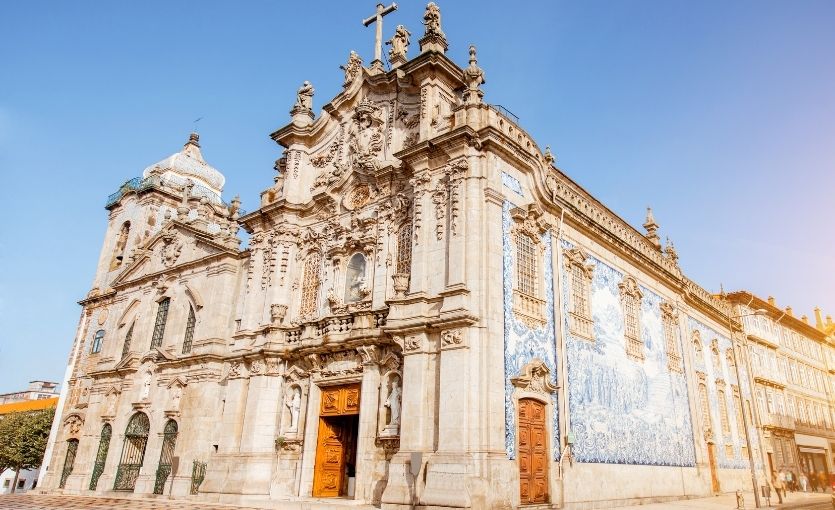
Day 2 — Azulejos, Trams and the Atlantic Coast
Begin at São Bento Station, whose entrance hall is covered in 20,000 blue-and-white azulejo tiles depicting scenes from Portuguese history. The tiles were installed between 1905 and 1916 and are in extraordinary condition. Spend the morning in the Bonfim and Cedofeita neighborhoods — Porto’s most creative districts, where galleries and ceramics studios have settled into 19th-century buildings.
In the afternoon, take the old tram west along the Douro to Foz do Douro, where the river meets the Atlantic. The moment the ocean comes into view is one of those travel arrivals that feels genuinely earned. Walk the seafront promenade past the Felgueiras lighthouse — built in 1886 on a basalt outcrop at the exact point where the Douro’s current meets the Atlantic swell — and feel the quality of air that only exists where a great river gives itself to the sea. Continue north to Matosinhos, where the beach is wide and the seafood restaurants on Rua dos Heróis de França serve the freshest grilled fish in Porto alongside ice-cold Vinho Verde. Stay for the sunset.
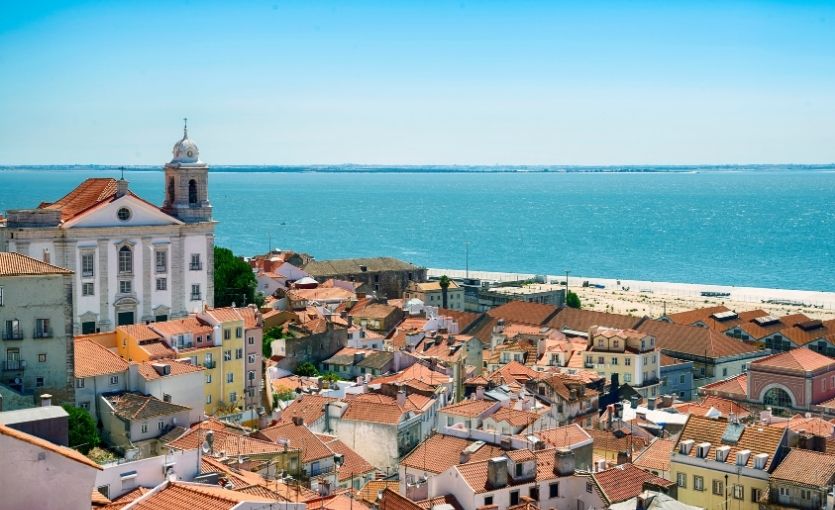
Day 3: Lisbon — The Seven-Hilled City in Full Summer
Morning — Alfama and the Castle
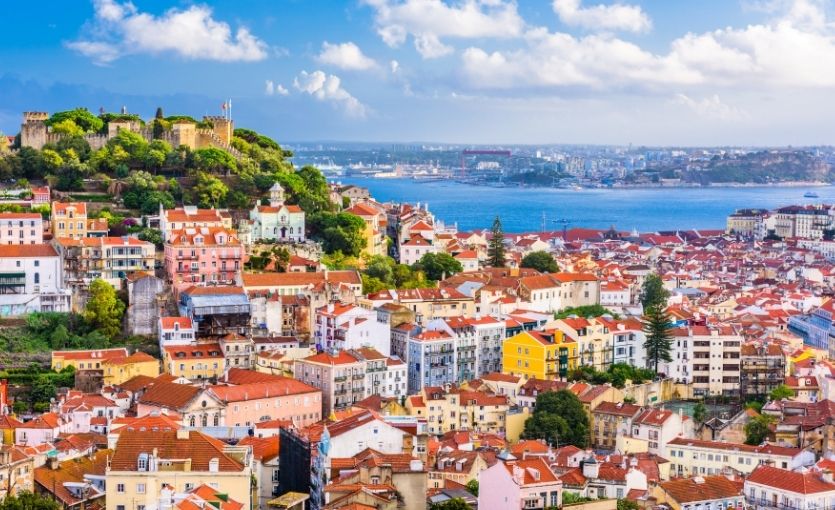
The train from Porto takes about three hours. Book a cheap flight to Lisbon if you’d prefer to fly in directly and start from Lisbon rather than Porto. The city’s oldest neighborhood, Alfama, survived the 1755 earthquake that destroyed most of the rest of the city, and has preserved something of its medieval street pattern despite the complications of gentrification. The lanes are steep and narrow enough that morning light reaches the cobblestones only briefly. The Castelo de São Jorge at the top offers the best overview of the city and the Tagus estuary, and at 10am in July the climb is warm but manageable.
Afternoon and Evening — Belém, Pastéis and Fado
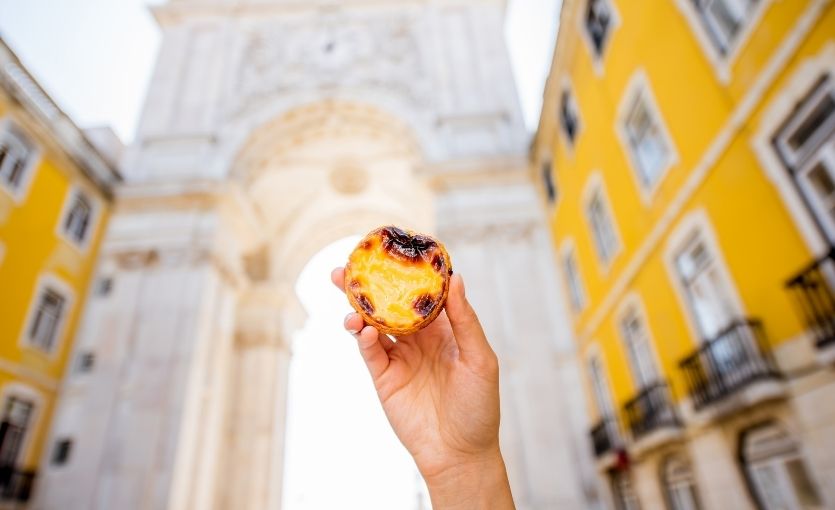
Take tram 15E west to Belém, the riverside district from which Vasco da Gama departed for India in 1497. The Torre de Belém rises from the water as your reference point; the Monument to the Discoveries stands inland. The non-negotiable stop is the Pastéis de Belém bakery at Rua de Belém 84-92, which has been making pastéis de nata to the same secret recipe since 1837. They come warm from the oven, dusted with cinnamon. Just eat one.
The evening returns you to Alfama for dinner and, timed right, fado — the specifically Portuguese music of loss and longing that UNESCO has listed as an intangible cultural heritage. The best venues are the ones where the singer performs between courses of a set dinner: smaller, louder, and considerably more affecting than a formal stage show.
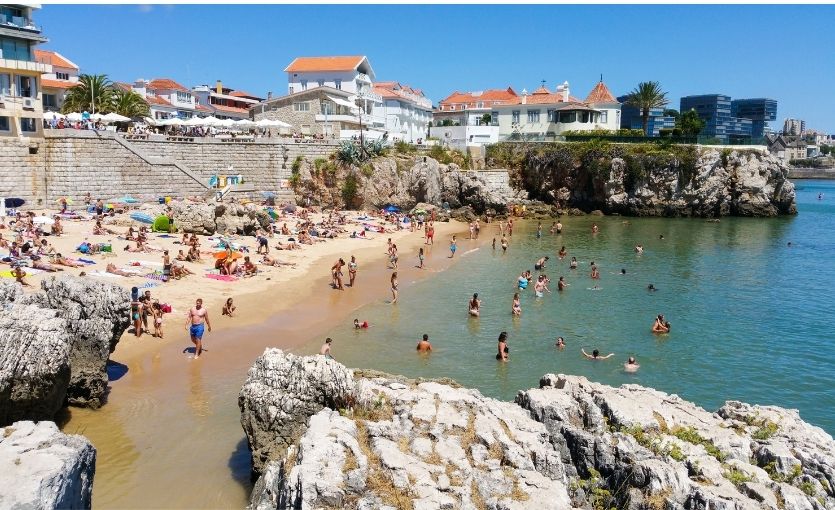
Day 4: Sintra in the Morning, Cascais and Cabo da Roca in the Afternoon
Morning — Palaces in the Forest
The train from Lisbon’s Rossio station reaches Sintra in 40 minutes. Sintra sits in wooded hills above the coast and contains an extraordinary density of palaces in a small area. Pena Palace is the one everyone photographs: a 19th-century Romantic extravaganza in yellow and terracotta red, sitting on the highest peak, surrounded by a park of exotic trees from across the Portuguese empire. Quinta da Regaleira, a 20-minute walk from the center, holds the Initiation Well — a spiral staircase descending nine levels underground, built not as a functional well but as a ceremonial passage associated with Masonic and Templar ritual. The cold air rising from the bottom as you descend is notable.
Afternoon — Cascais and the End of Europe
Drive or take a bus 12 kilometers south to Cascais, the former royal summer resort on the Atlantic coast. Praia da Rainha, just below the town center, is a small golden-sand bay sheltered by the headland — calm, warm and beautiful. Swim before the afternoon wind picks up.
From Cascais, drive 20 kilometers west to Cabo da Roca: the westernmost point of continental Europe, where the land ends in 140-meter limestone cliffs above the open Atlantic. The wind here is constant and strong, the waves visible far below, and the horizon offers no land between you and North America. The sunset from the cape in July, when the sun drops into the Atlantic well to the north of west, is exceptional. This is one of those geographical moments where the map becomes physical and the scale of things briefly becomes clear.
Day 5 — Lagos and Ponta da Piedade
The drive from Cascais to Lagos in the Algarve takes about three hours, passing through cork oak forests before the landscape opens onto the flat coastal plain above the golden cliffs of the south coast. Fly into cheap flights to Faro if you’d prefer to join the route here directly — Faro is the Algarve’s main airport, about an hour east of Lagos.
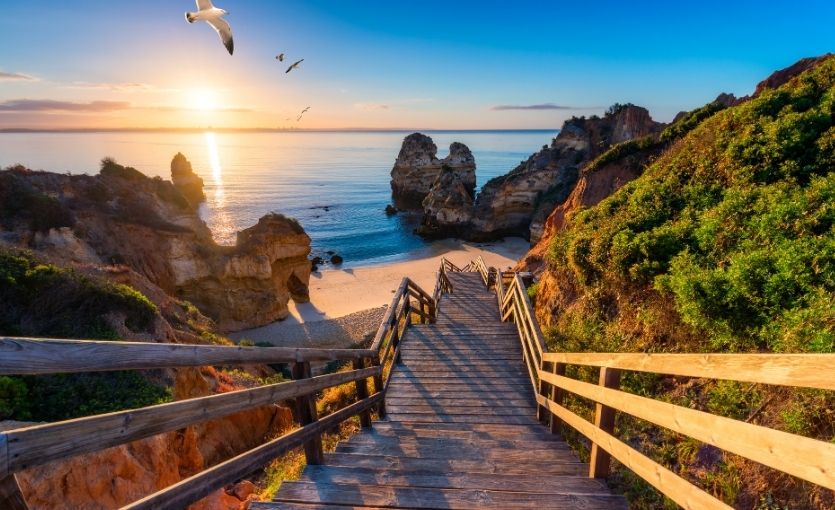
Praia do Camilo, a short walk south of Lagos down a wooden staircase cut into the cliff, is one of those beaches whose reputation is entirely justified: turquoise water against orange sandstone, high surrounding cliffs providing shade in the mornings, and a cove small enough to naturally limit the crowd. Walk south along the cliff path to Ponta da Piedade, where centuries of coastal erosion have produced arches, sea stacks, grottoes and passages that the afternoon light turns extraordinary colors. The boat tours from Lagos marina navigate through these formations and give you angles that the cliff path doesn’t — worth the hour they take.
Day 6 — Benagil Cave and the Coast Road East
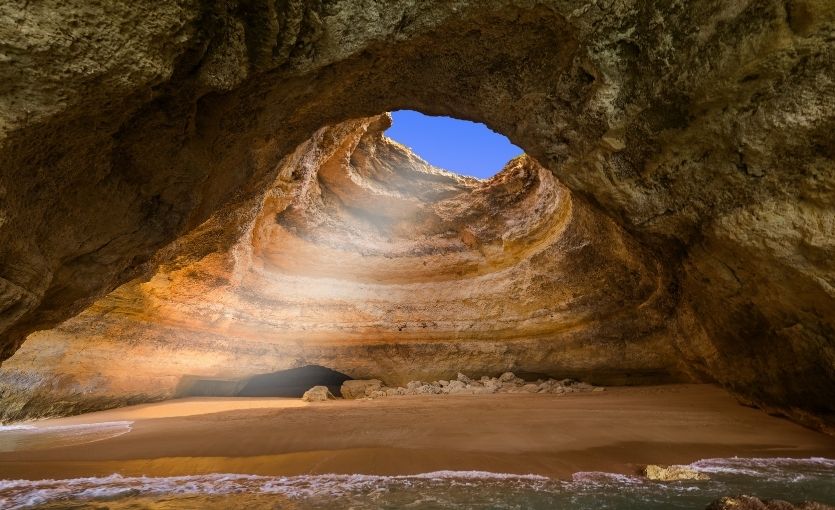
Benagil is the place that appears constantly on social media and then turns out to look exactly like that in real life. The cave is entered from the sea by kayak, paddleboard or small boat from Benagil beach, a ten-minute drive east of Lagoa. The cave itself is a large domed chamber open to the sky through a circular hole in the roof, with a small beach inside. Swimming in the chamber with the light filtering down through that circular aperture is genuinely extraordinary. Book the morning slot in advance during July and August — it offers the best light angle and sells out fastest.
After Benagil, drive east along the coastal road for lunch in Carvoeiro or Albufeira, then return to Lagos in the afternoon. The Algarve’s fish restaurants are at their peak in summer: the day’s catch, grilled simply with olive oil and lemon, eaten at a table that catches the sea breeze.
Day 7: Seville — Andalusia at Full Temperature
Morning — The Alcázar in the Cool Hours
The drive from Lagos to Seville crosses the Portuguese-Spanish border at Ayamonte and takes about three and a half hours. Fly into cheap flights to Seville if joining from elsewhere. Arrive mid-morning and go directly to the Real Alcázar before the day gets genuinely hot. The palace complex — built by the Moorish Almohad dynasty and expanded by Christian kings who understood how good the Islamic architecture was and wanted more of it — is one of the most beautiful buildings in Europe. Its courtyards are tiled, fountained, arcaded, planted with orange trees and 10 degrees cooler than the street outside. Southern Spain Slow Route: Málaga, Seville, Granada and Córdoba covers Seville alongside the rest of Andalusia if you want to extend the trip beyond this single day.
Afternoon and Evening — Plaza de España, Tapas and Flamenco
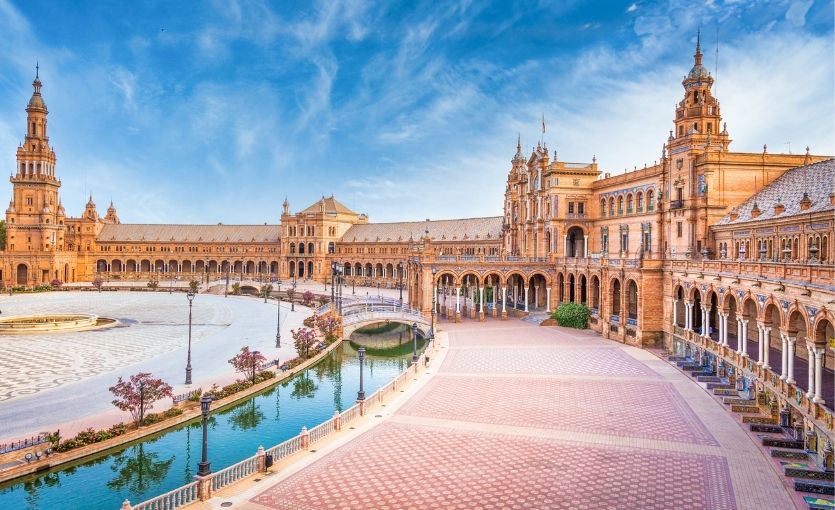
After the Alcázar, Plaza de España: the vast semi-circular plaza built for the 1929 Ibero-American Exposition, its curved facade decorated with ceramic tile panels representing every province of Spain, a canal running around its base where small boats can be rented. Spend the late afternoon in the Santa Cruz barrio, the former Jewish quarter whose whitewashed lanes and flower-draped balconies survive from the medieval city.
Seville’s tapas culture begins around 8pm, when the temperature drops and outdoor tables fill. Order tinto de verano — red wine over ice with lemon soda, the Andalusian summer drink that outperforms sangria at every bar it appears in. The evening closes with flamenco in Triana: the neighborhood across the Guadalquivir that produced the art form, where the authentic version still exists in small venues with no stage lighting and no concessions to comfort. Stamping and singing and guitar at midnight, with the summer heat still holding, is the right note to end seven days on.
Planning the Route
The most efficient routing is Porto in, Seville out — or reversed. A hire car is essential from day 4 onward: Cascais, Cabo da Roca, the Algarve coast and the Seville drive all require your own transport. The Lisbon-Porto leg on day 1 is best done by high-speed train (about three hours) rather than by car. If you’re short on time, you can fly between cheap flights to Lisbon and Porto to skip the train. July is excellent across the whole route but Seville on day 7 will be hot — the city regularly hits 40°C and that is not a misprint. Plan outdoor activities in Seville for before 11am and after 7pm.
Check the Pegasus route map for the full range of connections. Check the baggage allowance page before you pack — seven days across two countries requires thought. Consider the upgrade package for the flexibility a multi-city road trip benefits from. Pre-order your in-flight meal via the Pegasus Café pre-order menu up to 24 hours before departure. The pastel de nata will be waiting in Belém. Everything else can be worked out when you land.