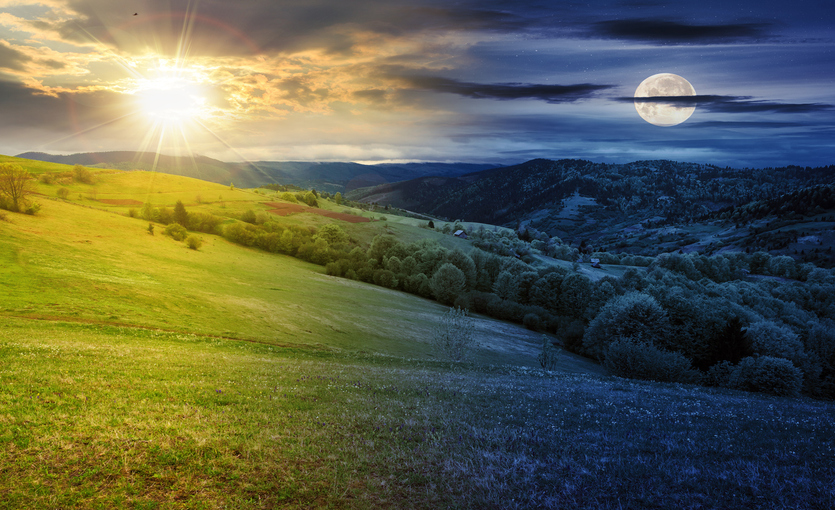
June 21, 2026 is a Sunday, and across Europe that specific Sunday will be spent very differently depending on where you are. In Iceland, the sun will not set at all. In Riga, 30,000 people will be in meadows and farmyards singing folk songs around bonfires until a dawn that comes before 4am. In Stockholm, the entire country will have left the city. In Wiltshire, people will have been standing in a field since before 3am waiting for the moment the light touches the Heel Stone and the ancient alignment becomes visible again. In Paris, every street will be a stage. The summer solstice is the same astronomical moment everywhere but it produces completely different human responses, and those responses, taken together, tell you something interesting about the continent. Here is where to be, and why June 21 is worth building a trip around. Check the Pegasus route map to see what connects where, and use how to find cheap flights to lock in fares early: solstice weekend is high demand across all these destinations.
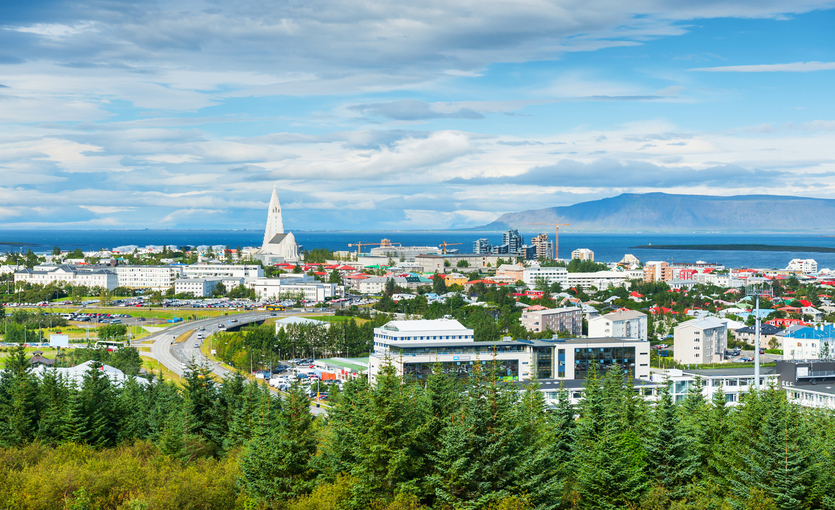
Reykjavik, Iceland: The Sun That Refuses to Set
In Reykjavik on June 21, the sun rises at 3am and does not set. This is not a figure of speech. The midnight sun is a real, continuous, slightly disorienting phenomenon, and experiencing it for the first time produces a specific kind of bewilderment: you look at your phone, it says 1am, and outside the window it looks like late afternoon. Your body clock files a formal complaint. The sky stays a pale gold-pink for a few hours around midnight, then brightens again, and the whole cycle feels like a long, strange afternoon that never quite ends.
Iceland marks the solstice with Jónsmessa, the Mass of St. John, on June 24th, but the surrounding days are celebrated with a particular intensity that the endless light makes inevitable. The Secret Solstice festival runs across the solstice weekend in Reykjavik, with concerts staged across the city and outdoor events that take full advantage of the round-the-clock daylight. The tradition also holds that rolling in the morning dew on Jónsmessa brings good fortune, that cows speak, and that elves may interact with you — a set of beliefs that says something charming about the Icelandic relationship with the supernatural. Fly in on a cheap flight to Reykjavik and give yourself at least three nights: the light changes by the hour and the landscape deserves unhurried attention. Top Coastal Escapes in Europe with Pegasus Airlines covers the broader summer escapes if you want to combine Iceland with the rest of the circuit.
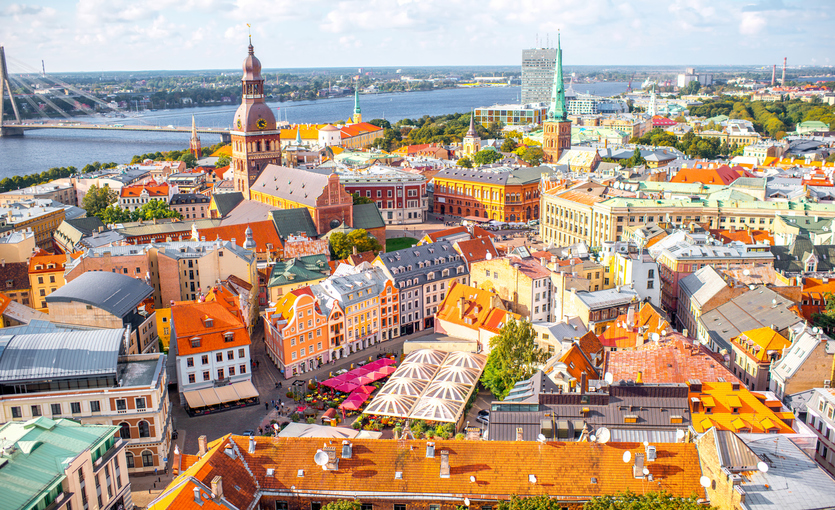
Riga, Latvia: The Night That Outranks Christmas
According to a 2023 survey, Jāņi — Latvia’s midsummer festival — is the most celebrated holiday in the country, outranking Christmas. This is worth sitting with for a moment. A country where midsummer beats Christmas is a country that has maintained a genuinely pre-Christian relationship with the turning of the year, and the intensity of Jāņi reflects that. The festival runs on the night of June 23rd into the 24th, but the solstice energy builds across the week. Men wear crowns of oak leaves. Women wear garlands of wildflowers. Bonfires are lit across the country — in fields, farmyards, by the river — and the tradition is to stay awake all night and jump over the embers. The folk songs specific to the festival, the Līgo songs, have their own ancient repertoire and are sung in a minor key that makes them sound simultaneously sorrowful and celebratory. Cheese made with caraway seeds and strong beer are the specific foods of the night. In the western town of Kuldīga, a small number of participants mark the holiday by running naked through the streets at 3am and are rewarded with beer. The police attend to ensure no one interferes with the runners.
Riga itself is one of the great Art Nouveau cities of Europe, with a historic old town that is simultaneously UNESCO-listed and genuinely inhabited. For Jāņi, most Latvians leave the city for the countryside, which means Riga is actually quieter than usual on the holiday itself — but the days around it, with markets and street performances and the visible energy of a population preparing for its biggest night of the year, are extraordinary to be in the middle of. A Small Suitcase and Three Countries of Big Surprises by the Baltic covers the broader Baltic region that makes Riga such a rewarding base. Fly in on a cheap flight to Riga.
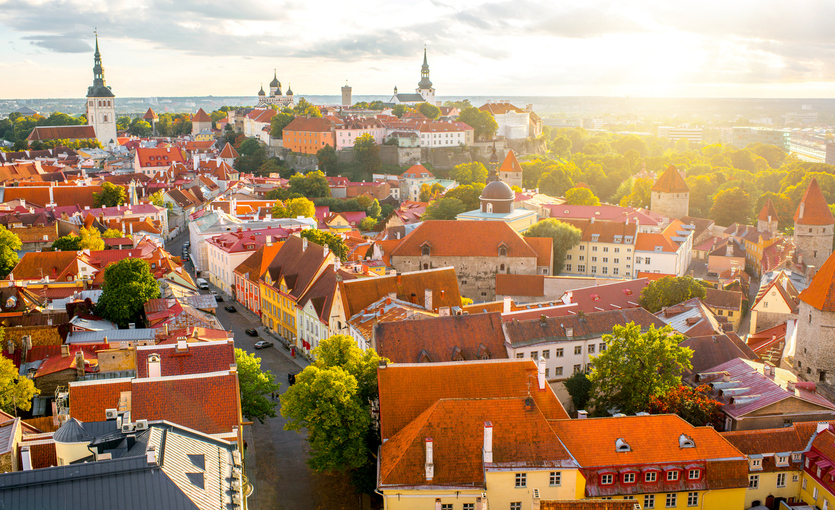
Tallinn, Estonia: Bonfires on the Beach at the Edge of the Baltic
Estonia’s midsummer festival, Jaanipäev, follows the same pattern as Latvia’s: bonfires, folk songs, an all-night vigil, a population that decamps from the cities to the countryside and coast. Tallinn, Estonia’s medieval capital, empties out for the holiday in a way that the city’s residents describe with a mixture of pride and relief — everyone goes somewhere with trees and water, and the city is left to the tourists and the cats. The bonfires on the beaches and lakesides of the Estonian countryside, lit as the sun dips toward its brief near-absence around midnight, are a genuinely moving sight: the whole landscape punctuated with firelight in the near-dark of the northern night.
If you stay in Tallinn itself for the holiday, the old city is one of the best-preserved medieval walled towns in Europe, and the solstice light on the limestone towers and terracotta rooftops in the long northern evening is particularly beautiful. The Baltic coast beaches east of the city, accessible by a short bus ride, are where the city’s remaining residents go for bonfires and swimming. The water is cold. Everyone goes in anyway. A Small Suitcase and Three Countries of Big Surprises by the Baltic covers Tallinn alongside Riga and Vilnius for those building a Baltic circuit around the solstice. Fly in on a cheap flight to Tallinn.
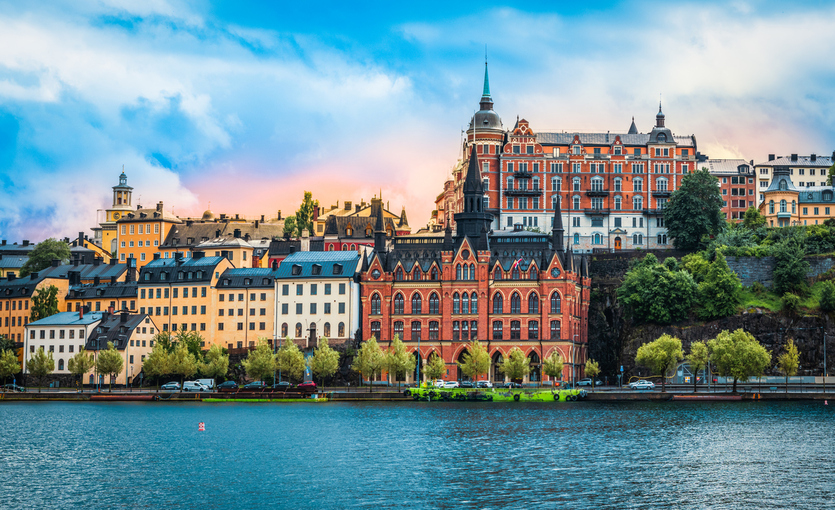
Stockholm, Sweden: The Country That Leaves the City
Sweden’s Midsommar is the most internationally famous of Europe’s solstice celebrations, and it is celebrated with a fervor that the country’s reputation for restraint does not quite prepare you for. The maypole — a tall pole decorated with greenery and flowers — is raised in every village and town square. People dance around it in circles, singing traditional songs about small frogs (the dance is called Små grodarna, and yes, you jump like a frog, and yes, everyone does it). Women and children wear garlands of wildflowers. The traditional meal is pickled herring, new potatoes with dill, and the first strawberries of the season, eaten outdoors at long tables. The traditional drink is brännvin, a strong aquavit, consumed with songs called snapsvisor that are short, cheerful, and frequently involve instruction to drink.
The significant thing about Midsommar is the exodus. On the Friday before the holiday, Stockholm empties. The trains and roads out of the city fill with people carrying flowers and baskets and fishing rods. The archipelago islands, the lake cottages, the rural villages: all of these absorb the city’s population and the city itself becomes a different kind of place — almost eerily quiet by Swedish urban standards. Skansen, the open-air museum in central Stockholm, holds one of the country’s most famous public Midsommar celebrations if you want to see the maypole and the dances without leaving the city. But the real experience is going somewhere with grass and a lake. Coffee, Steam and Frozen Streets in Scandinavia’s Cozy Capitals covers Stockholm in the broader Nordic context. Fly in on a cheap flight to Stockholm.
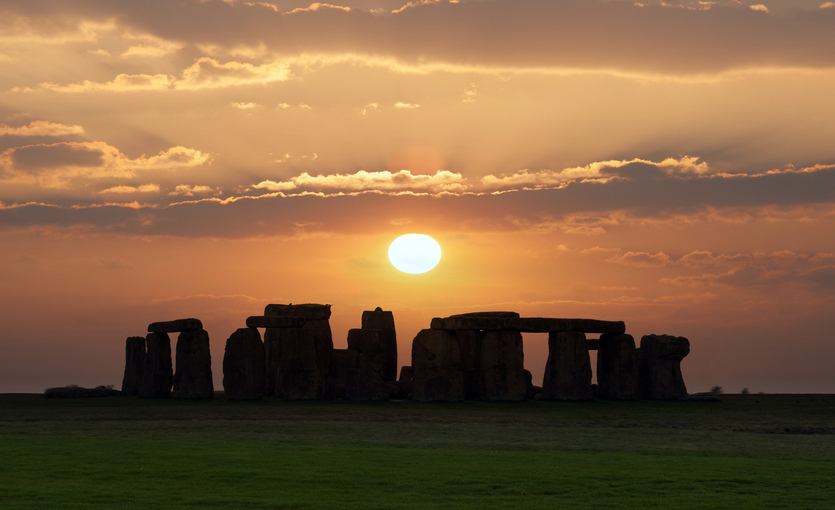
Stonehenge, England: Before Sunrise, 30,000 People and 5,000 Years of History
To understand what happens at Stonehenge on the summer solstice, you need to understand the alignment. The monument was built — over centuries, by multiple generations of people — so that on the longest day of the year, the rising sun aligns precisely with the Heel Stone and casts its light directly into the center of the circle. This is not an accident. The engineering required to achieve this alignment, with the technology available in the Neolithic period, represents an astronomical sophistication that took modern scholars a long time to accept. The people who built Stonehenge understood the solar year with a precision that we can only observe and admire.
Sunrise on June 21 is at around 4:52am in Wiltshire. The gates open to the public at around midnight. By 3am there are already tens of thousands of people — Druids in white robes performing ceremonies, pagans with drums, tourists with thermos flasks, people who simply wanted to be there and couldn’t quite explain why. The crowd is one of the most genuinely mixed in Europe: all ages, all backgrounds, all there for the same brief moment when the light comes through the stones. The atmosphere is loud and communal until just before dawn, when it becomes very quiet. Then the sun rises. The nearby stone circle at Avebury, less famous and entirely open access, offers a quieter alternative. Fly into London on a cheap flight to London and take the train to Salisbury. The bus service to Stonehenge runs through the night on solstice.
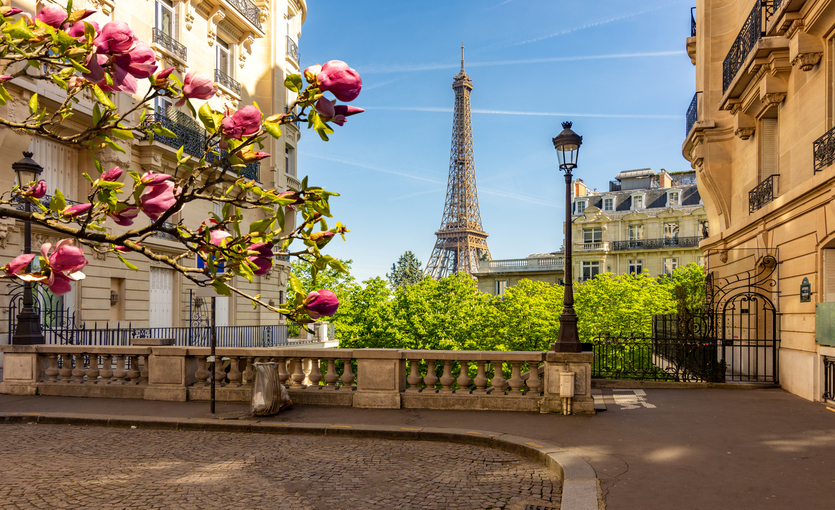
Paris, France: The Night the City Becomes a Stage
The Fête de la Musique was created in 1982 by France’s Ministry of Culture on a simple principle: on the summer solstice, music should be free, it should be everywhere, and anyone who wants to play should be able to. In Paris on June 21, 2026, that principle plays out across the entire city simultaneously. Jazz spills out of wine bars in the Marais. A classical quartet sets up under the Louvre colonnade. A brass band marches down a side street in the 11th arrondissement. Techno DJ sets occupy town hall forecourts. Gospel choirs fill church courtyards. Every genre, every neighborhood, all night, all free.
The festival now runs in over 120 countries, but Paris remains its home and its fullest expression. The city’s long summer evening — 16.4 hours of daylight on the solstice, with dusk not falling until after 10pm — means the outdoor performances run well into the warm night. The Seine riverbanks fill up. The parks stay open late. The metro extends its hours. There is no single central event to find: the point is to walk, to follow the sound, to let the city take you somewhere you didn’t plan to go. The Fête’s own name is a double meaning — fête de la musique means both ‘festival of music’ and, imperative tense, ‘make music’. Paris on this night takes both meanings equally seriously. Paris in 3 Days: The Perfect Itinerary for France’s Capital covers the city for anyone combining the solstice with a longer Paris stay. Fly in on a cheap flight to Paris. The music starts in the afternoon. Stay until it stops, which may be dawn.