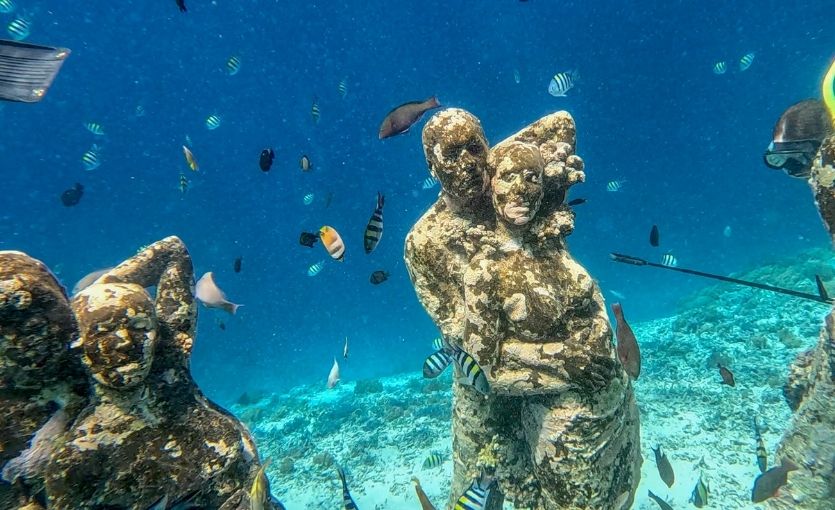
The most extraordinary museums in the world don’t have entrance halls or gift shops or climate-controlled galleries. They have depth. The Mediterranean, the Red Sea, and the Aegean between them contain more history per square kilometer of seabed than almost any comparable area on earth — Bronze Age cargo ships still carrying their copper ingots, Roman port cities swallowed by earthquakes, WWII merchant vessels resting upright on sandy floors with their cargoes intact — and all of it is accessible to anyone willing to put on a mask and go down to look. This is a guide to the most compelling underwater archaeology sites reachable with Pegasus, from beginner-friendly snorkeling ruins to technical dives on wrecks that most divers only see in books. Check the Pegasus route map for connections and use the depth chart above as your planning reference — sites are positioned at their actual dive depths, from the 3-meter shallows of Baiae to the 120-meter technical descent to the Britannic.
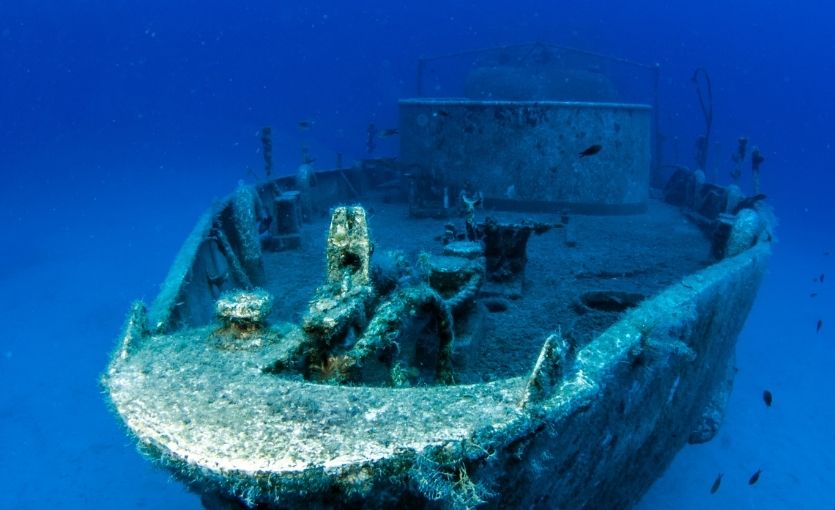
Türkiye: The Aegean Coast and the World’s Oldest Ocean Wreck
Uluburun, Kaş — 44 meters | Advanced
In 1982, a sponge diver named Mehmed Çakır was working the waters off Uluburun Point near Kaş when he noticed what he described as ‘metal biscuits with ears’ on the seabed. He had found the Uluburun wreck: a Late Bronze Age merchant vessel dating to around 1305 BC, carrying the most diverse cargo ever recovered from an ancient shipwreck. Ten tons of copper ingots. One ton of tin. Ebony logs from tropical Africa. Glass ingots from Egypt. Pomegranate-shaped amber beads from the Baltic. A golden scarab bearing the cartouche of Nefertiti. The ship had been traveling between the major powers of the ancient Mediterranean — Egypt, Cyprus, Canaan, Mycenae — and it went down with a cargo that now tells us more about Bronze Age trade networks than almost any other single archaeological find.
The wreck itself is accessible to advanced divers at 44 to 52 meters, with the Bodrum Museum of Underwater Archaeology housing the recovered artifacts — a visit to the museum before the dive gives you the context to understand what you’re looking at on the seabed. The dive requires technical certification at the deeper sections and is typically done as a guided dive from Kaş. The Best Places in Kaş covers the town, and Antalya as Your Gateway to 100+ Routes shows how to combine a Kaş diving trip with the broader Antalya region. Fly into cheap flights to Antalya and drive west along the Lycian coast.
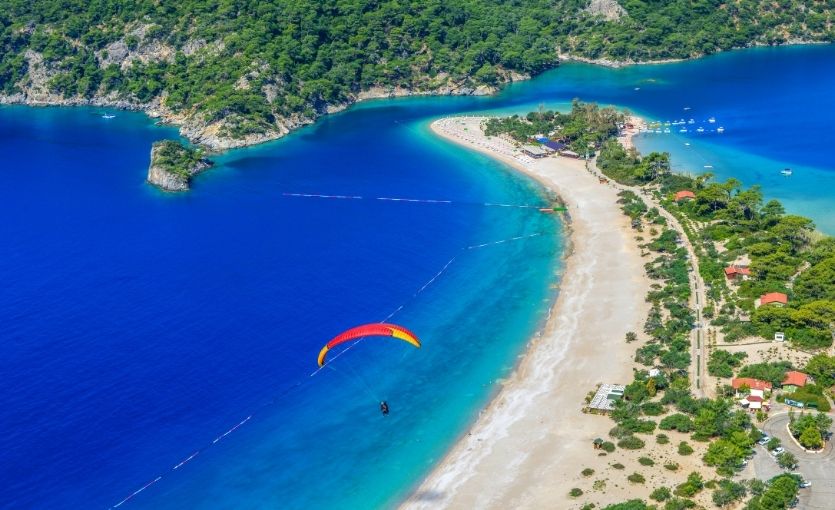
Fethiye and the Three Islands — 5 to 30 meters | All levels
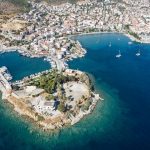
The waters around Fethiye and the Three Islands (Üç Adalar) off Antalya offer a different kind of underwater archaeology — less a single dramatic wreck and more a landscape of accumulated history. Ancient amphora fields lie on the seabed around the islands, the remains of trading vessels that didn’t make it through the Aegean. A deliberately sunk coast guard vessel provides a relatively recent artificial reef now colonized by sea life. The visibility in these waters can exceed 20 meters in summer, and the combination of manageable depths, organized dive operations out of Fethiye marina, and the sheer density of material on the seabed makes this an excellent introduction to archaeological diving for those without technical certifications. Hidden Bays and Ancient Ruins Along the Muğla Shoreline covers the broader coastal archaeology of this region. Fly into cheap flights to Dalaman.
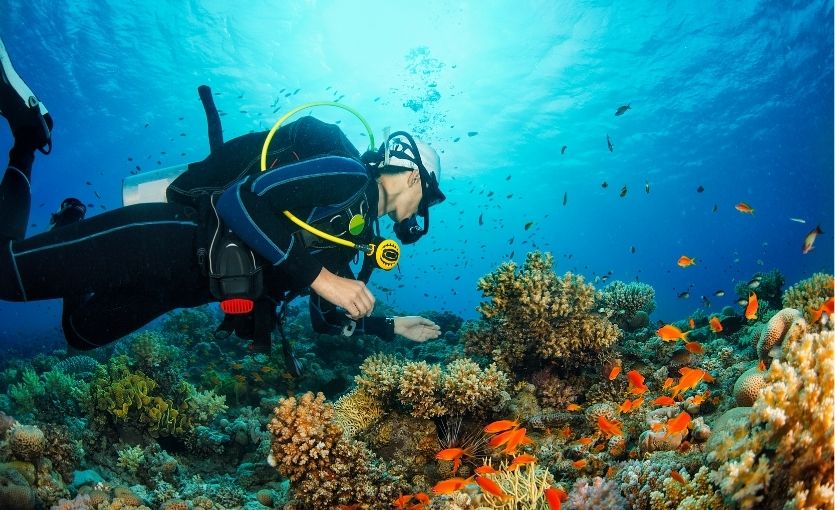
Italy: Where Roman Cities Sank Beneath the Sea
Baiae Underwater Archaeological Park, Naples — 3 to 15 meters | Snorkel / Beginner
Baiae was the Las Vegas of ancient Rome — a resort town on the Bay of Naples where the aristocracy built extravagant villas, the emperor kept a palace, and the hot springs (the same volcanic activity that eventually destroyed Pompeii) kept the water warm year-round. Julius Caesar had a villa here. Cicero wrote letters from here. Hadrian died here. And then, over centuries of bradyseismic activity — the slow rise and fall of the volcanic ground beneath the bay — Baiae sank. Not dramatically, not in a single event, but gradually, so that by the 8th century AD the buildings that had once housed the most powerful people in the world were under four meters of seawater.
Today the Baiae Underwater Archaeological Park protects the sunken city, and the experience of diving or snorkeling through it is among the most surreal in the Mediterranean. At three meters depth, you swim over complete Roman mosaic floors, the tesserae still in their original positions and colors still visible through the water. Copies of statues found here — the originals now in the museum in Baia castle — stand on their original plinths underwater. Entire room layouts are visible from above the surface through a glass-bottomed boat if you don’t dive. This is the most accessible major underwater archaeological site in the world: no technical certification, no deep diving, just a mask and the patience to look carefully at what’s beneath you. Fly into cheap flights to Naples with Pegasus — Baiae is about 40 kilometers west of the city. 3 Days in Rome: From Ancient Stones to Late-Night Trattorias covers the broader Italian archaeological context.
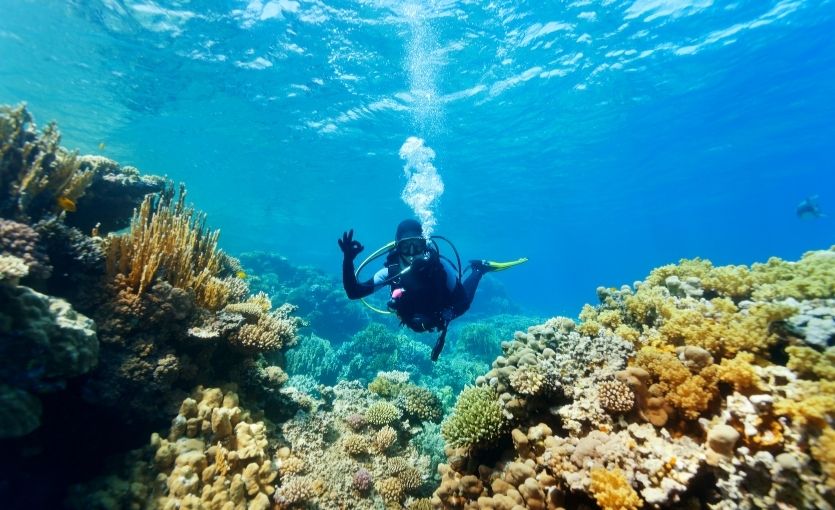
Greece: Amphorae Fields and a Ship Bigger Than the Titanic
Peristera Wreck, Alonissos — 25 meters | Intermediate
The Peristera wreck is one of the largest ancient shipwrecks ever discovered in the Mediterranean: a 5th-century BC merchant vessel that went down carrying an estimated 4,000 wine amphorae, now lying on a sandy seabed off the island of Alonissos in the Northern Sporades. The site was opened to recreational diving in 2020, making it one of the first ancient wrecks in Greece to be legally accessible to non-archaeological divers, and the dive itself is genuinely extraordinary — the amphorae are still stacked in their original cargo formation, rising in mounds from the seabed like an underwater warehouse that has been waiting for its inventory since Pericles was running Athens.
The Alonissos Marine Park, which protects the surrounding waters, is the largest marine protected area in Europe and the diving conditions within it are among the clearest in the Aegean. Guided dive tours to Peristera run from Alonissos town throughout the summer. Fly into cheap flights to Athens and connect by ferry through Volos or Agios Konstantinos.
HMHS Britannic, Kea Island — 120 meters | Technical divers only
The Britannic was the third and largest of the three Olympic-class ocean liners built by White Star Line — the class that included the Olympic and the Titanic. It sank in November 1916 in the Aegean Sea near the Greek island of Kea, having struck a mine while serving as a hospital ship during WWI. At 48,158 gross tons and 269 meters long, it is the largest ocean liner ever to lie on the seabed, and it rests almost intact on its side at 120 meters depth — deeper than most recreational divers ever go and accessible only to those with full technical certification including mixed gas and decompression training.
For technical divers, the Britannic is one of the most significant dives in the world: the ship is largely intact, the portholes of the hospital wards still visible, the massive propellers rising from the stern. Jacques Cousteau filmed the wreck in 1976. Dive expeditions to the Britannic operate from Athens and Kea, and the logistics are complex enough that most visitors join organized technical dive expeditions rather than attempting independent access. For anyone who wants to see the ship without descending 120 meters, the museum in Kea town has detailed documentation of the wreck and its history.
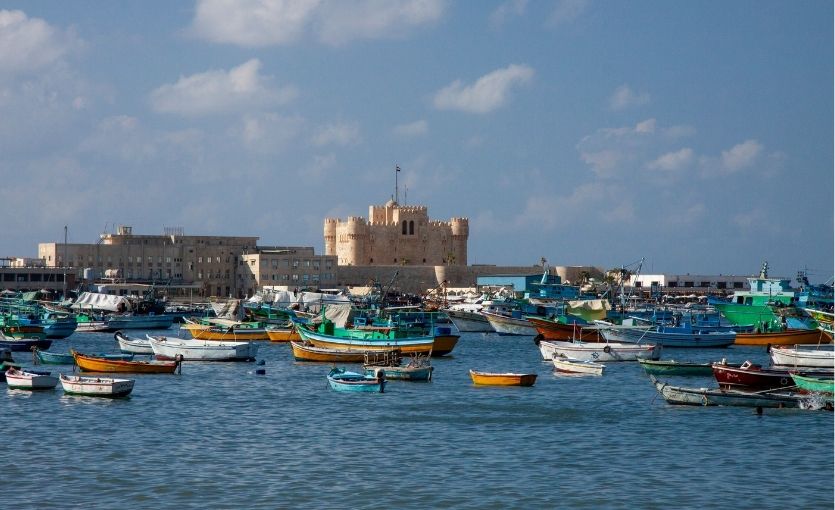
Egypt: Cleopatra’s Palace and Napoleon’s Fleet
Alexandria Eastern Harbor — 5 to 10 meters | Guided dive
The Eastern Harbor of Alexandria holds one of the greatest concentrations of ancient history per square meter of seabed on earth. The Lighthouse of Alexandria — one of the Seven Wonders of the ancient world — fell into the sea after earthquakes in the 14th century, and its massive granite blocks are still on the harbor floor, identifiable by their scale (some are five meters long) and by the ancient Greek and Egyptian carvings visible on their surfaces. The royal quarter of the Ptolemaic city, including what are believed to be the remains of Cleopatra’s palace complex, lies nearby: sphinxes, statues, columns, and the foundations of structures that were contemporary with Caesar’s visit to Egypt in 48 BC.
Diving the Eastern Harbor requires permits and is typically done through organized archaeological dive operations based in Alexandria — the site is not open to independent recreational diving. The Egyptian authorities have been discussing an underwater museum project that would make the ruins accessible without diving at all, though this remains in the planning stage. The overwater complement to a harbor dive is the Kom El Shoqafa Catacombs and the Greco-Roman Museum. Fly into cheap flights to Alexandria directly with Pegasus.
Abukir Bay — 10 to 20 meters | Intermediate
Twelve kilometers east of Alexandria, Abukir Bay is where Napoleon’s fleet was destroyed by Admiral Nelson in the Battle of the Nile in 1798, and where the ancient city of Heracleion — the legendary lost port city of ancient Egypt, mentioned by Herodotus and thought to be mythological until its discovery in 2000 — was found on the seabed. The French warships from the Napoleonic battle lie at depths accessible to intermediate divers, including the flagship L’Orient, which exploded and sank with 1,000 men aboard. The Heracleion site is primarily an archaeological excavation zone, but organized dive tours visit the visible remains: massive granite statues, sacred barques, and the collapsed walls of a city that had been submerged for 1,200 years before anyone knew it was there.
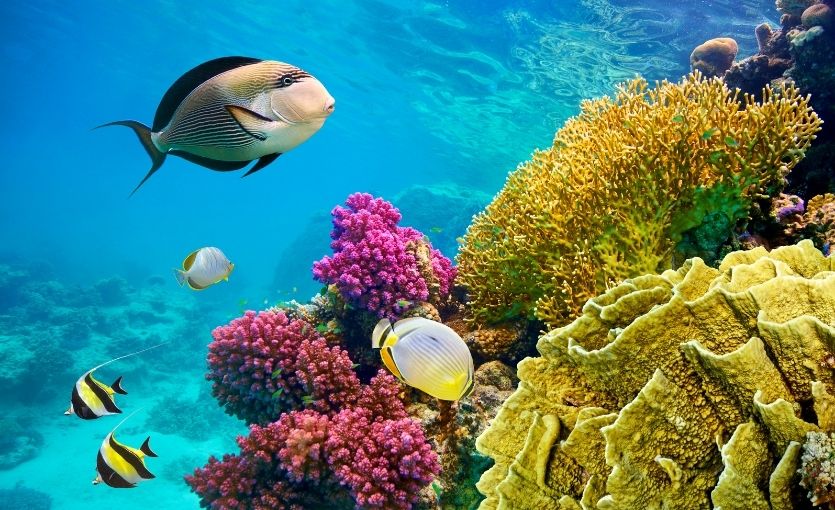
SS Thistlegorm — 30 meters | Intermediate
On the night of October 6, 1941, two German Heinkel He 111 bombers located the British merchant vessel SS Thistlegorm at anchor in the Red Sea and sank her with two direct hits to the ammunition hold. The explosion that followed detonated the cargo: 28 locomotives, trucks, motorcycles, Bren gun carriers, rifles, ammunition, and boots — the entire materiel of a military resupply mission intended for British forces in North Africa. The Thistlegorm went to the bottom in minutes, and almost everything she was carrying went with her.
Jacques Cousteau found the wreck in 1955, returned in 1963, and for decades kept its location largely secret. When it was rediscovered by recreational divers in the 1990s it became one of the most dived wrecks in the world, and for good reason: the hold is accessible, the cargo is intact, and diving through it is as close as you can get to entering a WWII museum that no one has curated. The motorcycles still have their side-cars. The locomotives are still in the hold where they were stowed. The visibility in the Red Sea, typically exceeding 25 meters, means you can see the full scale of the wreck from a distance before you descend to explore it. 3 Days in Sharm el-Sheikh: Beaches, Coral Reefs and Ancient Egypt covers everything else worth doing in the area. Fly direct with Pegasus to cheap flights to Sharm el-Sheikh.
MV Dunraven — 18 meters | Beginner-friendly
A few kilometers from the Thistlegorm, at the entrance to the Strait of Gubal, the Dunraven offers a dive that is both more accessible and in some ways more beautiful than its famous neighbor. The ship, a 19th-century British steamship that ran aground on the Sha’ab Mahmoud reef in 1876, lies upside down on the reef at 18 meters, its hull now completely encrusted with coral and inhabited by an extraordinary concentration of marine life — lionfish, grouper, moray eels, and in the crevices of the coral-covered hull, creatures that have made the wreck their permanent home over 150 years of colonization. The interior penetration dive through the engine room and cargo holds, upside-down relative to the original orientation, is disorienting in the best possible way.
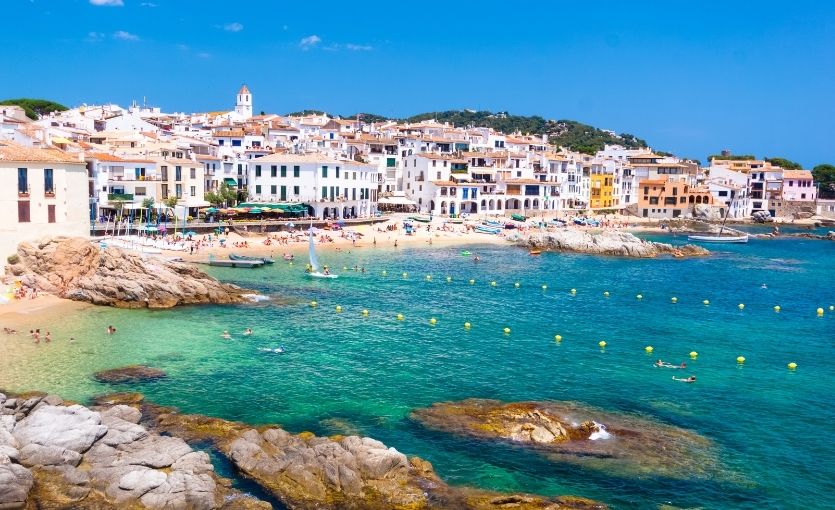
Spain: Marine Reserves and the Ship Graveyard of Cabo de Palos
Medes Islands Marine Reserve, Costa Brava — 5 to 30 meters | All levels
The Medes Islands, a small archipelago off the Costa Brava town of L’Estartit, have been a strictly protected marine reserve since 1983, and the result of four decades of protection is one of the most biodiverse marine environments in the western Mediterranean. The underwater caves beneath the islands are among the most dramatic in Europe — passages leading to air pockets where cave fish have evolved in darkness, tunnels whose walls are covered in red coral and sponges, and chambers large enough to hold a tour group comfortably. The archaeological element is subtler than at the other sites on this list: ancient anchors and trading vessel fragments scattered across the rocky seabed, the detritus of millennia of maritime traffic along this coast. But the diving environment itself is the main event, and it is exceptional. Fly into cheap flights to Barcelona and drive north along the coast to the Costa Brava. Sun, Sand and a Sea View: Europe’s Best Coastal Cities for Summer covers Barcelona and the surrounding coast.
Cabo de Palos, Murcia — 20 to 50 meters | Intermediate to Advanced
The headland of Cabo de Palos on Spain’s southeastern coast earned its historical reputation as a ship graveyard from the rocky reefs that extend from it underwater and the strong currents that have been driving vessels onto them for centuries. The result is a concentration of wrecks spanning several centuries of Mediterranean shipping: the Sirio, an Italian passenger liner that struck the reef in 1906 with enormous loss of life; the Lina Palombo, a cargo vessel; and a number of smaller vessels whose identities remain uncertain. The Reserva Marina de Cabo de Palos, one of Spain’s protected marine reserves, has allowed the wrecks to become coral structures in their own right over the decades. The diving ranges from intermediate depth on the shallower wrecks to advanced on those lying at 40 to 50 meters. Fly into cheap flights to Alicante or cheap flights to Valencia and drive south along the coast.
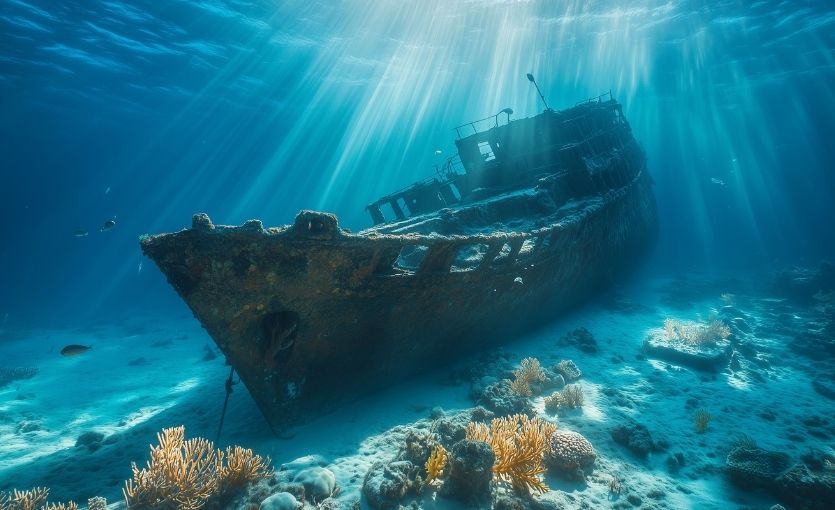
Planning Your Underwater Archaeology Trip
The sites on this list span four countries and a skill range from no diving required (Baiae via glass-bottomed boat, or snorkeling at 3 meters) to technical certification mandatory (Britannic at 120 meters). Be honest about your certification level and experience before booking any dive: most of these sites have responsible dive operators who will assess your logbook before taking you down, and the underwater archaeology community takes site preservation seriously — touching, moving, or taking anything from these sites is illegal and genuinely damaging to irreplaceable history.
For a multi-site trip combining, for example, Türkiye’s Aegean wrecks with Sharm el-Sheikh’s Red Sea diving, Flight Hacks: How to Plan a Multi-Stop Trip with Pegasus covers how to route efficiently. The Pegasus route map shows direct connections into Antalya and Dalaman (for Türkiye), Naples (for Baiae), Athens (for Peristera and Britannic), Alexandria and Cairo (for Egypt), Sharm el-Sheikh (direct for the Red Sea sites), and Barcelona, Alicante, and Valencia (for Spain). Check the baggage allowance page well in advance — dive equipment, particularly BCDs, regulators, and wetsuits, adds significant weight and volume, and declaring it correctly saves complications at check-in. Consider the upgrade package for the flexibility a diving trip benefits from. Pre-order your meal via the Pegasus Café pre-order menu up to 24 hours before departure. The wrecks have been waiting for centuries. A little planning won’t hurt.