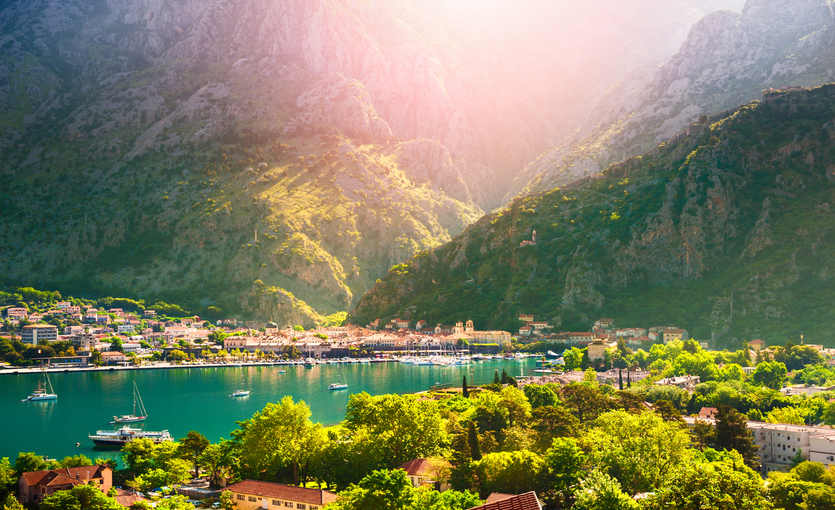
Montenegro is small enough to hold in your head after two days and varied enough to keep surprising you for a week. This is a country with a medieval walled city on a bay so beautiful it still stops traffic, a coastline that runs from fortress towns to cliff-backed beaches in the space of an hour’s drive, and a mountain interior that makes the coast feel like a completely different country by comparison. Three days is enough to do the coastal route properly — Kotor to Budva via the bay loop — and it leaves you with enough time to understand what you’ve seen rather than just photographing it. Book a cheap flight to Podgorica with Pegasus, pick up a hire car at the airport, and drive the forty minutes to Kotor. The itinerary below takes it from there. Podgorica to Kotor: Montenegro’s Underrated Coastal Duo covers the capital itself if you want to add a night before the coast, and From the Bosphorus to the Balkans: Budget-Friendly Routes covers how Montenegro fits into a broader Balkan itinerary.
Day 1: Kotor — Get Inside the Walls Before Anyone Else Does
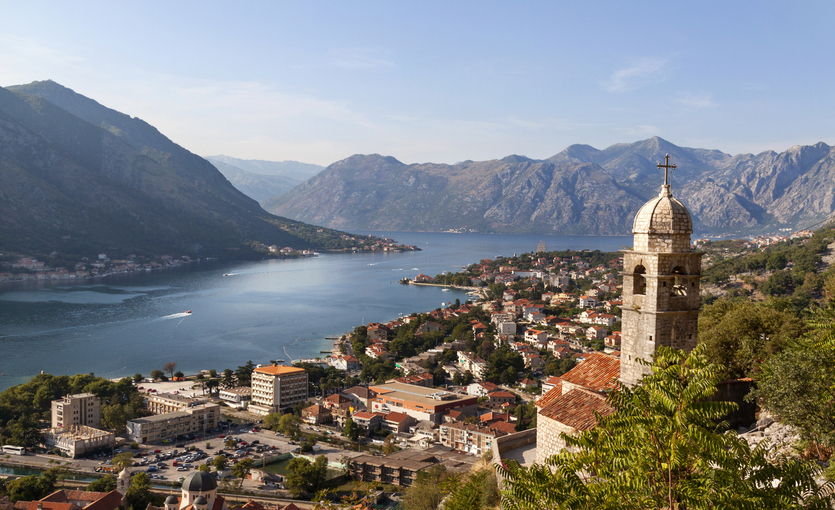
You want to be on the city walls by seven in the morning. This is not a suggestion about productivity. It is a suggestion about light and crowds, both of which are dramatically better at seven than at ten. The walls of Kotor climb steeply from the old city to the fortress of St. John at 260 meters above sea level, and the 1,350 steps are done in about two hours at a reasonable pace. The view from the top, looking down over the red rooftops of the old city and the whole sweep of the Bay of Kotor, is one of the finest urban viewpoints in Europe, and at dawn you have it almost entirely to yourself. By mid-morning that will not be the case.
Kotor’s old city is genuinely medieval in a way that many old towns are not: its streets are still as narrow as they were in the 13th century, the Cathedral of Saint Tryphon still holds the relics it was built for, and the cats — the city has a long history as a port, which means a long history of ship’s cats and their descendants — still run the place with the confidence of residents rather than mascots. Spend the morning inside the walls, have lunch at the waterfront, and then take the afternoon boat across the bay to Our Lady of the Rocks, the artificial island built by sailors who added a stone each time they passed safely. The church interior, covered in votive offerings and painted panels, has the accumulated sincerity of a thousand years of people being genuinely grateful to still be alive. Perast, the village of Baroque palaces a few minutes further along the shore, is quiet enough in late afternoon that you can hear the water. Dinner back inside the Kotor walls. Stay late.
Day 2: The Bay Loop, Herceg Novi, and the First Sight of the Open Sea
Drive the Bay of Kotor anticlockwise in the morning, when the light comes from the east and hits the water and the limestone mountains in a way that the afternoon light misses. The bay is not actually a bay: it is a series of four connected inlets, the innermost of which is the deepest natural harbor in the Adriatic, and driving around its perimeter takes you through a string of villages that time has treated more kindly than most. Morinj has a cold freshwater spring that feeds directly into the sea, producing a thermal contrast that makes swimming there genuinely interesting. Risan is the oldest settlement on the bay and has Roman mosaics under a building in the town center that receives almost no visitors. Stop and look.
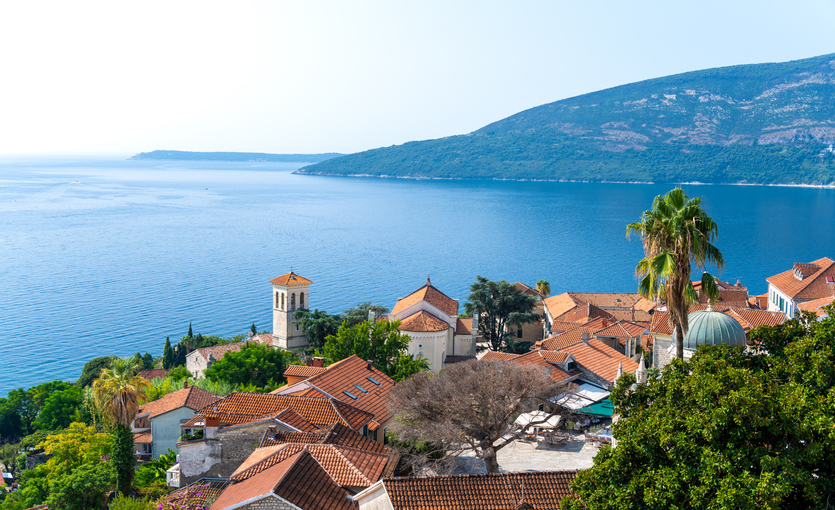
Herceg Novi, at the bay’s western mouth, is where the protected water ends and the Adriatic begins. The fortress town built by successive occupiers — medieval Bosnian, Ottoman, Venetian, Austro-Hungarian, each layer still visible — overlooks the point where the bay meets the open sea, and the view from the Kanli Kula fortress walls at midday, with the sea sparkling and the Dalmatian coast visible across the water, is the moment you understand the geographical logic of everything you’ve been driving through. After lunch, head south. The Budva Riviera begins within an hour of leaving Herceg Novi, and the road drops to the coast past Sveti Stefan — the island hotel on its rock, connected to the mainland by a narrow causeway, one of the most photographed images in the Adriatic — and then into Budva itself. The old town walls before dinner. The itinerary earns its keep.
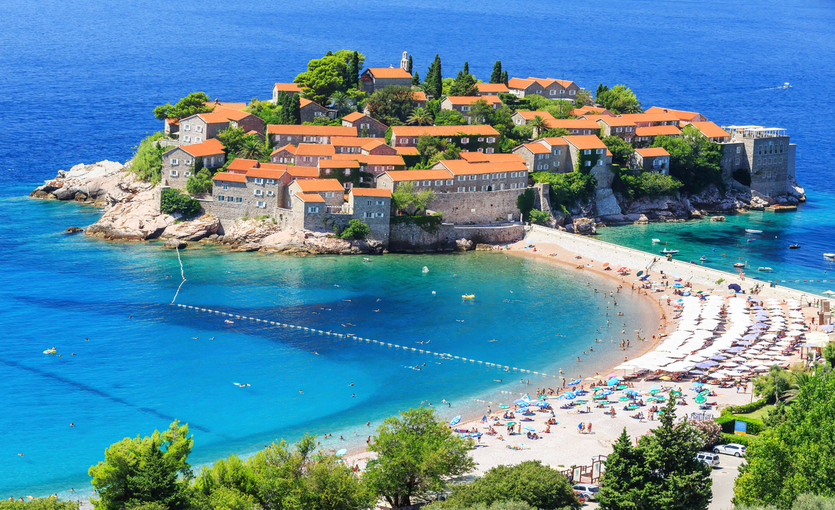
Day 3: Budva — Old Town, Good Beaches and How to Leave
Budva’s old town is smaller than Kotor’s and more battered by history, which makes it in some ways more interesting. The citadel walls are walkable, the streets inside are genuinely tiny, and the archaeological museum in the old town has a collection that covers the settlement’s history from the 5th century BC onward. Spend the morning there before the heat makes the stone streets feel like an oven. By ten-thirty you want to be at Mogren Beach, the twin cliff-backed coves a ten-minute walk from the old town along a path cut into the rock face: the water is clear, the setting is dramatic, and the beach is far enough from the main waterfront that the crowd density is manageable.
The afternoon is for a choice. Jaz Beach, a few kilometers west of Budva, is a long open stretch of pebble and sand that works well for a long, uncomplicated swim. Bečići, immediately south, is similar: bigger, somewhat more developed, reliably beautiful. Or take the mountain road up to Cetinje — the old royal capital forty minutes inland, surrounded by karst mountains, formerly the seat of the Montenegrin kings and now a small town of extraordinary historical density for its size. The National Museum occupies the former royal palace. The treasury contains objects from centuries of Montenegrin history. The town feels entirely removed from the coast, which after two days of Adriatic blue is itself a kind of relief.
The last evening in Budva’s old town. The walled city faces southwest, which means the sunset is built into the architecture, and by the third night you will know which terrace has the best angle. Then the question of where next.
Before and After: Connecting Montenegro to the Rest of the Balkans
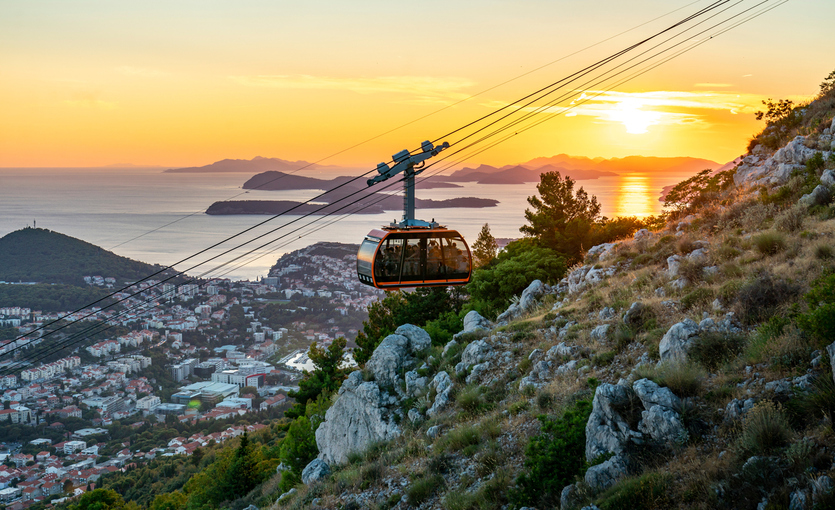
Montenegro sits at the junction of several of the most interesting travel routes in the region, and it would be a waste to treat it as a standalone destination when the connections are this good. Dubrovnik is two hours north by road from Budva — the Croatian border crossing is straightforward in summer and the drive along the coast is extraordinary. Our Sun, Sand and a Sea View: Europe’s Best Coastal Cities for Summer covers Dubrovnik in full. Tirana is three hours south, a completely different register — chaotic, colorful, post-communist, surprising — and 48 Hours in Tirana: Albania’s Colorful Capital is the guide to it. Sarajevo is four hours northeast: Ottoman bazaars, Austro-Hungarian architecture, and a recent history that gives the city a weight and seriousness that most European capitals lack. 72 Hours in Sarajevo: Ottoman Echoes and Balkan Beats covers it properly. Belgrade is reachable by overnight bus or a short flight, and Explore Sofia in 3 Days: Best Sights, Food and Day Trips is worth reading if you’re extending into the eastern Balkans.
The whole Balkan circuit — Podgorica, Kotor, Budva, Tirana, Sarajevo, Belgrade — is one of the best travel routes in Europe for the price, and Flight Hacks: How to Plan a Multi-Stop Trip with Pegasus covers how to build it efficiently. Walkable Wonders: Explore These Cities on Foot is worth reading for Kotor and Budva specifically, both of which are compact enough to do properly on foot.

Getting There and Getting Around
Podgorica airport is the entry point for most visitors coming by air, and Pegasus connects directly. Book your cheap flight to Podgorica early — summer demand on Balkan routes is higher than people expect, and how to find cheap flights covers when to book for the best fares. A hire car is not optional for this itinerary: the bay loop and the coastal drive to Budva do not work by public transport at the pace or flexibility this route requires. Montenegro is cash-heavy outside the main tourist areas, so withdraw euros on arrival.
If you’re combining Montenegro with Croatia, Serbia, or Albania and crossing borders by road, check current border requirements before you travel — they vary and change. Check the Pegasus route map for connections into Podgorica and into Tirana or Dubrovnik for onward flights, check the baggage allowance page before you pack for a three-country trip, and consider the upgrade package for flexibility on a multi-leg itinerary. Pre-order your food via the Pegasus Café pre-order menu up to 24 hours before departure. The walls of Kotor open at dawn. Set an alarm.