Schengen Area is an open-border zone that covers 29 countries, the majority of Europe. Schengen countries, with their developed economies, spectacular history, and unique cultures are among the most popular travel destinations for travellers of all kinds. Of course, for many people, traveling to this area requires a special travel authorization: a Schengen visa. Once you have obtained this visa, you can travel to all member countries freely.
Are you planning a European trip soon? You probably have some questions about the Schengen visa. Fortunately, you are where you need to be. This article will tell you all about the Schengen visa, its application process, and key facts you need to know.
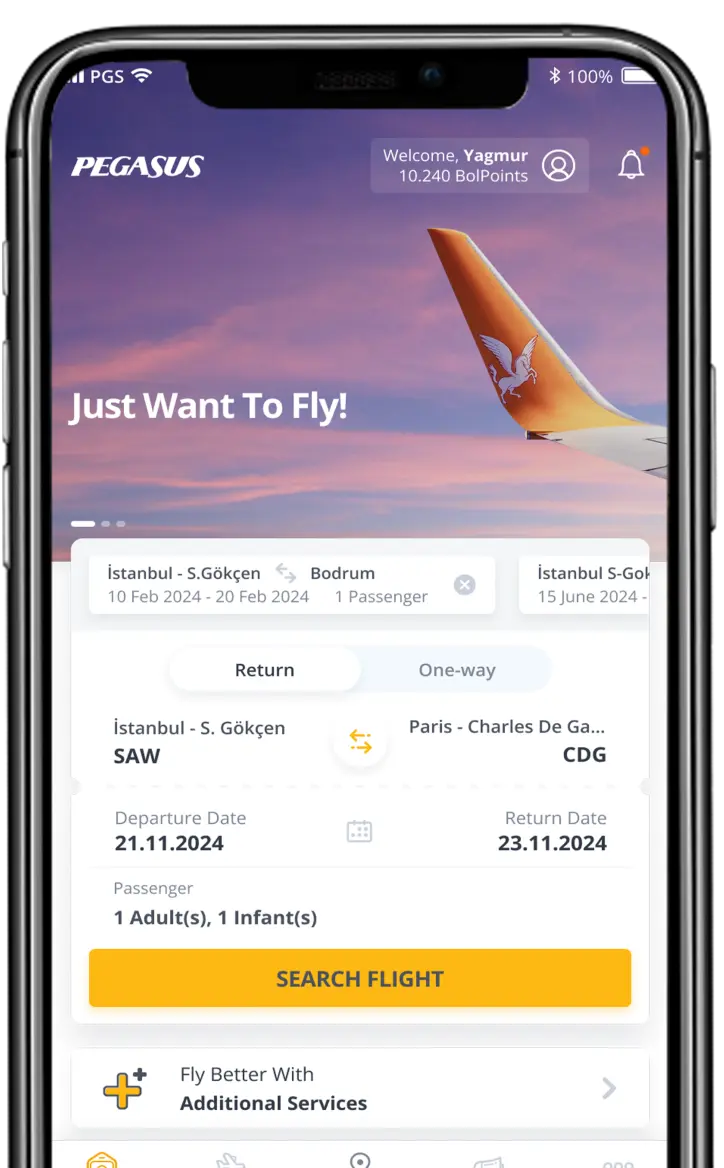
Have you booked your flight ticket? Make sure to visit our website for affordable flights to exciting destinations worldwide!
What is a Schengen Visa?
A Uniform Schengen Visa is the Type C visa issued by the member countries of the Schengen Area. This visa is available to those traveling to the Schengen Area for tourism, education, business, or social purposes, as long as they do not engage in paid work. The validity of a Schengen visa is usually up to 90 days, with single, double, and multi-entry options.
Passport-holders of visa-exempt countries do not need to hold this visa to travel to the Schengen Area.
Is this your first trip and do you want to learn more about travel documents and such? Check our comprehensive guide for all about passports: “What is a passport?”
Countries to Travel with a Schengen Visa
A Schengen visa allows you to access 29 European countries freely. The majority, but not all, of these countries are EU members.
Below is the complete list of Schengen countries:
- Austria
- Belgium
- Bulgaria
- Czech Republic
- Croatia
- Denmark
- Estonia
- Finland
- France
- Germany
- Greece
- Hungary
- Iceland
- Italy
- Latvia
- Liechtenstein
- Lithuania
- Luxembourg
- Malta
- Netherlands
- Norway
- Poland
- Portugal
- Romania
- Slovenia
- Slovakia
- Spain
- Sweden
- Switzerland
It should also be noted that holding a Schengen visa may simplify visa applications for other non-Schengen, EU countries such as Monaco and San Marino.
How to Get a Schengen Visa
Let’s explore some essential tips that might help you get a Schengen Visa.
Picking the Right Destination
Applying for a Schengen visa can seem challenging, and the possibility of refusal is a concern for many travellers. However, one key factor that can influence your chances of approval is the country you apply through.
Some Schengen countries have higher visa approval rates than others. For instance, Iceland, Latvia, and Switzerland tend to approve more applications. Italy, despite being a popular destination, also has a relatively high approval rate.
So, if your itinerary is flexible, you may consider applying through one of these countries to increase your chances of success.
Don’t Forget to Apply for Your Main Destination
Even though a Schengen visa allows you to visit multiple countries, your visa must be issued by the first country you’ll visit. This means that if you plan to begin the journey in Germany, you should apply through the German embassy or consulate.
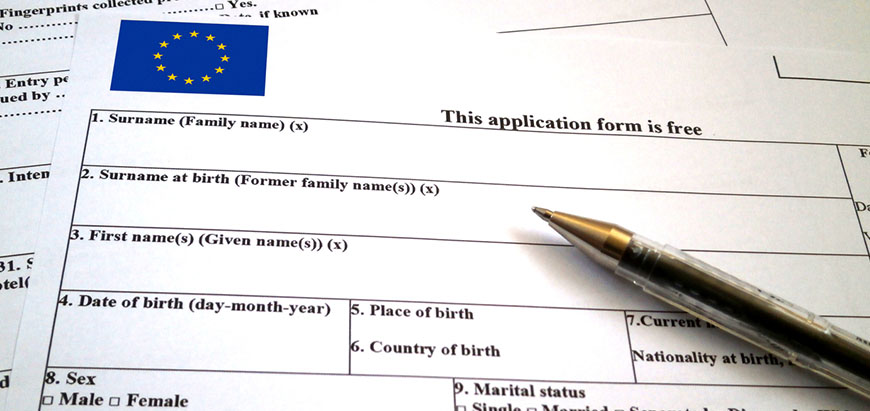
Fill Out the Application Form—Correctly
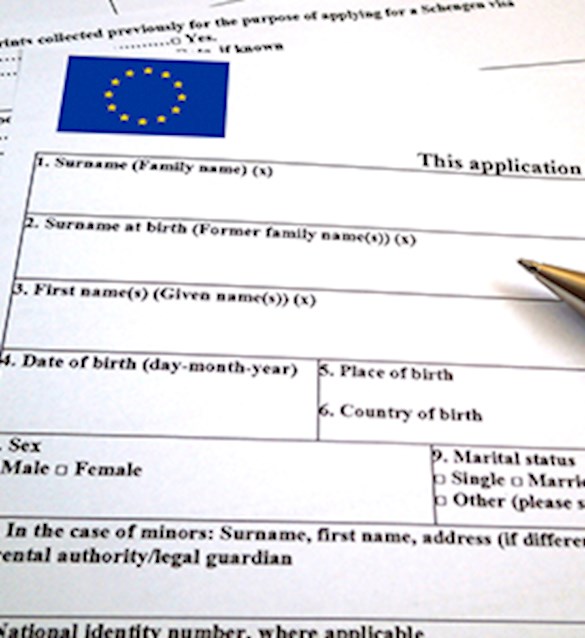
Filling out the application for Schengen visa is straightforward, yet accuracy in documentation is essential. Here are a few important points to keep in mind:
- Although some countries allow you to fill out the application form online, others require a printed and signed copy,
- Even if you fill out the application form online, you must still print it and sign it in person,
- Once you have sent the application form, you cannot make any changes to it—make sure that all the information you provide is valid,
- Minors must also fill out an application form (to be signed by their legal guardians),
- Most Schengen countries outsource their visa processing via third-party visa centers, such as VFS Global or BLS International. You can apply for your Europe visa through these centers,
- The same application form is used for single and multi-entry visas.
Take Advantage of E-Visa Forms
The EU has been steadily digitizing its visa application process for a while. As a result, many Schengen countries have digital visa application systems, making it more efficient and convenient. Therefore, check whether your destination country has a digital visa option. If they do, take advantage of this opportunity, as it can speed up processing and reduce paperwork.
Schengen Visa Application Process
Booking a visa appointment is the first step of your unforgettable journey! All you have to do for a smooth and problem-free visa process is to provide full and accurate information. Having a flight ticket significantly helps you here. So, don’t forget to book your flight in advance for a seamless application and shorter Schengen visa processing time!
How to Make a Schengen Visa Appointment?
Here’s a step-by-step guide to schedule a visa appointment for Schengen Visa:
Step 1: Choose the Right Diplomatic Mission
Check the embassies and consulates of the country you’re traveling to and choose the right one. If you’re visiting multiple Schengen countries, apply at the country of initial entry.
NOTE: Most Schengen countries outsource their visa processing; so, you will probably need to apply through an application centre.
Step 2: Check the Visa Requirements
Visit the embassy’s website for a complete list of visa documents. Ensure that your passport is valid at least three to six months beyond return date.
Step 3: Create an Online Account (if required)
Some embassies may require you to register on their digital visa portal. If your destination requires it, create an online account, and fill in your basic personal details to access the appointment system.
* If there’s no online application, skip to Step 5.
Step 4: Fill Out the Visa Application Form
Find the relevant Schengen application form online, print it, fill it out, and sign it. This form is usually available on the official website of the embassy or third-party provider. Make sure that you provide accurate personal data.
For countries with Schengen visa online application: Find the application form on the digital visa portal and fill it out with accurate personal data, just as you would a paper application. Once completed, print the form, and submit it.
Step 5: Schedule the Appointment
Visit the official website of the diplomatic mission or its visa service provider (e.g., VFS Global, BLS International). Select an available date and time for your Schengen visa application.
Step 6: Gather Required Documents
Ensure you meet all Schengen visa requirements and have the necessary paperwork, including the completed application form, passport-sized photos, travel insurance, and so on.
Step 7: Attend the Visa Appointment
Arrive at the embassy or visa centre on time with all the original documents and photocopies along with you. Biometric data is often required, so be prepared for fingerprinting and face scanning.
Step 8: Pay the Visa Fee
Although fees vary by country and visa type, Schengen visa fees are usually the same for all member states. Payments can be made online, at the centre, or via bank transfer. However, it’s best to check in advance which forms of payment are accepted.
Step 9: Wait for Processing
Standard processing time is usually 15 calendar days. Still, it can take longer or shorter time for each individual application. You can use the tracking service of the provider or the embassy to keep up with the process.
Step 10: Collect Your Passport
Once your passport is ready for collection, you can visit the embassy or application centre to find out the final verdict. If approved, congrats! You will receive your passport with the visa sticker, ready to embark on your journey.
Requirements for Obtaining a Schengen Visa
Meeting all the requirements for the Schengen visa is essential for a smooth application process.
- A valid purpose of travel: The embassy will want to know why you’re traveling. The most common purposes of travel are education and tourism.
- Proof of strong ties to your home country: When applying for a Schengen visa, you need to prove that you’ll leave the country after your visa ends. This proof can be your family, work, education, or anything else that might suggest strong ties to home country.
- Proof of financial sufficiency: Your Schengen visa application must include proof that you will support yourself during your stay. Most countries have specific daily financial requirements (such as a certain amount of euros per day). If you are unemployed, retired or a student, you can have a family member sponsor your trip.
- Accommodation arrangements: During the application process you must prove that you have arranged the accommodation and have a place to stay at your destination. This accommodation can be a hotel, hostel, or a friend’s home.
- A confirmed travel itinerary: You must have a round-trip flight reservation, planned activities, and a possible itinerary (countries and cities you might like to visit).
- Compliance with Schengen entry rules: You should hold a valid passport and must not be listed in the Schengen Information System for the purpose of refusing entry to the Schengen territory (SIS). Additionally, having previous visa violations, overstays, or a criminal record can lead to refusal.
- Biometric data submission: When applying for a Schengen visa, you’re asked to provide biometric data (fingerprints and a facial scan).
What Documents Are Needed to Apply?
Following is a list of documents to be submitted when applying for a Schengen visa:
- A valid passport or travel document with an expiry date of at least 3 months after the date of your departure from the Schengen area,
- A filled-out and signed visa application form,
- A photo in compliance with ICAO Standards,
- A letter of intention,
- Medical insurance covering emergency medical care, hospitalisation, and repatriation,
- Evidence of financial means,
- Proof of accommodation (hotel booking, Airbnb reservation, etc.),
- Evidence of your intention to return to your home country (employment, education, family, etc.),
- Your biometric information (taken at the visa application centre or embassy),
- Visa fee payment.
You can submit these documents in either English or the official language of the visa-issuing country. If there is more than one official language, the application can be prepared in any of them.
Schengen Visa Application Documents Required from Employees
If you’re currently employed, you can submit the following additional documents as proof of sufficient funds:
- A letter from your employer stating your duration of employment, confirmation of intended leave, your travel purpose and salary,
- Last 3 months’ salary slips and last 3 months’ salary bank account statements,
- Last 3 months personal bank account statements,
- Business license and last tax return (if self-employed).
NOTE: Bank statements for saving accounts, Travel Money Cards or cash may not be accepted as proof of sufficient funds.
2025 Schengen Visa Fees
The Schengen visa fee is standardized across all Schengen member states and decided by the European Commission.
You can find the latest Schengen visa cost table below:
| Applicant Type |
Visa Fee |
| Adults |
€90 |
| Children aged 6-12 |
€45 |
| Applicants from Armenia, Azerbaijan, and Belarus |
€35 |
| Applicants from Cabo Verde. |
€67,50 |
You should remember that applying through visa processing centres might incur additional fees. Besides, some countries might require you to pay extra fees, depending on your situation and application.
Schengen Visa Application Points
You can apply for a Schengen visa via the diplomatic missions of the issuing-country or a visa application centre. Check the official website of the European Commission for more information.
Most Common Mistakes in Schengen Visa Application
There are various reasons why a Schengen visa application might be refused. Some of the most common ones are:
- Applying for the wrong visa type,
- Submitting an incorrect or incomplete visa application form,
- Failing to provide enough financial sufficiency to cover expenses during the trip,
- Failing to provide proof of strong ties to home country and that you will return to your home country after the trip,
- Submitting a passport less than 3 months valid beyond your intended departure from the Schengen Area,
- Failing to provide adequate travel insurance,
- Not booking accommodation in advance,
- Submitting an incomplete (or no) travel itinerary,
- Paying the fees improperly or not paying at all,
- Having a history of overstaying or committing a crime in a Schengen country,
- Failing to follow the instructions of the visa application centre.
Tracking Schengen Visa Application
You can track the status of your Schengen visa application on the official website of the embassy or application centre.
Types of Schengen Visa
There are three types of Schengen Visa: Type A, Type C, and Type D. Each of these visas is issued for different purposes of visit and grants its holder distinct rights. You can find out more about this visa type below.
Type A Schengen Visa
You are flying to a non-Schengen country (for example, with one of the cheap flights to Turkey) but need to transit through an international airport in the area—you won’t leave the international zone within the airport. In this case, you must apply for a Type A Schengen visa. This visa doesn’t allow entry into the Schengen Area, only transit through the airport.
Type C Schengen Visa
If you’re planning a trip to a European country for a five-day trip, you should apply for a Type C Schengen visa. Also known as the Uniform Schengen Visa, this is the most applied visa among travellers. It can be issued for tourism, business, education, and family visit purposes.
A Type C visa typically allows a stay up to 90 days within six months and can be single, double, or multi-entry. Depending on the type, Schengen visas allow for different numbers of entries: a single-entry visa allows just one entry, a double-entry visa allows two, and a multi-entry visa allows unlimited entries.
Type D Schengen Visa
Have you been accepted to a university in a Schengen country and need a long-term visa? You must apply for a Type D Schengen visa.
Also known as a National Visa in some countries, a Type D Schengen Visa provides you with a longer stay and option to apply for a residence permit. National visas are for specific purposes such as work, study, or family reunification in a particular Schengen country.
It’s important to note that a Type D visa allows entry and residence only in the issuing country and does not grant the right to freely travel across all Schengen Area countries. To enjoy free movement within the Schengen Area, you must first obtain a residence permit.
Single Entry, Double Entry and Multiple Entry Schengen Visa
The Type C Schengen Visa is further divided into three categories based on the number of entries allowed:
- Single Entry Schengen Visa: This visa is valid for one entry only—once you enter the Schengen Area, it becomes invalid. It is the most common option for first-time applicants with no previous Schengen visa history. A Single Entry Visa is issued for short stays of up to 90 days.
- Double Entry Schengen Visa: Valid for two entries, this visa allows travellers to leave and re-enter the Schengen Area during its validity (up to 90 days). A Double Entry Visa application may require additional documentation justifying the need for multiple entries.
- Multiple Entry Schengen Visa: Unlike other Schengen Visas, a Multiple Entry Schengen Visa allows holders to enter the Schengen Area multiple times within its validity period. Those who held a Multiple Entry Schengen Visa in the past can get this visa with validity of up to five years, accessing longer-term travel flexibility. Obtaining a Schengen visa multiple entry usually requires stronger justification, such as proof of frequent travel, business commitments, or family ties.
Who Needs to Apply for a Schengen Visa?
Citizens of all African and most Asian countries need a visa to enter the Schengen Area. Additionally, most countries in the Americas and all European countries—except for Belarus and Russia—enjoy visa-free access to the Schengen Area.
You can check the embassy website or Timatic to determine whether you need a Schengen visa and what travel documents you need.
Schengen Visa Renewal and Extension Procedures
Although a Schengen Type C Visa typically permits a stay of up to 90 days, there might be some cases where a visitor is granted a visa extension. The most common reason for an extension is the applicant’s inability to leave the Schengen Area for the time being.
Force majeure, such as disasters and socio-political events, humanitarian reasons, for example, the death of a relative or a health issue, or professional obligations are considered valid reasons for such an extension.
Of course, even in a case of emergency, the granting of a visa extension isn’t guaranteed, and the severity of the case will be determining.
Step-by-Step Schengen Visa Renewal and Extension Procedures
Step 1 - Check if you’re eligible: If you cannot leave the Schengen Area for any reason, you must first check whether your case is valid for a visa extension. Contact the local immigration office for the most accurate information.
Step 2 - Gather all the documents: The immigration office will require proof as to why you want an extension. You will need to provide supporting documents, such as a medical certificate, a letter from a specialist, an invitation, and so on. Besides these supporting documents, you must also submit all the documents required when applying for a Schengen visa.
Step 3 - Fill out the application form: You need to fill out a visa extension form without leaving any key details out. You must ensure that your application is properly completed.
Step 4 - Visit the local immigration office: Once you have gathered all the necessary documents and filled out the form, visit the local immigration office to hand them over.
Step 5 - Pay the fees: Do not forget to pay the application fee and any additional fees required by the immigration office. Failing to do this might cause you to receive a refusal.
Step 6 - Wait for the response: Once you have completed all the steps, you now have to wait for a response. If the immigration office finds your case reasonable, they will grant you the extension.
Schengen Visa Letter of Intent
A letter of intent is essential for a Schengen Visa application, as it explains the purpose of your visit, your itinerary, and your intentions to return to your home country. This letter should typically include the following info:
- Your personal details–full name, address, contact information, and passport number,
- Details of your trip–destination, dates, and purpose of travel,
- Financial means–explanation of how you will cover your expenses,
- Accommodation details–hotel reservation, invitation letter, etc.,
- Proof of ties to your home country–job, property, family, or other commitments,
- A polite closing statement, expressing gratitude and willingness to provide further information.
A sample letter of intent:
[Your Name] [Your Address] [City, Country] [Email] [Phone Number] [Date]
Embassy of [Schengen Country] [Embassy Address] [City, Country]
Dear Sir/Madam,
I am writing to apply for a Schengen visa to visit [Country] from [Date of Entry] to [Date of Leaving]. I wish to explore [mention key places] and experience the culture of [Country].
I am employed as a [Job Title] at [Company] since [Year], and I have an approved leave for my trip. I will finance my travel through my personal savings, and I have attached my bank statements as proof.
During my stay, I will be residing at [Accommodation/Hotel/Airbnb] in [City]. I have enclosed my flight reservation, accommodation details, and a detailed itinerary.
I assure you of my intention to return to [Home Country] as I have professional and personal commitments, including my job at [Company] and my family responsibilities.
Thank you for considering my application. Please let me know if you need any further documents or information.
Sincerely, [Your Name]
NOTE: This letter serves only as a sample. Personalize it and ensure to provide as much information as possible. However, don’t keep it too long–the ideal letter should be one page and to the point.
Schengen Visa Special Cases
Unemployed, stay-at-home parents, or students
If you’re unemployed, a stay-at-home parent, or a student, you might need a sponsor to prove that you have the sufficient funds to support your trip. In the case of unemployed or students, you can have a family member fund you. For stay-at-home parents, however, a spouse can be the sponsor.
Applicants from the UK
If you’re a British passport-holder, you can travel to the Schengen Area for up to 90 days completely visa-free. Since the United Kingdom is no longer a member of the EU, British nationals do not have the freedom of movement within the EU for travels exceeding 90 days. For longer stays than 90 days, however, you need a National Visa from the country you’re planning to live in. For detailed information on the Schengen visa application from UK, continue reading our guide.
The process and Schengen Visa requirements from UK are the same as other third-country nationals. You need to gather all the necessary documentation, such as your e-Passport / Biometric Passport, proof of financial means, flight reservation, etc., and submit everything to the relevant embassy or visa application centre. It's important to note that how long the Schengen visa takes can vary, so plan accordingly.
You now know how to apply Schengen Visa from UK online. You can book your flight tickets and plan your itinerary for an unforgettable journey! If you're a UK resident planning to travel to the EU, understanding the EU visa process for UK citizens is essential for a smooth trip.
Frequently Asked Questions
How Long is a Schengen Visa Valid?
A Schengen Visa is often valid for up to 90 days. However, if you have held a multi-entry visa in the past, you may be eligible to apply for a visa with a validity of up to five years.
How Long Does the Procedure Take?
The whole application process might take around a whole week – or even longer. Combined with the decision time, you should expect the whole process to take around three weeks to a month. So, make sure to apply at least a month prior to your travel to avoid any issues.
How long can you stay?
A Schengen Visa allows you to stay in the Schengen Area for up to 90 days within 180 days.
How Long Does the Application Take to Process?
Standard processing usually takes around 15 days. Still, delays may occur, as how long does a Schengen Visa take depends on application volumes and supporting documents.
My Schengen Visa Application was Rejected, What Should I Do?
Carefully review the letter and understand the grounds for rejection. If you believe the decision was unfair, you can appeal. Alternatively, you can submit a completely new application.
My visa has been refused. What can I do? Will the visa fee be refunded?
You can appeal the decision or submit a new application. The visa fee is non-refundable.
Can I Cancel my Flight Ticket if the Visa is Not Approved?
It depends on the airline and the type of ticket. We recommend Pegasus Airlines’ Pegasus Flex product to enjoy flexible change and cancellation options.
Can I enter the Schengen Area in Country X, while the visa was issued by Schengen State Y?
Yes, you can cross any Schengen border with visa issued by another Schengen country. Still, you must stick to your itinerary.
How long before the start of my trip should I apply for a visa?
As it usually takes several weeks to process the visa, it’s best if you apply three to five weeks in advance.
My passport expires in two months’ time. Can I apply for a visa?
No, you cannot. Your passport must be valid at least three months after the end of your visa.
Which documents do I need to provide when submitting my visa application?
You must submit the following documents along with your application:
- A valid passport or travel document with an expiry date of at least 3 months after the date of your departure from the Schengen area,
- A filled-out and signed visa application form,
- A photo in compliance with ICAO Standards,
- Medical insurance covering emergency medical care, hospitalisation, and repatriation,
- Evidence of financial means,
- Proof of accommodation in the country you’re traveling to,
- Evidence of your intention to return to your home country,
- Your biometric information (taken at the visa application centre or embassy),
- Visa fee payment.
My visa has been issued by, for example, the German Consulate. Could I use this visa to make a trip to other Schengen States?
Yes, as long as you have a Schengen visa, you can freely travel to other member states.
Can I leave the Schengen area and return again with my Schengen visa?
On a single-entry visa, you can only enter the Schengen area once. Once you entered the area, your visa becomes invalid. If you have a double or multi-entry visa, however, you can leave and re-enter the Schengen area.
Do I have to present any other document at the Schengen external borders apart from my travel document with the Schengen visa?
At border and other controls, you must show your passport with a valid visa. Additionally, you may need to produce the supporting documents, depending on the officer at the border.
I have a connecting flight, with a stay at Schengen state airport. Do I have to apply for an airport transit visa or a short stay visa?
If you’re transiting through an international airport within the Schengen Area, you need an airport transit visa rather than a short stay visa.
Can my visa be extended?
In extreme cases, such as force majeure, death, or socio-political issues, you may have a chance to extend your Schengen Visa. Of course, you must document the cause and provide their proof.
What is the Easiest Country to Get a Schengen Visa?
Your chances of receiving approval for your Schengen Visa application depend on factors such as your employment status, previous visa history, and the type of visa you're applying for.
Is it Possible to Enter a Different Country Other than the Country Where the Schengen Visa is Obtained?
Although it’s possible, you are expected to enter the Schengen Area through the country that issued you the visa.
How many years does a Schengen visa last?
A regular Schengen Visa is valid for up to 90 days.
How many years can I get a Schengen visa?
Usually, a Schengen Visa is valid for up to 90 days. However, multi-entry visas can be issued with validity of up to five years.
How long can you stay in Schengen Area?
With a Schengen Visa, you are allowed to stay within the Schengen Area for a total of 90 days within any 180-day period.
Now that you know everything about the Schengen visa, start planning your dream trip! Check out our latest flight deals and get ready to explore Europe.




 Enrich Your Flight
 Airport Services
 Accommodation Services
 Gift Card

 Opportunities
 Get Inspired
 Popular Destinations
 Flight Information
 Airport Information
 Support Center
 BOLBOL





 -
-
 0/
15
0/
15